Gesneriaceae › Achimenes › 4 of 8
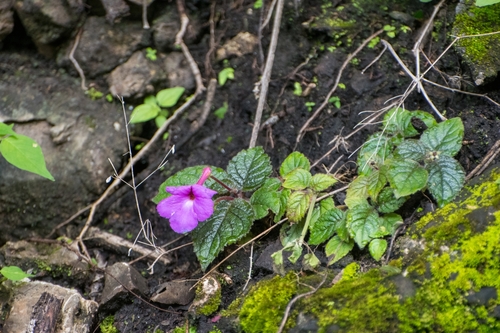
Achimenes grandiflora (Schiede) DC.
Also called Achimenes cordata, Achimenes ghiesbrechtiana, and 13 more.
| Family | Gesneriaceae |
|---|---|
| Native to | Mexico Central, Mexico Northeast, Mexico Gulf, Mexico Northwest, Mexico Southwest, Mexico Southeast, Costa Rica, El Salvador, Guatemala, Honduras, Nicaragua, Panama · Kew's World Checklist, file of 2026-06-04 |
| Your plants | Add one · related species |
Gesneriaceae · Mexico Central +11
Family Gesneriaceae
Native to Mexico Central, Mexico Northeast, Mexico Gulf, Mexico Northwest, Mexico Southwest, Mexico Southeast, Costa Rica, El Salvador, Guatemala, Honduras, Nicaragua, Panama
Cited as Kew's World Checklist cites it, Achimenes grandiflora (Schiede) DC.: GBIF's backbone key for this page carries the name with another author, (Schiede) A.DC.
Habitat in shortFigures ›
- Cold floor
- 8.3 °C 1 night in 100 colder NASA POWER
- Rain
- 1,601 mm a year, median across the range CHELSA
- Open-sky light
- 26–42 DLI lowest to highest month CHELSA
- Season
- Wet summers Jun–Sep, your months CHELSA
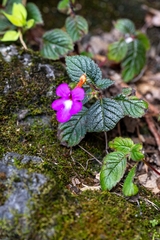


 48 photographs ›
At a glance
- Jan
- Feb
- Mar
- Apr
- May
- Jun, shaded
- Jul, shaded
- Aug, shaded
- Sep, shaded
- Oct
- Nov
- Dec
Hardiness of the habitat
| USDA zone of the habitat | 11a | the mean of the typical spot’s lowest night in each of 44 complete years, 1981–2024: 7.0 °C = 7.0 × 9 ÷ 5 + 32 = 44.6 °F, in zone 11a (40 to 45 °F). USDA’s zones are the 30-year mean of each year’s lowest temperature, in 10 °F zones with 5 °F half-zones (USDA Plant Hardiness Zone Map); this mean is of the years the series holds, not USDA’s 1991–2020. |
|---|---|---|
| RHS band of the record low | H2 | the record low falls in RHS’s H2 band (1 to 5 °C: tender, cool or frost-free glasshouse; RHS hardiness rating): 4.5 °C, the lowest night in 44 years. |
Both are the habitat’s, worked out from where it grows wild: neither is a tested hardiness of the plant. Lows from NASA POWER (MERRA-2) daily 1981–2024, cell 18.50_-99.375, lapse-corrected +3 m at 6.5 °C/km.
Climate class
Cwa Köppen–Geiger, worked out from the median year of the range’s 382 cells
| C temperate | the coldest month 17.7 °C, over 0 and under 18 °C; the warmest 23.1 °C, over 10 °C; not arid: 1555 mm a year, 10 × 69.5 mm (2 × 20.7 + 28: 80% of the rain in summer, 70% or more) or more |
|---|---|
| w dry winter | the driest winter month 23 mm, under a tenth of the wettest summer month's 302 mm (summer April to September) |
| a hot summer | the warmest month 23.1 °C, 22 °C or more |
By the thresholds of Peel, Finlayson and McMahon (2007), Hydrology and Earth System Sciences 11, 1633–1644, Table 1; summer is the warmer of October to March and April to September. The class of the median year, each month’s median across the cells, not of each cell.
Walter–Lieth: arid in December to April, where the month’s rain in mm is under twice its mean temperature in °C (January 31 mm against 2 × 17.7 = 35.4). The scale of Walter and Lieth’s climate diagrams (1960–1967), 10 °C to 20 mm.
The months read: CHELSA V2.1 1981–2010 climatology, 0.05° cells (each the mean of ~36 1 km pixels).
At home, aim for (worked out from the figures above)
| Winter nights | 8–18 °C | the January mean nightly low, 10th to 90th percentile across the 382 cells of the range, median 12.7 °C (CHELSA V2.1, 1981–2010); its coldest night on record was 4.5 °C (NASA POWER, daily lows over 44 years at the typical spot) |
|---|---|---|
| Summer days | 24–33 °C | the April mean daily high, 10th to 90th percentile across the 382 cells of the range, median 28.1 °C (CHELSA V2.1, 1981–2010) |
| Grow light, 14 h a day | 669 µmol/m²/s | the year’s mean daily light, 33.7 mol/m²/day (the twelve monthly medians averaged; open sky, CHELSA V2.1, 1981–2010 solar radiation at 2.07 mol of PAR per MJ), × 1,000,000 ÷ (14 × 3,600) |
| Humidity | 60–68% | the lowest and highest of the twelve monthly median relative humidities (CHELSA V2.1, 1981–2010); a figure about the air, saying nothing of how the plant takes water |
A starting point worked out from where it grows wild, not tested in cultivation. The light is the open sky’s; a plant among rocks or shrubs gets less.
Summary
Achimenes grandiflora (Schltdl.) DC. is a plant species in the genus Achimenes, family Gesneriaceae. It is native to Mexico and Central America, growing in mountainous regions from Chihuahua to Nicaragua. It is cultivated as an ornamental in other places because of its showy purple flowers.
Quoted from Wikipedia, "Achimenes grandiflora", its opening paragraph, revision 1218117360, read 2026-11-08, CC BY-SA 4.0.
About the genus · Achimenes
Achimenes is a genus of about 25 species of tropical and subtropical rhizomatous perennial herbs in the flowering plant family Gesneriaceae. They have a multitude of common names such as magic flowers, widow's tears, Cupid's bower, or hot water plant.
Quoted from Wikipedia, "Achimenes", its opening paragraph, revision 1270916716, read 2026-11-08, CC BY-SA 4.0.
Cultivation
Seasons
The rain rule reads a summer growing season: 70% of the median year's rain (1,093 mm of 1,555 mm) falls in June to September, warmer than the year (wet-season mean 22.1 °C against a yearly mean of 20.7 °C). Months are the habitat's, northern hemisphere; shifted six months for a southern-hemisphere collection: December to March.
Rain
1,555 mm in the median year at the habitat, 1,093 mm of it June to September. Wettest month September at 302 mm, driest months (2 at 23 mm). Across the grid cells of the range the year's total runs 931 mm to 2,811 mm, the 10th to 90th percentile of each cell's own year. The median of the cells' own yearly totals, 1,601 mm, is the year's rain at the top of the page; the 1,555 mm here is the median year's, the twelve monthly medians added, which the rain rule reads. Habitat calendar, northern hemisphere; median year across the grid cells of the range, CHELSA.
Light
Open sky over the habitat: 26 to 42 mol/m²/day across the year (daily light integral, median year across the grid cells of the range, CHELSA; the lowest 10th-percentile month across the cells is 22, the highest 90th-percentile month 48).
Warmth and air
Coldest: the 1st-percentile night over 44 years at a typical spot in the range is 8.3 °C, the absolute minimum 4.5 °C, no frost in 44 years (NASA POWER daily minima). Warmest: the 99th-percentile day is 36.9 °C. Monthly means: the coldest month's mean nightly low 12.7 °C in January (across the grid cells of the range 8.3 °C to 17.7 °C), the warmest month's mean daily high 28.1 °C in April and May (median year across the grid cells of the range, CHELSA). Cold floor: 8.3 °C, which is the 1st-percentile night over 44 years at a typical spot in the range (NASA POWER).
Relative humidity at the habitat: 60 to 68% across the year (monthly means, median year across the grid cells of the range, CHELSA). A figure about the air, saying nothing about how the plant takes water.
How this section is made
Each card states this species' habitat figures with their sources, and what two fixed rules read from them; nothing here says what the plant does, wants or tolerates. The rules · the terms.
Seasons. Read from the median year of CHELSA monthly rainfall and mean temperature across the grid cells of the range: the rain rule takes the smallest set of months carrying 70% of the rain and calls it winter when its mean is more than half a degree below the year's, summer when more than that above, and neither in between; the temperature rule, used only under 120 mm, names the cooler six months when they are at least a degree cooler than the other six. Months are shifted for the other hemisphere only where the temperature curve moves 4 °C or more and the habitat lies 10° or more from the equator. A reading of the curves, not an observation of the plant.
Rain. CHELSA monthly precipitation, median year across the grid cells of the range. The rain that falls where the species is recorded; nothing about how the plant takes water.
Light. CHELSA shortwave radiation at each envelope cell, a daily-mean flux taken to a daily total and converted at 2.07 mol of PAR per MJ. The sky over the habitat, measured; what reaches a plant under a rock, a shrub or a shade cloth is not.
Temperature. NASA POWER daily minima and maxima over 44 years at a typical spot in the range, lapse-corrected +3 m to its elevation; CHELSA monthly means, median year across the grid cells of the range. The cold floor is the 1st-percentile night named in its sentence. Not a measured survival limit for any plant in a pot.
Humidity. CHELSA relative humidity, median year across the grid cells of the range.
Climate across the habitat
Habitat months, northern hemisphere
Mean daily high from 23 °C in Jan and Dec to 28 °C in Apr and May; mean nightly low from 13 °C in Jan, Feb and Dec to 18 °C in May, Jun, Jul, Aug and Sep. The cold quarter, Dec to Feb, is the three months around the coldest month's mean nightly low, centred on the 3 months in a row that tie for it. 1,555 mm of rain in the median year (the twelve monthly medians added), the wettest month Sep. The bands show the 10th to 90th percentile across 382 habitat cells. Over 44 years at a typical spot in the range (NASA POWER) the absolute minimum was 4.5 °C and the 1-in-100 hot day (the 99th-percentile day) 36.9 °C; neither is dated to a month. Beneath: daily light integral and relative humidity through the year, each on its own scale.
Figures by month
| Month | Day °C | Night °C | Rain mm | DLI | RH % |
|---|---|---|---|---|---|
| Jan | 23 / 18–27 | 13 / 8–18 | 31 / 7–95 | 27 / 23–34 | 63 / 49–69 |
| Feb | 24 / 20–29 | 13 / 9–18 | 23 / 8–86 | 32 / 27–39 | 62 / 47–67 |
| Mar | 26 / 22–31 | 15 / 10–20 | 23 / 6–60 | 38 / 34–45 | 60 / 45–65 |
| Apr | 28 / 24–33 | 16 / 12–22 | 44 / 10–91 | 42 / 37–48 | 60 / 45–65 |
| May | 28 / 24–33 | 18 / 14–23 | 104 / 47–172 | 40 / 38–46 | 63 / 49–67 |
| Jun | 26 / 23–31 | 18 / 14–23 | 262 / 161–392 | 37 / 32–40 | 67 / 60–70 |
| Jul | 26 / 22–30 | 18 / 14–23 | 269 / 180–411 | 37 / 33–40 | 66 / 61–71 |
| Aug | 26 / 22–30 | 18 / 14–23 | 260 / 165–455 | 36 / 32–40 | 67 / 61–71 |
| Sep | 25 / 22–29 | 18 / 14–22 | 302 / 180–481 | 32 / 29–35 | 68 / 63–72 |
| Oct | 24 / 21–28 | 17 / 12–21 | 157 / 76–322 | 30 / 27–35 | 67 / 59–71 |
| Nov | 24 / 20–28 | 15 / 11–20 | 48 / 15–187 | 28 / 24–34 | 65 / 54–69 |
| Dec | 23 / 19–27 | 13 / 9–19 | 32 / 5–135 | 26 / 22–33 | 64 / 51–69 |
How this section is made
Natural habitat
Flowering by month
- 0Jan
- 0Feb
- 0Mar
- 0Apr
- 0May
- 0Jun
- 3Jul
- 18Aug
- 15Sep
- 1Oct
- 0Nov
- 0Dec
Flowering observations of wild plants on iNaturalist, as iNaturalist shares them with GBIF: GBIF.org (2026-11-15) GBIF Occurrence Download https://doi.org/10.15468/dl.y8zpkp: 37 observations, research grade, openly licensed (CC0, CC BY or CC BY-NC), counted under the page's GBIF keys. Calendar months, as each plant was observed; not moved to your hemisphere.
How this section is made
Photographs
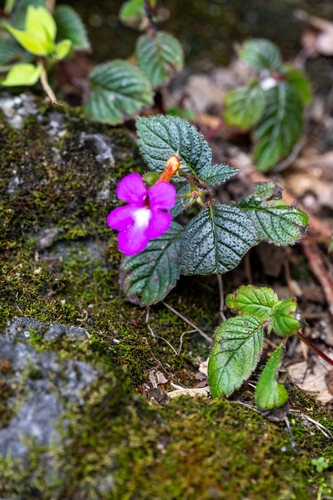
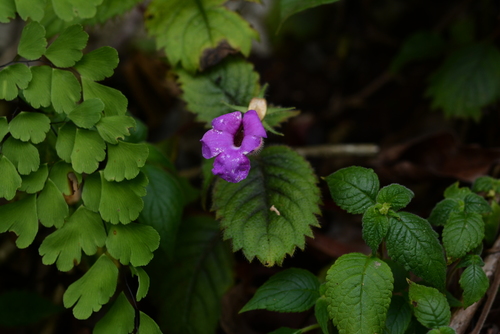
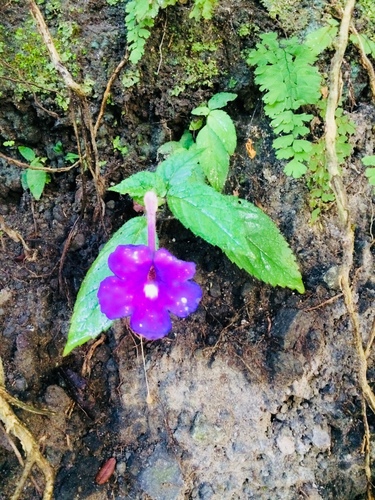
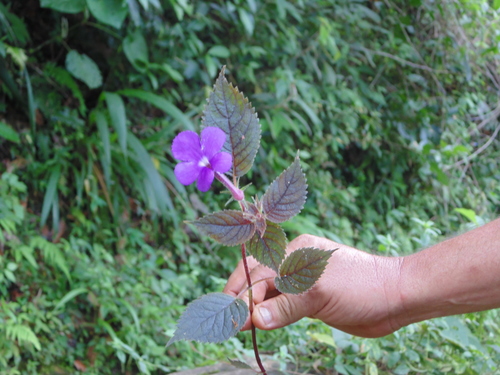
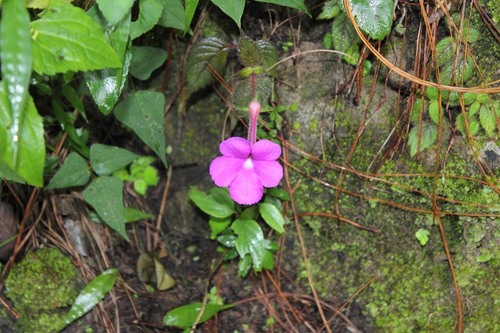
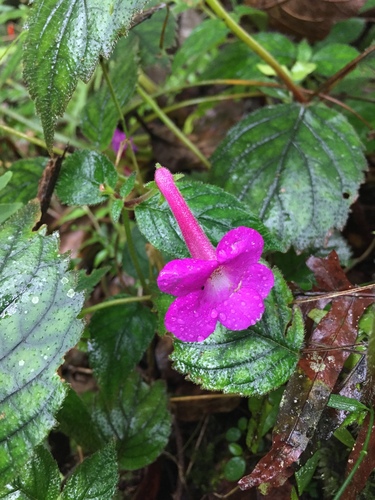
The photograph at the top: (c) José Javier Barrios Flores, some rights reserved (CC BY), observed growing wild, observed 2024-08-31. Photographs: (c) José Javier Barrios Flores, some rights reserved (CC BY); (c) Neptalí Ramírez Marcial, some rights reserved (CC BY); (c) Adrianh M. Orozco, some rights reserved (CC BY); (c) Eugenio Padilla, some rights reserved (CC BY-SA); (c) Juan Cruzado Cortés, some rights reserved (CC BY-SA); (c) Oscar C. González Martínez, some rights reserved (CC BY-SA). Credits as read from iNaturalist on 2026-11-03. What each licence allows.
Related
Similar habitat climate The 6 nearest by mean daily high, mean nightly low and rain, month by month. How.
 Monstera deliciosa Swiss cheese plant Photo: CC BY, Robert Taylor
 Cuphea hyssopifolia False heather Photo: CC BY, zebedeugalinha
 Epiphyllum oxypetalum Dutchman's pipe cactus Photo: CC BY, Devika M B
 Ardisia compressa Primulaceae Photo: CC BY, Peter Quakenbush
 Rhyncholaelia glauca Glaucous Beaked Laelia Photo: CC0, Sobeida Morales
 Ageratum houstonianum Bluemink Photo: CC BY, Matt Pelikan
Other Achimenes 7 in the reference
 Achimenes admirabilis Gesneriaceae Photo: CC BY, Annika Lindqvist
 Achimenes antirrhina Gesneriaceae Photo: CC BY, Javier Bucio
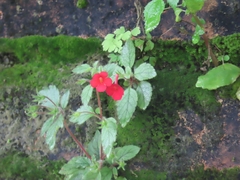 Achimenes erecta Gesneriaceae Photo: CC0, Sobeida Morales
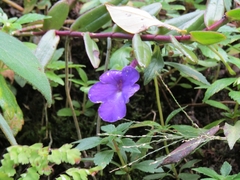 Achimenes longiflora Cupid's bow Photo: CC0, Sobeida Morales
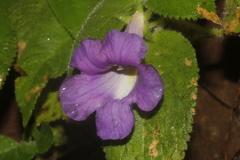 Achimenes mexicana Gesneriaceae Photo: CC BY-SA, Juan Cruzado Cortés
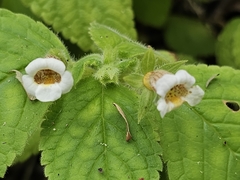 Achimenes misera Gesneriaceae Photo: CC BY, Liliana Ramírez-Freire
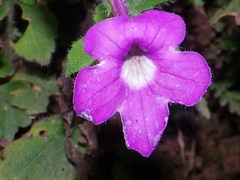 Achimenes patens Gesneriaceae Photo: CC BY, Arturo Castro Castro
Names & registers
Also known as Achimenes cordata; Achimenes ghiesbrechtiana; Achimenes grandiflora f. liebmannii; Achimenes grandiflora var. glabrescens; Achimenes grandiflora var. incisa and 10 more. (GBIF Backbone)
WFO Plant List (2026-06) accepted. World Flora Online, CC0; read 2026-11-13.
Published in Prodr. 7: 536 (1839) (WCVP, RBG Kew, file of 2026-06-04)
Elsewhere Tropicos · Catalogue of Life · CalPhotos · ITIS · NCBI (identifiers from Wikidata's item Q10680915, read 2026-11-13, CC0)
Chromosomes no count in ChromoDB's IAPT/IOPB set (the file holds no count under IPNI id 377597-1). ChromoDB, IAPT/IOPB chromosome data (Simon, Bosch & Blanché), version 3.1 of 8 November 2026, CC BY 4.0; read 2026-11-13.
The record
Predicted extinction risk 3% probability of being threatened (95% interval 2% to 5%); predicted not threatened, the model is confident of this class. A model's prediction, not an assessment. Bachman et al. 2024, New Phytologist; Kew's data of 1 February 2024, CC BY 4.0; read 2026-11-13.
CITES Not in the CITES Appendices (the edition in force from 5 March 2026): no listing of its name, its genus or its family. CITES Appendices I, II and III, valid from 5 March 2026; read 2026-11-13. The Appendices
Every figure here is derived from public data by a stated rule and names its source; nothing about this species is written for its page by a person or by AI, apart from the marked, credited quotations. How →
Where this page came from built 2026-11-18
gbif.species answeredGBIF's key 9036864 is Achimenes grandiflora (Schiede) A.DC.; the page links Kew's Achimenes grandiflora (Schiede) DC., and the name is cited as Kew cites it (kept from this page's build of 2026-10-21)gbif.synonyms answeredkept from this page's build of 2026-11-01gbif.vernacular answeredasked 2026-11-18names fetched 2026-10-21; carried by an offline re-derivation of 2026-11-18wcvp.distribution answeredas of 2026-06-04gbif.occurrences answeredas of 2026-10-21GBIF occurrence download https://doi.org/10.15468/dl.hbdw64, of 2026-10-21; 6 records at a dataset's default point left out (a coordinate where the records of 20 species or more of this reference lie, nearly all of them with no year, as the reference lists them; a record there its dataset states to within 10 km is kept); records tested against the native regions' shapes, openly licensed and restricted alike (Natural Earth's provinces, placed in TDWG's regions; shapes rule r87); a record within the margin, off a coast or on an island too small to draw counted only when it states the region's country, and only on no other region's land but within 0.02° of a native shape across a border, where its stated state or province does not name the other region (read by Natural Earth's name, its ISO 3166-2 code or an old province's name); 8 records within 1 km of a botanic garden, herbarium or zoo left out (8 at a botanic garden or arboretum; Wikidata's list)climate answeredasked 2026-11-18climate.extremes answeredasked 2026-11-18NASA POWER (MERRA-2) daily 1981–2024, cell 18.50_-99.375, lapse-corrected +3 m at 6.5 °C/kmwikidata answeredfound by its label; its IPNI identifier 377597-1 is Kew's for Achimenes grandiflora (Schiede) DC. (kept from this page's build of 2026-10-21)wikipedia answeredkept from this page's build of 2026-10-21; not asked againinat.taxon answerediNaturalist's taxon 153062 (Achimenes grandiflora), kept from an earlier build, checked 2026-10-23: active and this species' own (kept from this page's build of 2026-10-21)inat.photos.wild answeredasked 2026-10-24from iNaturalist's API: research-grade observations not marked captive with an open-licence photograph, the observations iNaturalist puts first by votes, 24 of them (the open data of 2026-09-27 holds 58, and no votes); filled 2026-10-24; kept by the build of 2026-11-18 (this build: not asked: this build left iNaturalist to the daily fill, which asks for the photographs once the page's taxon is known)inat.photos.cultivated answeredasked 2026-10-24observations marked captive or cultivated whose identifications agree; filled 2026-10-24; kept by the build of 2026-11-18 (this build: not asked: this build left iNaturalist to the daily fill, which asks for the photographs once the page's taxon is known)gbif.media answeredas of 2026-10-21from the GBIF download https://doi.org/10.15468/dl.hbdw64, of 2026-10-21commons not askedkept from this page's build of 2026-10-30openalex not askedthe reference does not ask OpenAlex for papersEvery source is recorded as having answered, reported nothing, refused, failed, not been asked, or answered twice where one answer is taken (“not taken: two items answered”), and, for a source asked when this page was built, when: the figures are as the source held them that day; a source read from a file (Kew's World Checklist, a GBIF download) says "as of" the file's day instead; a row carried from an earlier build of the page names that build instead. Only “nothing to report” is ever shown as an absence. Records came from 65 datasets via GBIF.org; each carries its own licence.