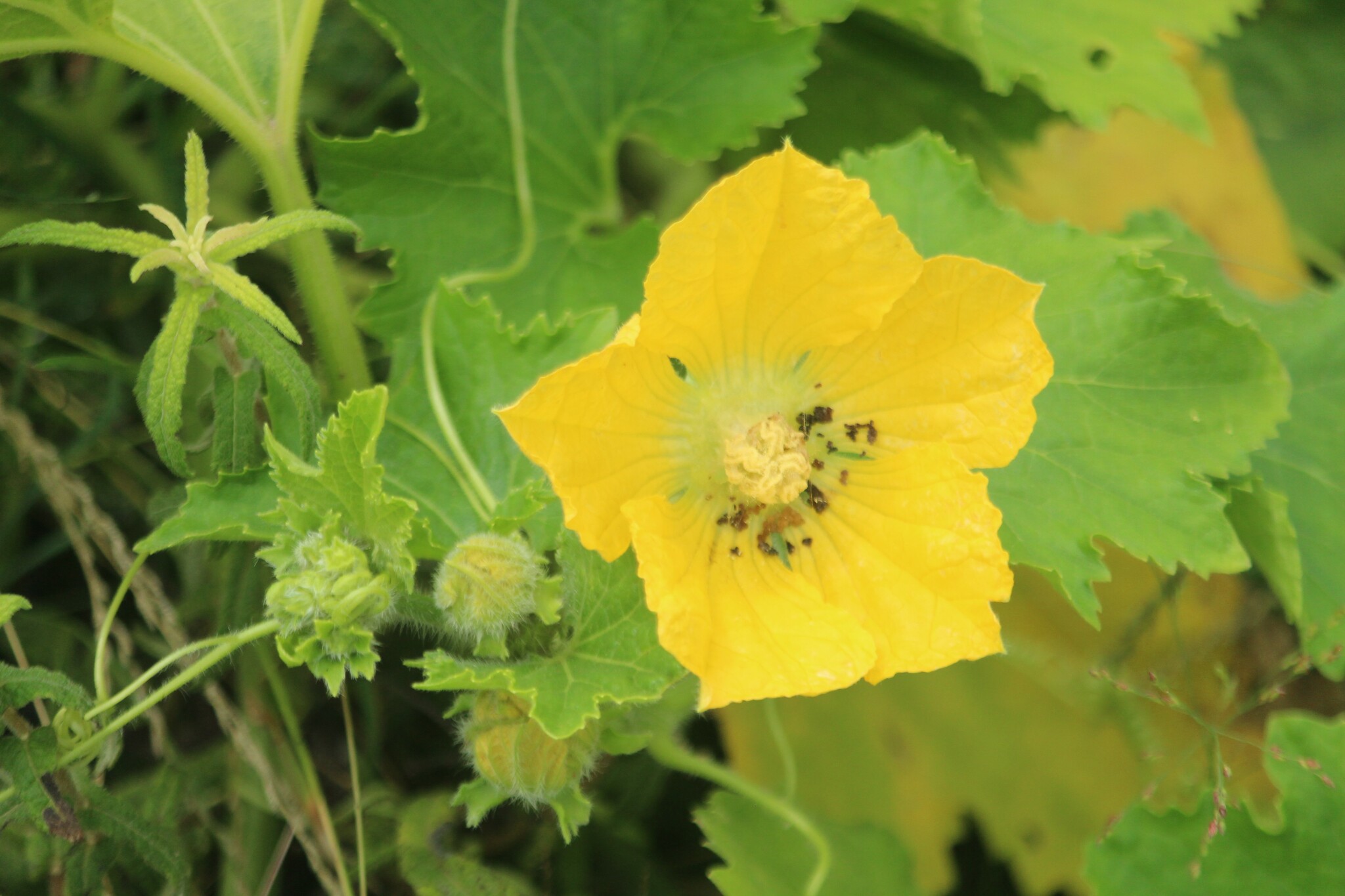
Benincasa hispida (Thunb.) Cogn.
Beligo, Calabaza china, Chinese preserving-melon, Chinese-watermelon
Every figure on this page is derived from public data by a stated rule and says its source; nothing here is written by a person or a model, except the Wikipedia passage, which is quoted and marked as such. How it is made.
Summary
Benincasa hispida, the wax gourd, also called ash gourd, white gourd, winter gourd, winter melon, tallow gourd, ash pumpkin, dongah or Chinese preserving melon, is a species of gourd.
Text from Wikipedia, “Wax gourd”, CC BY-SA 4.0, quoted as written. Kept separate from everything derived here.
About the genus · Benincasa
Benincasa is a genus of flowering plants in the cucumber family, Cucurbitaceae. It includes two species native to Indomalaya and Australasia:Benincasa fistulosa (Stocks) H.Schaef. & S.S.Renner – tinda Benincasa hispida (Thunb.) Cogn. – wax gourd
Text from Wikipedia, “Benincasa”, CC BY-SA 4.0, quoted as written.
At a glance
Also known as Benincasa cerifera Savi; Benincasa cerifera f. emarginata K.Kimura & H.Sugiy.; Benincasa cylindrica Ser.; Benincasa hispida var. chieh-qua F.C.How; Benincasa hispida var. hispida and 18 more.
Cultivation
Its year Rain rule: a sharp rainy season, November to May at the habitat (not shifted); the temperature curve is flat (1.0 °C of range), so no growing season is inferred.
This species’ habitat figures, and what two fixed rules read from them.
The rain rule reads a sharp season: 70% of the year's rain (1745 mm of 2274 mm) falls in November to May. The temperature curve is flat, 1.0 °C between the warmest and coldest month, so the growing-season rule does not infer a growing season from it. Months are the habitat's, southern hemisphere, within 10° of the equator; with no thermal season there there is no season to reverse, so they are not shifted for a collection elsewhere.
Read from the median year of CHELSA monthly rainfall and mean temperature across the envelope cells: the rain rule takes the smallest set of months carrying 70% of the rain and calls it winter when its mean is more than half a degree below the year's, summer when more than that above, and neither in between; the temperature rule, used only under 120 mm, names the cooler six months when they are at least a degree cooler than the other six. Months are shifted for the other hemisphere only where the temperature curve gives a season to reverse. A reading of the curves, not an observation of the plant.
Rain Habitat rain 2274 mm a year, wettest January at 309 mm, driest August at 76 mm (habitat calendar, southern hemisphere).
This species’ habitat figures, with their source.
2274 mm a year at the habitat, 1745 mm of it November to May. Wettest month January at 309 mm, driest August at 76 mm. Across the envelope cells the year's total runs 1055 mm to 3471 mm (10th to 90th percentile of each cell's own year) (median year across the envelope cells, CHELSA; habitat calendar, southern hemisphere).
CHELSA monthly precipitation, median year across the envelope cells. The rain that falls where the species is recorded; nothing about how the plant takes water.
Light Open sky over the habitat: 31 to 38 mol/m²/day.
This species’ habitat figures, with their source.
Open sky over the habitat: 31 to 38 mol/m²/day across the year (daily light integral, median year across the envelope cells, CHELSA; the lowest 10th-percentile month across the cells is 29, the highest 90th-percentile month 46).
CHELSA shortwave radiation at each envelope cell, a daily-mean flux taken to a daily total and converted at 2.07 mol of PAR per MJ. The sky over the habitat, measured; what reaches a plant under a rock, a shrub or a shade cloth is not.
Warmth and air Cold floor 21.9 °C (1st-percentile habitat night, NASA POWER).
This species’ habitat figures, with their source.
Coldest: the 1st-percentile night over 44 years at the typical cell is 21.9 °C, the absolute minimum 20.4 °C, no frost in 44 years (NASA POWER daily minima). Warmest: the 99th-percentile day is 35.8 °C. Monthly means: coldest night 22.7 °C in August (across the envelope cells 18.8 °C to 24.8 °C), warmest day 28.3 °C in March (median year across the envelope cells, CHELSA). Cold floor: 21.9 °C, which is the 1st-percentile night over 44 years at the typical cell (NASA POWER).
NASA POWER daily minima and maxima 1981–2024 at the typical cell, lapse-corrected to its elevation; CHELSA monthly means, median year across the envelope cells, CHELSA. The cold floor is the figure named in its sentence. Not a measured survival limit for any plant in a pot.
Relative humidity at the habitat: 65 to 69% across the year (monthly means, median year across the envelope cells, CHELSA). A figure about the air, saying nothing about how the plant takes water.
CHELSA relative humidity, median year across the envelope cells.
The figures the cards read from are in Climate below, and where they came from in Natural habitat.
Climate across the habitat
Figures by month
| Jan | Feb | Mar | Apr | May | Jun | Jul | Aug | Sep | Oct | Nov | Dec | |
|---|---|---|---|---|---|---|---|---|---|---|---|---|
| Day °C | 28 / 27–29 | 28 / 27–29 | 28 / 27–29 | 28 / 27–30 | 28 / 27–30 | 28 / 26–30 | 28 / 26–30 | 28 / 26–30 | 28 / 26–31 | 28 / 27–32 | 28 / 27–30 | 28 / 27–30 |
| Night °C | 24 / 22–26 | 24 / 22–25 | 24 / 22–26 | 24 / 22–26 | 24 / 21–26 | 23 / 20–25 | 23 / 19–25 | 23 / 19–25 | 23 / 20–25 | 23 / 21–26 | 24 / 21–26 | 24 / 22–26 |
| Rain mm | 309 / 195–381 | 272 / 162–355 | 274 / 145–361 | 221 / 91–342 | 178 / 48–320 | 121 / 26–250 | 94 / 17–269 | 76 / 7–218 | 88 / 11–222 | 150 / 22–297 | 214 / 85–335 | 277 / 168–342 |
| DLI | 33 / 29–37 | 33 / 30–36 | 35 / 32–38 | 34 / 31–37 | 32 / 30–36 | 31 / 29–34 | 32 / 29–35 | 35 / 32–39 | 38 / 34–44 | 38 / 35–46 | 35 / 32–43 | 33 / 30–39 |
| RH % | 69 / 65–72 | 69 / 65–72 | 69 / 65–72 | 68 / 64–72 | 66 / 63–71 | 65 / 62–71 | 65 / 60–71 | 65 / 59–70 | 65 / 59–70 | 66 / 61–70 | 68 / 64–71 | 69 / 65–72 |
Each figure is the median across the 25 grid cells holding the 31 in-range records, with the 10th–90th percentile span across those cells after the slash where it differs. Extremes and elevation were read at the typical cell 1970:6113 (-8.525, 125.675). Over 44 years there: absolute minimum 20.4 °C, 1st-percentile night 21.9 °C, 99th-percentile day 35.8 °C. Normals: CHELSA V2.1 1981–2010 climatology, 0.05° cells (each the mean of ~36 1 km pixels). Envelope: median and 10th–90th percentile of each month across the 25 distinct grid cells holding the 31 in-range records; extremes and elevation at the typical cell 1970:6113 (its coldest month's mean night nearest the median across cells); its position is the cell centre. Extremes: NASA POWER (MERRA-2) daily 1981–2024, cell -8.50_125.625, lapse-corrected -215 m at 6.5 °C/km. Elevation: ETOPO 2022, 41 m (cell mean).
Natural habitat
Photographs
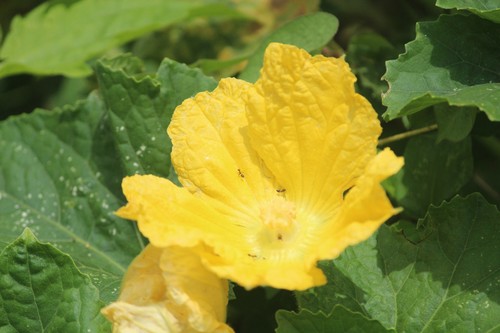
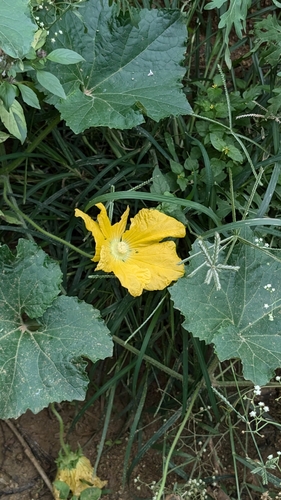
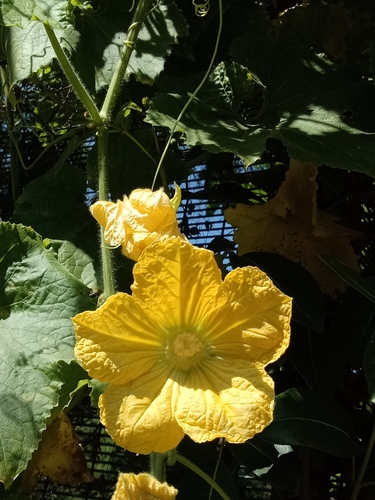
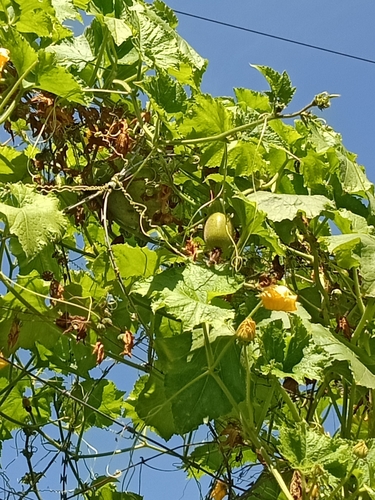

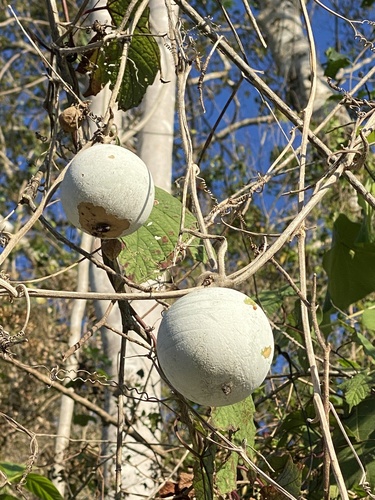
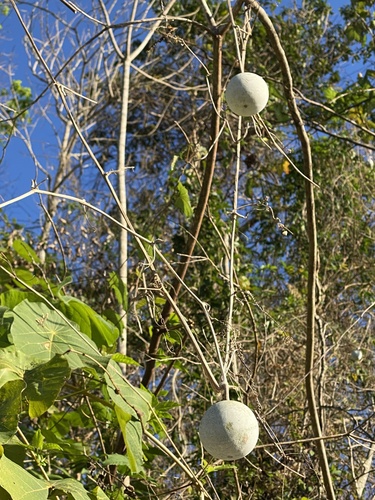
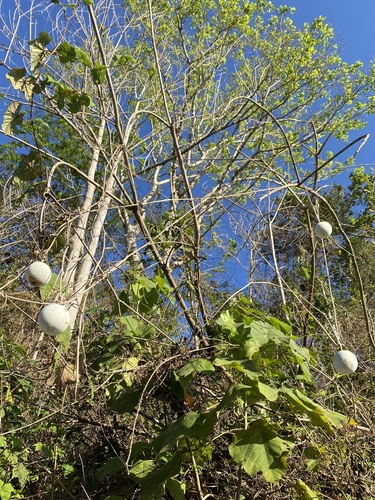
Photographs: Haneesh K M, CC0, iNaturalist via GBIF; kumarkv, CC BY, iNaturalist via GBIF; Swarochi Tathagath, CC BY, iNaturalist via GBIF (2); jaberag, CC BY-SA, via GBIF; Katharine Khamhaengwong, CC BY, iNaturalist via GBIF (3).
Photographs: iNaturalist did not answer when this page was built; what is shown came from the sources that did.
Papers naming this species
Works whose title or abstract names Benincasa hispida, most cited first, from OpenAlex (CC0). A mention, not a cultivation source: nothing on this page is drawn from them.
Related
Similar habitat climate the 6 species whose habitat climate is nearest this one's: mean day and night, month by month, and rain on a log scale, in calendar order, so a habitat with the same seasons six months out is far, not near. Nothing else counts: not range, not family.
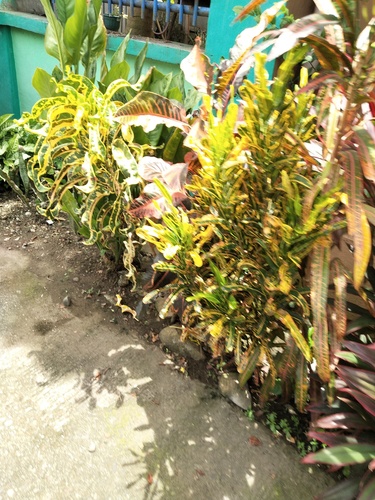 Codiaeum variegatum Garden Croton
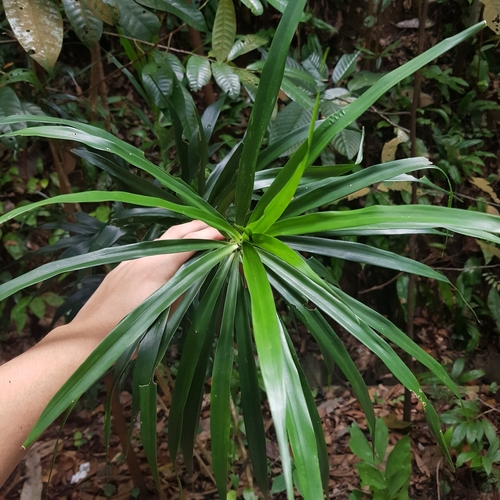 Dracaena angustifolia Suji
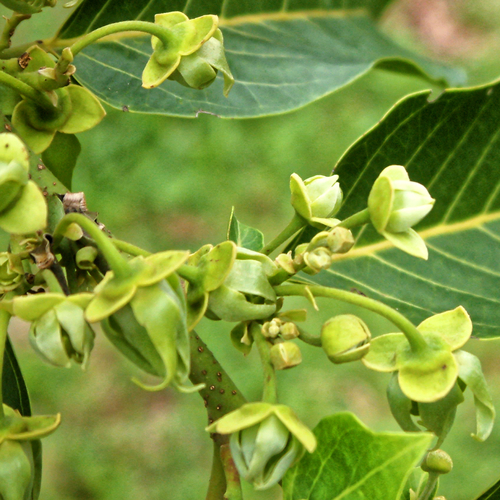 Cananga odorata Cananga tree
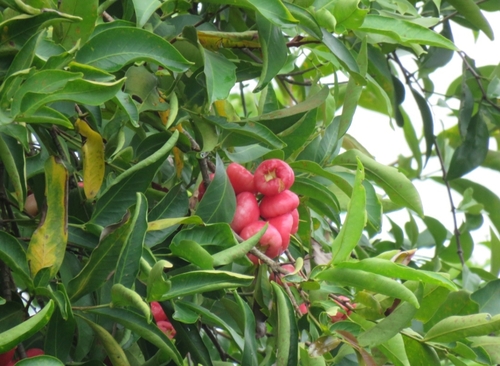 Syzygium aqueum Bell Fruit
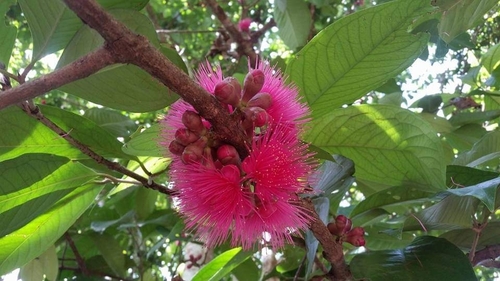 Syzygium malaccense Malay-apple
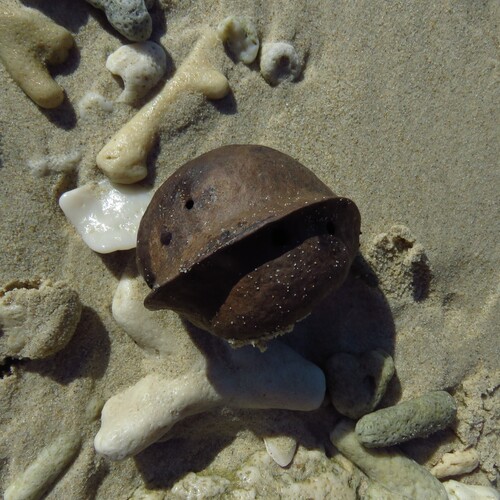 Heritiera littoralis beach tulip-oak
History & registers
Where this page came from built 2026-09-20 · dossier v2 · node
gbif.species answeredcarried from build of 2026-09-20 (offline re-derivation; the backbone was not asked)gbif.synonyms answeredcarried from build of 2026-09-20 (offline re-derivation; the backbone was not asked)gbif.vernacular answeredcarried from build of 2026-09-20 (offline re-derivation; the backbone was not asked)wcvp.distribution answeredgbif.occurrences answeredGBIF occurrence download https://doi.org/10.15468/dl.3h4zamclimate answeredwikidata answeredcarried from build of 2026-09-20 (rederive); that build: carried from build of 2026-09-19 (rederive); that build: carried from build of 2026-09-19 (rederive)wikipedia answeredcarried from build of 2026-09-20; this build: skippedinat.taxon not askedcarried from build of 2026-09-20 (rederive)inat.photos.wild answeredcarried from build of 2026-09-20 (rederive); that build: carried from build of 2026-09-19 (rederive); that build: carried from build of 2026-09-19 (rederive)inat.photos.cultivated nothing to reportcarried from build of 2026-09-20 (rederive); that build: carried from build of 2026-09-19 (rederive); that build: carried from build of 2026-09-19 (rederive)commons nothing to reportcarried from build of 2026-09-20 (rederive); that build: carried from build of 2026-09-19 (rederive); that build: carried from build of 2026-09-19 (rederive)gbif.media answeredopenalex answeredcarried from build of 2026-09-20; this build: skippedEvery upstream is recorded as having answered, reported nothing, or refused. Only “nothing to report” is ever shown as an absence. Records came from 55 datasets via GBIF.org; each carries its own licence.