
Commiphora angustifoliolata Mendes
Burseraceae
Every figure on this page is derived from public data by a stated rule and says its source; nothing here is written by a person or a model, except the Wikipedia passage, which is quoted and marked as such. How it is made.
About the genus · Commiphora
Commiphora is the most species-rich genus of flowering plants in the frankincense and myrrh family, Burseraceae. The genus contains approximately 190 species of shrubs and trees, which are distributed throughout the (sub-) tropical regions of Africa, the western Indian Ocean islands, the Arabian Peninsula, India, and South America. The genus is drought-tolerant and common throughout the xerophytic scrub, seasonally dry tropical forests, and woodlands of these regions.
Text from Wikipedia, “Commiphora”, CC BY-SA 4.0, quoted as written.
Cultivation
Grouped as a cactus or succulent by the genus Commiphora, which is reliably one kind of plant (archetype table). The table holds no figure for this group, which spans too much for one minimum, and no habitat climate is derived yet; no cold floor is given, and no prose comes from the table.
Climate across the habitat
Natural habitat
Related
Other Commiphora 170 in the reference
 Commiphora acuminata Burseraceae
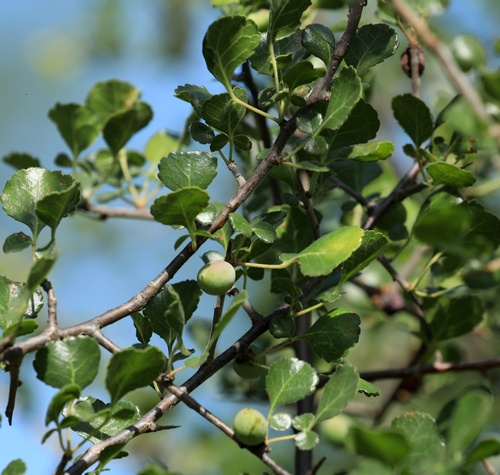 Commiphora africana Hairy Corkwood
 Commiphora alata Burseraceae
 Commiphora alaticaulis Burseraceae
 Commiphora anacardiifolia Large-Leaved Commiphora
 Commiphora andranovoryensis Burseraceae
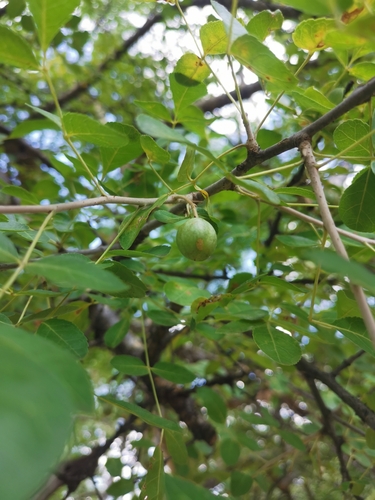 Commiphora angolensis Poison-grub
 Commiphora ankaranensis Burseraceae
 Commiphora antunesii Burseraceae
 Commiphora aprevalii Burseraceae
 Commiphora arafy Burseraceae
 Commiphora arenaria Burseraceae all 171 ›
History & registers
Where this page came from built 2026-09-20 · dossier v2 · node
gbif.species answeredcarried from build of 2026-09-20 (offline re-derivation; the backbone was not asked)gbif.synonyms answeredcarried from build of 2026-09-20 (offline re-derivation; the backbone was not asked)gbif.vernacular answeredcarried from build of 2026-09-20 (offline re-derivation; the backbone was not asked)wcvp.distribution answeredgbif.occurrences answeredGBIF occurrence download https://doi.org/10.15468/dl.3h4zamclimate nothing to reportwikidata answeredcarried from build of 2026-09-20 (rederive); that build: carried from build of 2026-09-19 (rederive); that build: carried from build of 2026-09-19 (rederive)wikipedia nothing to reportcarried from build of 2026-09-20; this build: skippedinat.taxon nothing to reportcarried from build of 2026-09-20 (rederive); that build: carried from build of 2026-09-19 (rederive)inat.photos.wild nothing to reportcarried from build of 2026-09-20 (rederive); that build: carried from build of 2026-09-19 (rederive); that build: no iNaturalist taxon of exactly this nameinat.photos.cultivated nothing to reportcarried from build of 2026-09-20 (rederive); that build: carried from build of 2026-09-19 (rederive)commons nothing to reportcarried from build of 2026-09-20 (rederive); that build: carried from build of 2026-09-19 (rederive); that build: carried from build of 2026-09-19 (rederive)gbif.media answeredcarried from build of 2026-09-20; this build: api.gbif.org not asked: offline re-derivationopenalex nothing to reportcarried from build of 2026-09-20; this build: skippedEvery upstream is recorded as having answered, reported nothing, or refused. Only “nothing to report” is ever shown as an absence. Records came from 1 datasets via GBIF.org; each carries its own licence.