Nepenthes glandulifera Chi C.Lee
Nepenthaceae
Every figure on this page is derived from public data by a stated rule and says its source; nothing here is written by a person or a model, except the Wikipedia passage, which is quoted and marked as such. How it is made.
Summary
Nepenthes glandulifera is a species of pitcher plant endemic to the Hose Mountains of central Sarawak. This plant is so named for the black speckles around the petioles. The species's discoverer, Ch'ien Lee, initially thought they were a sign of disease. After further investigation, it was realised that the black speckles were actually nectar glands. More on Wikipedia ›
The opening of Wikipedia, “Nepenthes glandulifera”, CC BY-SA 4.0, quoted as written. Kept separate from everything derived here.
About the genus · Nepenthes
Nepenthes is a genus of carnivorous plants, also known as tropical pitcher plants, or monkey cups, in the monotypic family Nepenthaceae. The genus includes about 170 species, and numerous natural and many cultivated hybrids. They are mostly liana-forming plants of the Old World tropics, ranging from South China, Indonesia, Malaysia, and the Philippines; westward to Madagascar and the Seychelles (one); southward to Australia (four) and New Caledonia (one); and northward to India (one) and Sri Lanka (one). More on Wikipedia ›
The opening of Wikipedia, “Nepenthes”, CC BY-SA 4.0, quoted as written.
Cultivation
Grouped as a carnivorous plant by the genus Nepenthes, which is reliably one kind of plant (archetype table). The table holds no figure for this group, which spans too much for one minimum, and no habitat climate is derived yet; no cold floor is given, and no prose comes from the table.
Climate across the habitat
Natural habitat
Papers naming this species
Works whose title or abstract names Nepenthes glandulifera, most cited first, from OpenAlex (CC0). A mention, not a cultivation source: nothing on this page is drawn from them.
Related
Other Nepenthes 174 in the reference
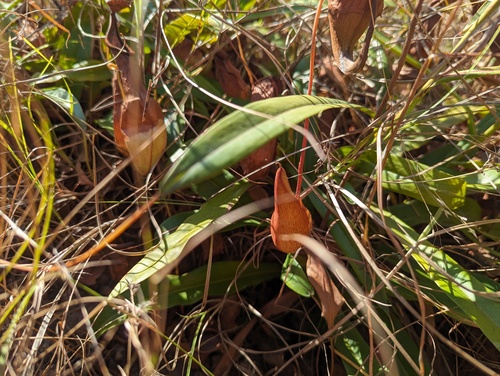 Nepenthes abalata Nepenthaceae Nepenthes abgracilis Nepenthaceae Nepenthes adnata Nepenthaceae Nepenthes aenigma Nepenthaceae
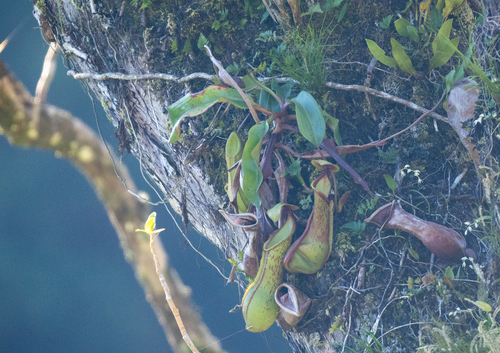 Nepenthes alata Nepenthaceae
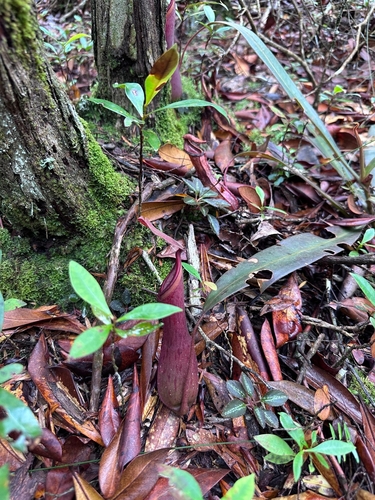 Nepenthes albomarginata Nepenthaceae Nepenthes alfredoi Nepenthaceae Nepenthes alzapan Nepenthaceae
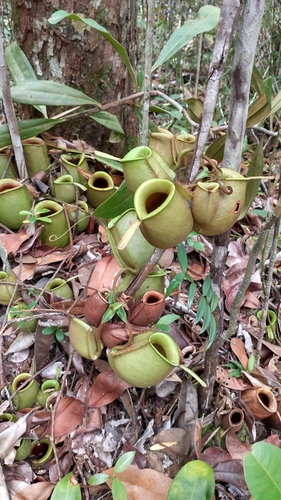 Nepenthes ampullaria flask-shaped pitcher plant Nepenthes andamana Nepenthaceae Nepenthes angasanensis Nepenthaceae Nepenthes appendiculata Nepenthaceae all 175 ›
History & registers
Where this page came from built 2026-09-20 · dossier v2 · node
gbif.species answeredcarried from build of 2026-09-19 (offline re-derivation; the backbone was not asked)gbif.synonyms answeredcarried from build of 2026-09-19 (offline re-derivation; the backbone was not asked)gbif.vernacular answeredcarried from build of 2026-09-19 (offline re-derivation; the backbone was not asked)wcvp.distribution answeredgbif.occurrences answeredGBIF occurrence download https://doi.org/10.15468/dl.3h4zamclimate nothing to reportwikidata answeredcarried from build of 2026-09-19 (rederive); that build: carried from build of 2026-09-19 (rederive)wikipedia answeredcarried from build of 2026-09-19; this build: skippedinat.taxon not askedinat.photos.wild nothing to reportcarried from build of 2026-09-19 (rederive); that build: carried from build of 2026-09-19 (rederive)inat.photos.cultivated nothing to reportcarried from build of 2026-09-19 (rederive); that build: carried from build of 2026-09-19 (rederive)commons nothing to reportcarried from build of 2026-09-19 (rederive); that build: carried from build of 2026-09-19 (rederive)gbif.media did not answerapi.gbif.org not asked: offline re-derivationopenalex answeredcarried from build of 2026-09-19; this build: skippedEvery upstream is recorded as having answered, reported nothing, or refused. Only “nothing to report” is ever shown as an absence. Records came from 1 datasets via GBIF.org; each carries its own licence.