Staphyleaceae › Staphylea › 4 of 12
Staphylea × elegans Zabel
· doubtful
| Family | Staphyleaceae |
|---|---|
| Native to | Transcaucasus · Kew's World Checklist, file of 2026-06-04 |
| Your plants | Add one · related species |
Staphyleaceae · Transcaucasus
Family Staphyleaceae
Native to Transcaucasus
A hybrid: S. colchica × S. pinnata, the parents Kew's World Checklist states for it (WCVP, RBG Kew).
About the genus · Staphylea
Staphylea, called bladdernuts, is a small genus of 10 or 11 species of flowering plants in the family Staphyleaceae, native to temperate regions of the Northern Hemisphere. The highest species diversity is in China, where four species occur.
Quoted from Wikipedia, "Staphylea", its opening paragraph, revision 1277348776, read 2026-11-08, CC BY-SA 4.0.
Cultivation
Climate across the habitat
Natural habitat
Flowering by monthfrom few records: 0
No research-grade observation of a wild plant that iNaturalist shares with GBIF is annotated flowering under this page's GBIF keys, in GBIF's download.
Flowering observations of wild plants on iNaturalist, as iNaturalist shares them with GBIF: GBIF.org (2026-11-15) GBIF Occurrence Download https://doi.org/10.15468/dl.y8zpkp: 0 observations, research grade, openly licensed (CC0, CC BY or CC BY-NC), counted under the page's GBIF keys. Calendar months, as each plant was observed; not moved to your hemisphere.
Photographs
No openly licensed photograph on file. If you grow this plant, add your own photograph to your record.
Related
Other Staphylea 11 in the reference
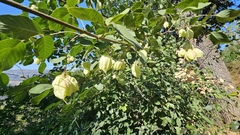 Staphylea bolanderi Sierra bladdernut Photo: CC BY, Chris Winchell
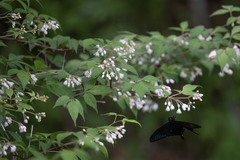 Staphylea bumalda Bumald's bladdernut Photo: CC BY, Kristof Zyskowski
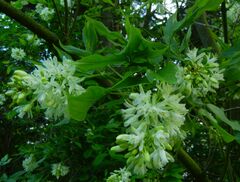 Staphylea colchica Caucasian bladdernut Photo: CC BY, Jon Mortin
 Staphylea emodi Himalayan bladdernut Photo: CC BY-SA, Vinayaraj
 Staphylea holocarpa Chinese Bladdernut Photo: CC BY-SA, peganum from Small Dole, England
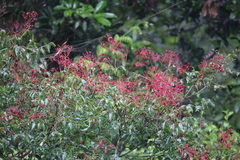 Staphylea japonica Common Euscaphis Photo: CC BY, 胡正恆(Jackson Hu)
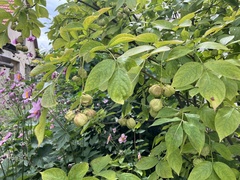 Staphylea pinnata Bladdernut Photo: CC BY, Pavel Kacl
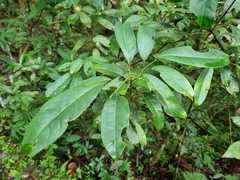 Staphylea ternata Staphyleaceae Photo: CC BY, Cesar Ormazabal
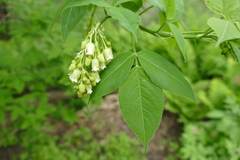 Staphylea trifolia American bladdernut Photo: CC BY-SA, Amy MacPherson
Names & registers
WFO Plant List (2026-06) holds the name, not yet placed. World Flora Online, CC0; read 2026-11-13.
Published in Gartenflora 37: 499 (1888) (the page on BHL) (WCVP, RBG Kew, file of 2026-06-04; page by BHL’s resolver for this citation)
Elsewhere not asked: this page has no Wikidata item.
Chromosomes no count in ChromoDB's IAPT/IOPB set (the file holds no count under IPNI id 785254-1). ChromoDB, IAPT/IOPB chromosome data (Simon, Bosch & Blanché), version 3.1 of 8 November 2026, CC BY 4.0; read 2026-11-13.
Parents
Kew's World Checklist gives this hybrid's parents as “S. colchica × S. pinnata” (WCVP, RBG Kew, file of 2026-06-04). Each parent's own habitat is shown beside the other's, not combined.
| Parent | Coldest month, mean low | Warmest month, mean high | Rain a year | Record low |
|---|---|---|---|---|
| Staphylea colchica | -0.5 °C CHELSA V2.1 1981–2010 | 25.1 °C CHELSA V2.1 1981–2010 | 2,203 mm median across the range, CHELSA V2.1 1981–2010 | -16.1 °C in 44 years, NASA POWER (MERRA-2) daily 1981–2024 |
| Derived 2026-11-18 for Staphylea colchica's page. | ||||
| Staphylea pinnata | -3.3 °C CHELSA V2.1 1981–2010 | 23.2 °C CHELSA V2.1 1981–2010 | 835 mm median across the range, CHELSA V2.1 1981–2010 | -21.6 °C in 44 years, NASA POWER (MERRA-2) daily 1981–2024 |
| Derived 2026-11-18 for Staphylea pinnata's page. | ||||
The record
Predicted extinction risk no prediction for this name: the file holds no row under IPNI id 785254-1. Bachman et al. 2024, New Phytologist; Kew's data of 1 February 2024, CC BY 4.0; read 2026-11-13.
CITES Not in the CITES Appendices (the edition in force from 5 March 2026): no listing of its name, its genus or its family. CITES Appendices I, II and III, valid from 5 March 2026; read 2026-11-13. The Appendices
Every figure here is derived from public data by a stated rule and names its source; nothing about this species is written for its page by a person or by AI, apart from the marked, credited quotations. How →
Where this page came from built 2026-11-18
gbif.species answeredasked 2026-11-18gbif.synonyms answeredasked 2026-11-18gbif.vernacular answeredasked 2026-11-18names fetched 2026-11-18wcvp.distribution answeredas of 2026-06-04gbif.occurrences nothing to reportasked 2026-11-18climate nothing to reportasked 2026-11-18no georeferenced record inside the rangewikidata nothing to reportasked 2026-11-18no taxon item carries its GBIF key or Kew's IPNI identifier for it, or the name as its label or an aliaswikipedia nothing to reportasked 2026-11-18inat.taxon nothing to reportasked 2026-11-18gbif.media nothing to reportas of 2026-10-21from the GBIF download https://doi.org/10.15468/dl.hbdw64, of 2026-10-21commons nothing to reportasked 2026-11-18openalex not askedthe reference does not ask OpenAlex for papersEvery source is recorded as having answered, reported nothing, refused, failed, not been asked, or answered twice where one answer is taken (“not taken: two items answered”), and, for a source asked when this page was built, when: the figures are as the source held them that day; a source read from a file (Kew's World Checklist, a GBIF download) says "as of" the file's day instead; a row carried from an earlier build of the page names that build instead. Only “nothing to report” is ever shown as an absence.