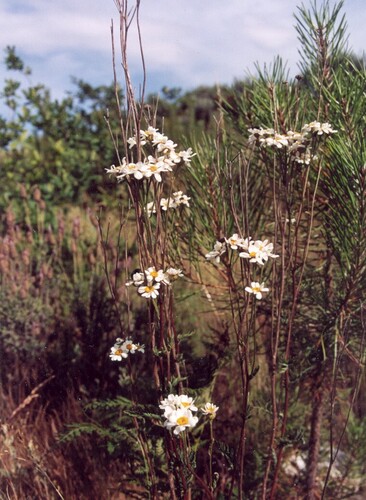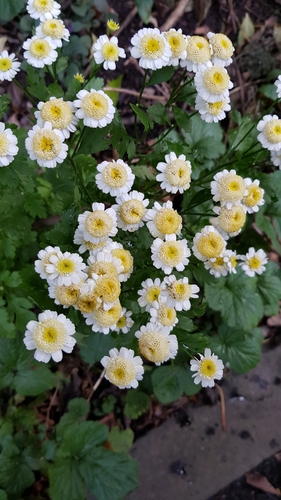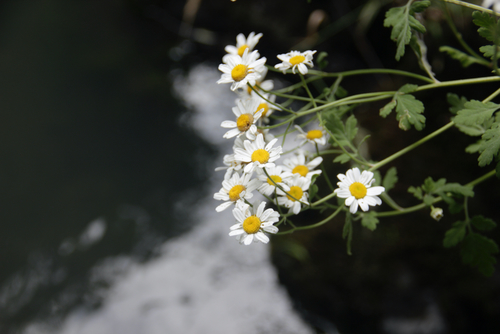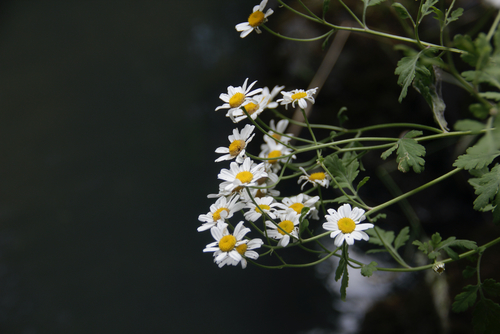
Species
+

Tanacetum parthenium (L.) Sch.Bip.

Feverfew, Mutterkraut (DE); Feverfew (EN); Hierba de Santa Maria (ES)

No habitat climate 44 photographs

Every figure on this page is derived from public data by a stated rule and says its source; nothing here is written by a person or a model, except the Wikipedia passage, which is quoted and marked as such. How it is made.

Summary

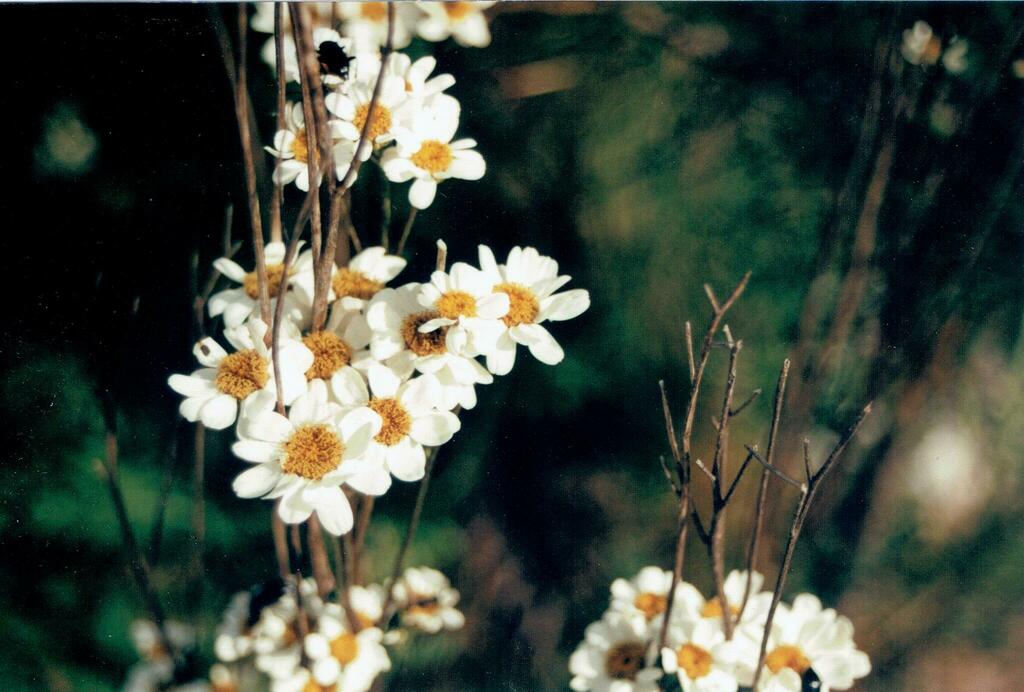
Tanacetum parthenium, known as feverfew, is a flowering plant in the daisy family, Asteraceae. It may be grown as an ornament, and may be identified by its synonyms, Chrysanthemum parthenium and Pyrethrum parthenium. Having its origin in the Balkans region, it is now distributed worldwide.

Text from Wikipedia, “Tanacetum parthenium”, CC BY-SA 4.0, quoted as written. Kept separate from everything derived here.

About the genus · Tanacetum

Tanacetum is a genus of about 160 species of flowering plants in the aster family, Asteraceae, native to many regions of the Northern Hemisphere. They are known commonly as tansies. The name tansy can refer specifically to Tanacetum vulgare, which may be called the common tansy or garden tansy for clarity. More on Wikipedia ›

The opening of Wikipedia, “Tanacetum”, CC BY-SA 4.0, quoted as written.

Family
Asteraceae
Described by
(L.) Sch.Bip.
Native to
Albania, Bulgaria, Greece +11
Wild records
none in range

Also known as Chamaemelum parthenium (L.) E.H.L.Krause; Chrysanthemum parthenium (L.) Bernh.; Chrysanthemum parthenium (L.) Cav., 1803; Chrysanthemum parthenium (L.) Pers.; Chrysanthemum parthenium f. brachyglossum Wirtg. and 45 more.

Cultivation

Nothing derived: no habitat climate for this species, and the archetype table has no figure for its genus or family.

Climate across the habitat

No habitat climate can be derived: No georeferenced record inside the range.

Natural habitat

Native range as published by WCVP.
No openly licensed record to show inside the range.
NativeAlbania, Bulgaria, Greece, Turkey-in-Europe, Yugoslavia, Krym, Transcaucasus, Afghanistan, East Aegean Is., Iran, Iraq, Turkey, Pakistan, West Himalaya· introduced: Denmark, Great Britain, Ireland, Norway, Sweden, Austria, Belgium, Czechoslovakia, Germany, Hungary, Netherlands, Poland, Switzerland, Baleares, Corse, France, Portugal, Sardegna, Spain, Italy, Kriti, Romania, Sicilia, Belarus, Baltic States, East European Russia, North European Russia, South European Russia, Ukraine, Algeria, Morocco, Azores, Canary Is., Cape Verde, Madeira, Ethiopia, Mauritius, Réunion, West Siberia, Sakhalin, Kazakhstan, Turkmenistan, Tadzhikistan, Uzbekistan, North Caucasus, Cyprus, Lebanon-Syria, China South-Central, Hainan, Inner Mongolia, Manchuria, China North-Central, Qinghai, China Southeast, Tibet, Xinjiang, India, Borneo, Malaya, Philippines, Sulawesi, Sumatera, New South Wales, Northern Territory, Queensland, South Australia, Tasmania, Victoria, Western Australia, Chatham Is., New Zealand North, New Zealand South, British Columbia, Newfoundland, Ontario, Colorado, Idaho, Montana, Oregon, Washington, Wyoming, Illinois, Minnesota, Missouri, Wisconsin, Connecticut, Indiana, Maine, Massachusetts, Michigan, New Hampshire, New Jersey, New York, Ohio, Pennsylvania, Rhode I., Vermont, West Virginia, Nevada, Utah, Alabama, Delaware, Kentucky, Maryland, Mississippi, North Carolina, South Carolina, Mexico Northeast, Mexico Northwest, Mexico Southwest, Mexico Southeast, Costa Rica, El Salvador, Guatemala, Honduras, Panama, Cuba, Dominican Republic, Venezuela, Bolivia, Colombia, Ecuador, Peru, Brazil West-Central, Brazil Northeast, Brazil Southeast, Brazil North, Brazil South, Argentina Northeast, Argentina South, Argentina Northwest, Chile Central, Chile North, Chile South, Paraguay, Uruguay
Kew's description“biennial or perennial” · “temperate”· quoted from WCVP, RBG Kew (CC BY 4.0); not derived here
Evidence usedNo georeferenced records inside the stated native range.

Photographs

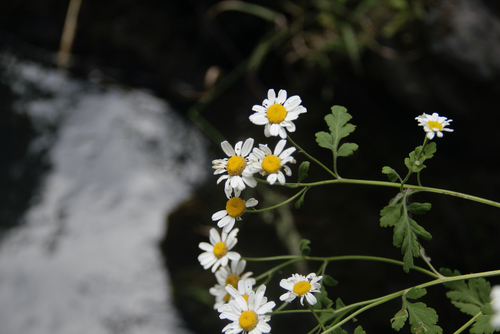
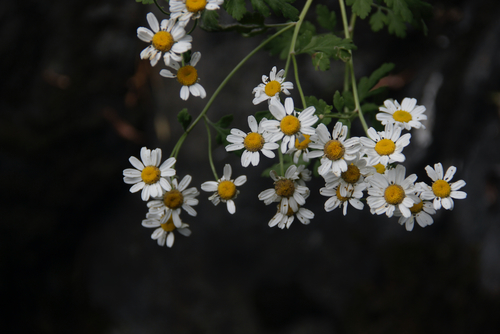
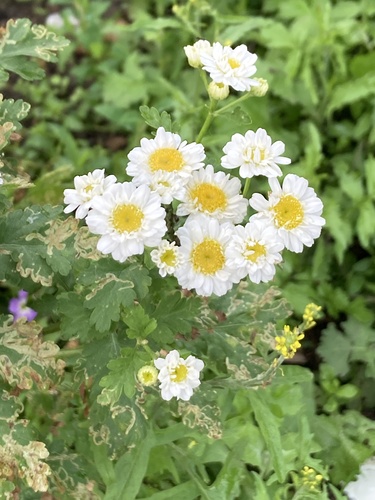
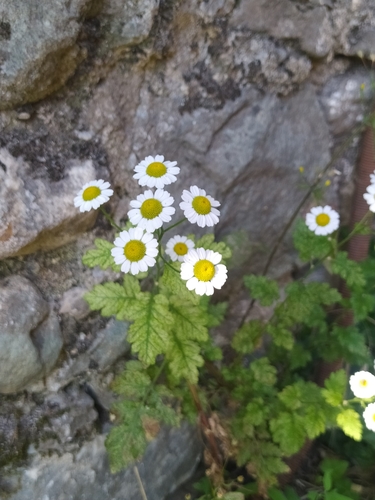
Tanacetum partheniumTanacetum partheniumTanacetum partheniumTanacetum partheniumTanacetum partheniumTanacetum partheniumTanacetum partheniumTanacetum parthenium

Photographs: (c) zebedeugalinha, some rights reserved (CC BY); no rights reserved · CC0 (2); (c) Steven Bodzin, some rights reserved (CC BY) (4); (c) Vasileia Sef, some rights reserved (CC BY).

Photographs: iNaturalist and GBIF media did not answer when this page was built; what is shown came from the sources that did.

Papers naming this species

Works whose title or abstract names Tanacetum parthenium, most cited first, from OpenAlex (CC0). A mention, not a cultivation source: nothing on this page is drawn from them.

Feverfew (Tanacetum parthenium L.): A systematic review
Anil Pareek, Manish Suthar, GarvendraS Rathore, Vijay Kumar Bansal (2011) · Pharmacognosy Reviews/Bioinformatics Trends/Pharmacognosy review
The Role of Quercetin, Flavonols and Flavones in Modulating Inflammatory Cell Function
Salvatore Chirumbolo (2010) · Inflammation & Allergy - Drug Targets
Antileishmanial Activity of Parthenolide, a Sesquiterpene Lactone Isolated from Tanacetum parthenium
Tatiana Shioji Tiuman, Tânia Ueda‐Nakamura, Diógenes Aparı́cio Garcia Cortez, Benedito Prado Dias Filho (2004) · Antimicrobial Agents and Chemotherapy
Advances in chemistry and bioactivity of parthenolide
Robert R. A. Freund, Philipp Gobrecht, Dietmar Fischer, Hans‐Dieter Arndt (2019) · Natural Product Reports
Antioxidant constituents in feverfew (Tanacetum parthenium) extract and their chromatographic quantification
Changqing Wu, Feng Chen, Xi Wang, Hyun‐Jin Kim (2005) · Food Chemistry
Feverfew for preventing migraine
Barbara Wider, Max H Pittler, Edzard Ernst (2015) · Cochrane Database of Systematic Reviews
Antinociceptive and anti-inflammatory effects of Tanacetum parthenium L. extract in mice and rats
Naveen Jain, Shrinivas K Kulkarni (1999) · Journal of Ethnopharmacology
Sesquiterpene lactones and other constituents from Tanacetum parthenium
Ferdinand Bohlmann, Christa Zdero (1982) · Phytochemistry
Targeting Thioredoxin Reductase by Parthenolide Contributes to Inducing Apoptosis of HeLa Cells
Dongzhu Duan, Junmin Zhang, Juan Yao, Yaping Liu (2016) · Journal of Biological Chemistry

Other Tanacetum 1 in the reference

History & registers

Where this page came from built 2026-09-20 · dossier v2 · node
gbif.species answeredcarried from build of 2026-09-20 (offline re-derivation; the backbone was not asked)
gbif.synonyms answeredcarried from build of 2026-09-20 (offline re-derivation; the backbone was not asked)
gbif.vernacular answeredcarried from build of 2026-09-20 (offline re-derivation; the backbone was not asked)
wcvp.distribution answered
gbif.occurrences answeredGBIF occurrence search API
climate nothing to report
wikidata answeredcarried from build of 2026-09-20 (rederive); that build: carried from build of 2026-09-19 (rederive); that build: carried from build of 2026-09-19 (rederive)
wikipedia answeredcarried from build of 2026-09-20; this build: skipped
inat.taxon not askedcarried from build of 2026-09-20 (rederive)
inat.photos.wild answeredcarried from build of 2026-09-20; this build: skipped
inat.photos.cultivated nothing to reportcarried from build of 2026-09-20 (rederive); that build: carried from build of 2026-09-19 (rederive); that build: carried from build of 2026-09-19 (rederive)
commons nothing to reportcarried from build of 2026-09-20 (rederive); that build: carried from build of 2026-09-19 (rederive); that build: carried from build of 2026-09-19 (rederive)
gbif.media did not answercarried from build of 2026-09-20 (rederive); that build: api.gbif.org not asked: offline re-derivation
openalex answeredcarried from build of 2026-09-20; this build: skipped

Every upstream is recorded as having answered, reported nothing, or refused. Only “nothing to report” is ever shown as an absence. Records came from 11 datasets via GBIF.org; each carries its own licence.