Menyanthaceae
17 species in 4 genera · 16 with a habitat climate · 17 grown, per iNaturalist
Most native to: China Southeast 6Japan 5Korea 5Queensland 5China South-Central 4Manchuria 4New South Wales 4Taiwan 4Western Australia 4Bangladesh 3Cambodia 3Florida 3
A species counts in every region it is native to. Native ranges: Kew's World Checklist of Vascular Plants (Govaerts et al., CC BY 4.0), file of 4 June 2026.
17 species
Menyanthaceae
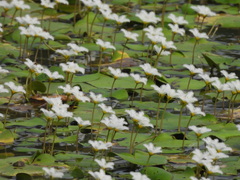 Nymphoides indica Water snowflake Photo: CC BY, Heng Chian Li
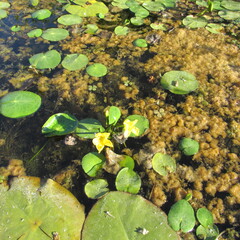 Nymphoides peltata Fringed water-lily Photo: CC BY, zebedeugalinha
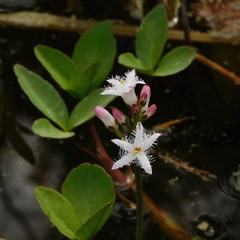 Menyanthes trifoliata Bogbean Photo: CC BY, Michael J. Papay
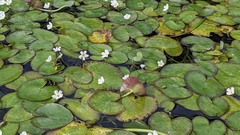 Nymphoides hydrophyllum Photo: CC BY, Cheng-Te Hsu
 Nymphoides humboldtiana Photo: CC0, lallen
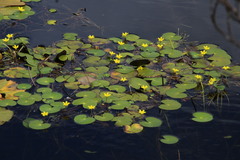 Nymphoides thunbergiana Floating Heart Photo: CC BY-SA, Tony Rebelo
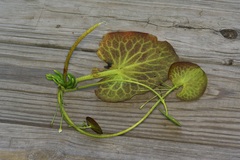 Nymphoides aquatica Banana Plant Photo: CC BY, Michelle W. (鍾偉瑋)
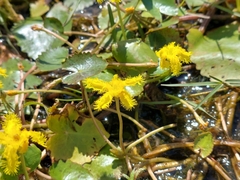 Nymphoides crenata Wavy marshwort Photo: CC BY-SA, Ruth Palsson
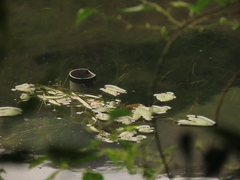 Nymphoides coreana East Asian floatingheart Photo: CC BY, chiuluan
 Nymphoides fallax Photo: CC BY, Juan Carlos Fonseca Mata
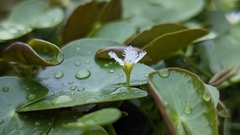 Nymphoides lungtanensis Photo: CC BY, Cheng-Te Hsu
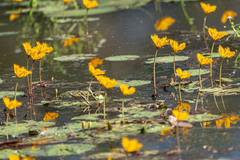 Nymphoides aurantiaca Photo: CC BY, Alan Bell
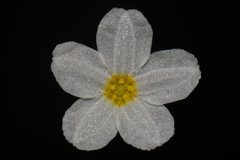 Nymphoides cordata Little floatingheart Photo: CC BY-SA, Brian Finzel
 Nymphoides geminata Entire marshwort Photo: CC BY, Jon Sullivan
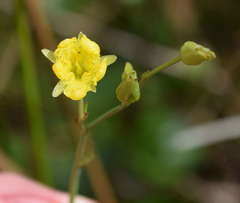 Ornduffia reniformis Photo: CC BY, Kevin Sparrow
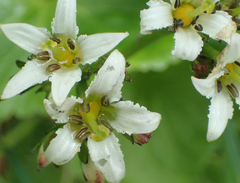 Nephrophyllidium crista-galli Deer-cabbage Photo: CC BY, Connie Taylor
 Nymphoides ezannoi Photo: CC BY-SA, Kurt Stüber
Grown: iNaturalist's observations of the species marked captive or cultivated; "not counted" where the species list does not count it. Native ranges: Kew's World Checklist of Vascular Plants (Govaerts et al., CC BY 4.0), file of 4 June 2026. Grown: iNaturalist's observations marked captive or cultivated, counted 17 October 2026 (the species list's count). Habitat climate known: the species page has a habitat climate, read from CHELSA's monthly climate and NASA POWER's daily extremes at its well-placed wild records inside Kew's native range; each page says its own sources and days. Record low: the lowest night in NASA POWER's daily series at the habitat's typical spot, as the species page gives it, held in °C to a tenth and shown in your units; each page says its own years and day read. Counts as the reference built on 19 November 2026 holds them. The CSV holds every result, not only this page's.