Aerangis
11 species in the reference · family Orchidaceae · 7 with a habitat climate · 11 grown, per iNaturalist
About the genus
Aerangis, abbreviated as Aergs in horticultural trade, is a genus of the Orchid family (Orchidaceae). The name of this genus has been derived from the Greek words 'aer' (air) and 'angos' (urn), referring to the form of the lip. It is the type genus of the subtribe Aerangidinae, which has recently been subsumed in the subtribe Angraecinae. Approximately 50 species in this genus are known mostly from tropical Africa, but also from the Comoro Islands, Madagascar and Sri Lanka.
Quoted from Wikipedia, "Aerangis", its opening paragraph, revision 1302599621, read 2026-11-08, CC BY-SA 4.0.
Where Aerangis is native
| Madagascar | 5 |
|---|---|
| Tanzania | 4 |
| Central African Republic | 3 |
| Ethiopia | 3 |
| Kenya | 3 |
| Uganda | 3 |
| Cameroon | 2 |
| Comoros | 2 |
| Guinea | 2 |
| KwaZulu-Natal | 2 |
| Malawi | 2 |
| Mozambique | 2 |
Species native to each region. A species counts in every region it is native to. Native ranges: Kew's World Checklist of Vascular Plants (Govaerts et al., CC BY 4.0), file of 4 June 2026.
11 species
Aerangis
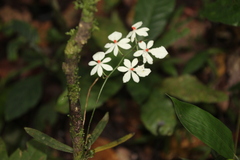 Aerangis luteoalba Photo: CC0, Erwin Sieben
 Aerangis biloba Photo: CC BY-SA, Airborne Pilot
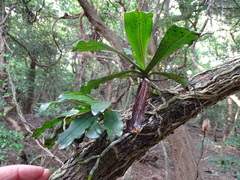 Aerangis mystacidii Subtropical Moustache Orchid Photo: CC BY, Shaun Swanepoel
 Aerangis citrata Photo: CC BY-SA, Thibaud Aronson
 Aerangis fastuosa Photo: CC BY, Kai Squires
 Aerangis hildebrandtii Photo: CC BY-SA, Dalton Holland Baptista
 Aerangis thomsonii Photo: CC0, Jean-Paul Boerekamps
 Aerangis kotschyana Photo: CC BY-SA, Dalton Holland Baptista
 Aerangis articulata Photo: CC BY-SA, Dalton Holland Baptista
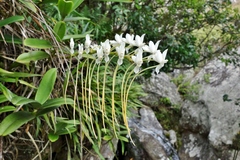 Aerangis ellisii Photo: CC BY-SA, Thibaud Aronson
 Aerangis macrocentra Photo: CC0, n_armstrong
Grown: iNaturalist's observations of the species marked captive or cultivated; "not counted" where the species list does not count it. Native ranges: Kew's World Checklist of Vascular Plants (Govaerts et al., CC BY 4.0), file of 4 June 2026. Grown: iNaturalist's observations marked captive or cultivated, counted 17 October 2026 (the species list's count). Habitat climate known: the species page has a habitat climate, read from CHELSA's monthly climate and NASA POWER's daily extremes at its well-placed wild records inside Kew's native range; each page says its own sources and days. Record low: the lowest night in NASA POWER's daily series at the habitat's typical spot, as the species page gives it, held in °C to a tenth and shown in your units; each page says its own years and day read. Counts as the reference built on 19 November 2026 holds them. The CSV holds every result, not only this page's.