Alyssum
16 species in the reference · family Brassicaceae · 11 with a habitat climate · 9 grown, per iNaturalist, 7 not counted
About the genus
Alyssum is a genus of over a hundred species of flowering plants in the family Brassicaceae, native to temperate Europe, Asia, and northern Africa, with the highest species diversity in the Mediterranean region. The genus comprises annual and perennial herbaceous plants or (rarely) small shrubs, growing to 10–100 cm tall, with oblong-oval leaves. Alyssum flowers are characteristically small and grouped in terminal clusters; they are often yellow or white colored but can be pink or purple.
Quoted from Wikipedia, "Alyssum", its opening paragraph, revision 1373559685, read 2026-11-08, CC BY-SA 4.0.
Where Alyssum is native
| Yugoslavia | 8 |
|---|---|
| Bulgaria | 7 |
| Turkey | 7 |
| Albania | 6 |
| Iran | 6 |
| Krym | 6 |
| Austria | 5 |
| Central European Russia | 5 |
| Greece | 5 |
| North Caucasus | 5 |
| Romania | 5 |
| South European Russia | 5 |
Species native to each region. A species counts in every region it is native to. Native ranges: Kew's World Checklist of Vascular Plants (Govaerts et al., CC BY 4.0), file of 4 June 2026.
16 species
Alyssum
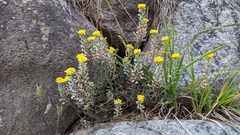 Alyssum montanum Mountain alison Photo: CC0, Philipp
 Alyssum gmelinii Photo: CC BY, Todd Patterson
Alyssum alyssoides Small alison Photo: CC BY, Alice Shanks
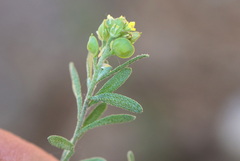 Alyssum turkestanicum Desert alyssum Photo: CC BY, Вячеслав Юсупов
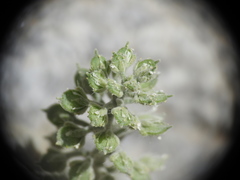 Alyssum simplex Field Alison Photo: CC BY, Yves Bas
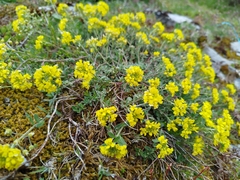 Alyssum fastigiatum Photo: CC BY, Celestino Quintela Sabarís
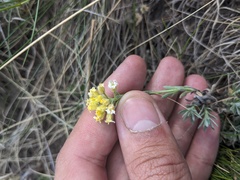 Alyssum lenense Photo: CC BY, Yuri Sofronov
 Alyssum repens Photo: CC BY, Christian Berg
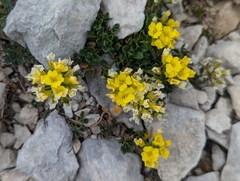 Alyssum wulfenianum Photo: CC BY, Elias
- no open photograph on file Alyssum armenum
- no open photograph on file Alyssum idaeum
- no open photograph on file Alyssum lycaonicum
 Alyssum moellendorfianum Photo: CC0, Daderot
 Alyssum pirinicum Photo: CC BY, fmunoz
 Alyssum propinquum Photo: Public domain, Daderot
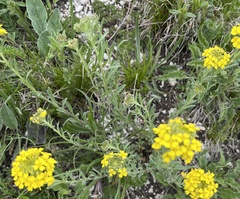 Alyssum trichostachyum Photo: CC BY, нина рафаиловна
Grown: iNaturalist's observations of the species marked captive or cultivated; "not counted" where the species list does not count it. Native ranges: Kew's World Checklist of Vascular Plants (Govaerts et al., CC BY 4.0), file of 4 June 2026. Grown: iNaturalist's observations marked captive or cultivated, counted 17 October 2026 (the species list's count). Habitat climate known: the species page has a habitat climate, read from CHELSA's monthly climate and NASA POWER's daily extremes at its well-placed wild records inside Kew's native range; each page says its own sources and days. Record low: the lowest night in NASA POWER's daily series at the habitat's typical spot, as the species page gives it, held in °C to a tenth and shown in your units; each page says its own years and day read. Counts as the reference built on 19 November 2026 holds them. The CSV holds every result, not only this page's.