Aralia
14 species in the reference · family Araliaceae · 13 with a habitat climate · 11 grown, per iNaturalist, 3 not counted
About the genus
Aralia , or spikenard, is a genus of the family Araliaceae, consisting of 68 accepted species of deciduous or evergreen trees, shrubs, and rhizomatous herbaceous perennials. The genus is native to Asia and the Americas, with most species occurring in mountain woodlands. Aralia plants vary in size, with some herbaceous species only reaching 50 centimetres (20 in) tall, while some are trees growing to 20 metres (66 ft) tall.
Quoted from Wikipedia, "Aralia", its opening paragraph, revision 1354820490, read 2026-11-08, CC BY-SA 4.0.
Where Aralia is native
| China South-Central | 6 |
|---|---|
| China Southeast | 6 |
| Illinois | 4 |
| Indiana | 4 |
| Maryland | 4 |
| New Jersey | 4 |
| North Carolina | 4 |
| Ohio | 4 |
| Pennsylvania | 4 |
| Taiwan | 4 |
| Virginia | 4 |
| West Virginia | 4 |
Species native to each region. A species counts in every region it is native to. Native ranges: Kew's World Checklist of Vascular Plants (Govaerts et al., CC BY 4.0), file of 4 June 2026.
14 species
Aralia
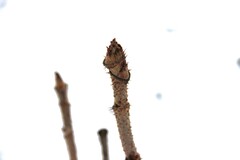 Aralia elata Japanese angelica tree Photo: CC BY, Татьяна Максимова
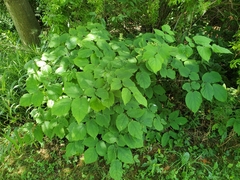 Aralia racemosa American-spikenard Photo: CC BY, Alex Zorach
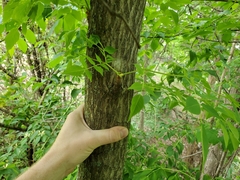 Aralia spinosa Devil's walking-stick Photo: CC BY, Will Kuhn
 Aralia cordata Japanese-spikenard Photo: CC BY, Yoshihiro Tokue
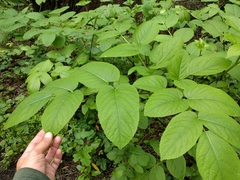 Aralia californica California spikenard Photo: CC BY, Ken-ichi Ueda
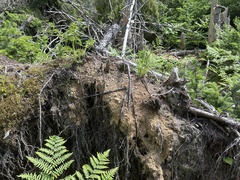 Aralia hispida Bristly sarsaparilla Photo: CC BY, Mary E. Macaulay, P.Eng.
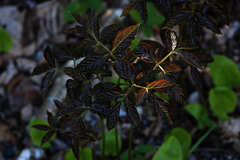 Aralia nudicaulis Wild sarsaparilla Photo: CC BY, Nick Kleinschmidt
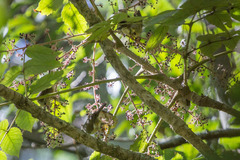 Aralia decaisneana Decaisne's spikenard Photo: CC BY, avocat
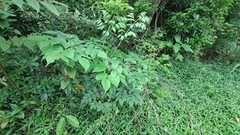 Aralia chinensis Chinese angelica-tree Photo: CC BY, CYL
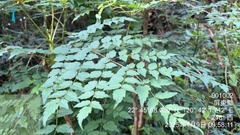 Aralia bipinnata Photo: CC BY, 謝麗霦
 Aralia continentalis Manchurian-spikenard Photo: CC BY-SA, Anneli Salo
 Aralia cachemirica Photo: CC BY-SA, Dinesh Valke
 Aralia echinocaulis Photo: CC BY-SA, peganum from Henfield, England
 Aralia undulata Photo: CC BY-SA, peganum from Henfield, England
Grown: iNaturalist's observations of the species marked captive or cultivated; "not counted" where the species list does not count it. Native ranges: Kew's World Checklist of Vascular Plants (Govaerts et al., CC BY 4.0), file of 4 June 2026. Grown: iNaturalist's observations marked captive or cultivated, counted 17 October 2026 (the species list's count). Habitat climate known: the species page has a habitat climate, read from CHELSA's monthly climate and NASA POWER's daily extremes at its well-placed wild records inside Kew's native range; each page says its own sources and days. Record low: the lowest night in NASA POWER's daily series at the habitat's typical spot, as the species page gives it, held in °C to a tenth and shown in your units; each page says its own years and day read. Counts as the reference built on 19 November 2026 holds them. The CSV holds every result, not only this page's.