Asparagus
44 species in the reference · family Asparagaceae · 43 with a habitat climate · 40 grown, per iNaturalist, 4 not counted
About the genus
Asparagus (Asparagus officinalis) or garden asparagus is a perennial flowering plant species in the genus Asparagus native to Eurasia. Widely cultivated as a vegetable crop, its young shoots are used as a spring vegetable. In 2024, world production of asparagus was 8.9 million tonnes, led by China with 87% of the total.
Quoted from Wikipedia, "Asparagus", its opening paragraph, revision 1382935701, read 2026-11-08, CC BY-SA 4.0.
Where Asparagus is native
| Cape Provinces | 18 |
|---|---|
| Northern Provinces | 13 |
| KwaZulu-Natal | 11 |
| Swaziland | 10 |
| Mozambique | 9 |
| Zimbabwe | 9 |
| Namibia | 8 |
| Tanzania | 8 |
| Canary Is. | 7 |
| Free State | 7 |
| Greece | 7 |
| Kenya | 7 |
Species native to each region. A species counts in every region it is native to. Native ranges: Kew's World Checklist of Vascular Plants (Govaerts et al., CC BY 4.0), file of 4 June 2026.
44 species
Asparagus
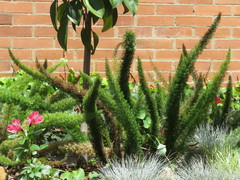 Asparagus densiflorus Asparagus fern Photo: CC BY, Juan Carlos Caicedo Hernández
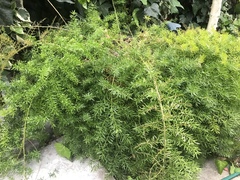 Asparagus aethiopicus Sprenger's asparagus fern Photo: CC0, o2k
 Asparagus setaceus Common asparagus fern Photo: CC BY-SA, alessandradalia
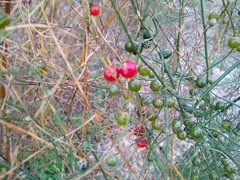 Asparagus officinalis Garden asparagus Photo: CC BY, Luke Wildfire
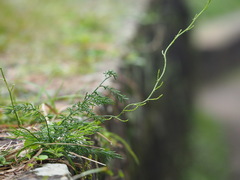 Asparagus cochinchinensis Chinese asparagus Photo: CC0, 葉子
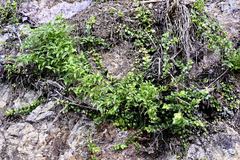 Asparagus asparagoides African asparagus fern Photo: CC BY, garywwilson
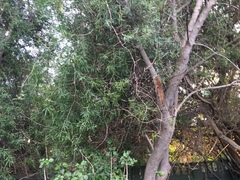 Asparagus falcatus Photo: CC BY, Caroline Voget
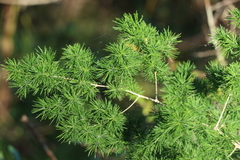 Asparagus macowanii Ming Asparagus Photo: CC BY-SA, Greg Tasney
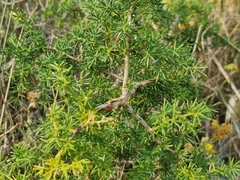 Asparagus acutifolius Wild Asparagus Photo: CC BY, Žan Rode
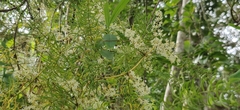 Asparagus racemosus Asparagus-fern Photo: CC BY, T R Shankar Raman
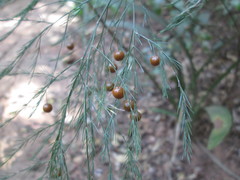 Asparagus virgatus African Broom Asparagus Photo: CC BY, Nolan Exe
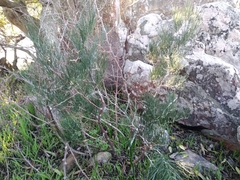 Asparagus retrofractus Photo: CC BY, De Waal Hugo
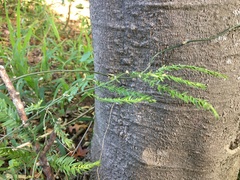 Asparagus scandens Asparagus-fern Photo: CC BY, Caroline Voget
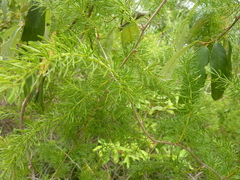 Asparagus africanus African asparagus Photo: CC BY, Tony van Kampen
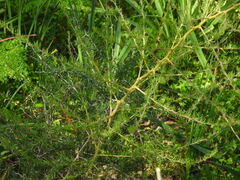 Asparagus albus Photo: CC BY, Duarte Frade
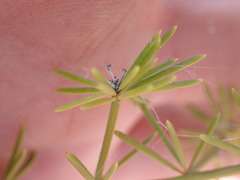 Asparagus umbellatus Photo: CC BY, W Rao
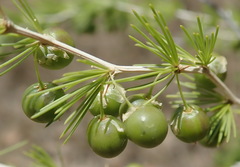 Asparagus laricinus Cluster-Leaved Asparagus Photo: CC BY-SA, Nicola van Berkel
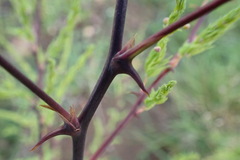 Asparagus rubicundus Redstem Asparagus Photo: CC BY-SA, Nicola van Berkel
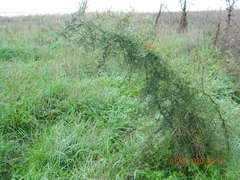 Asparagus verticillatus Vining asparagus Photo: CC BY, Galyna Mykytynets
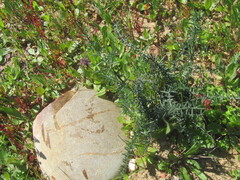 Asparagus aphyllus Mediterranean Asparagus Photo: CC BY, zebedeugalinha
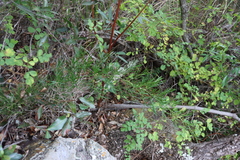 Asparagus angusticladus Photo: CC BY-SA, Tony Rebelo
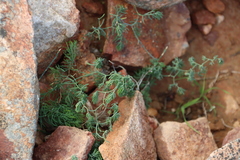 Asparagus declinatus Bridal-creeper Photo: CC BY-SA, Tony Rebelo
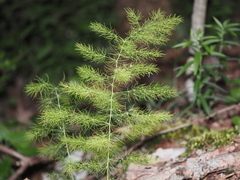 Asparagus tenuifolius Photo: CC BY, Louis Aureglia
 Asparagus scoparius Photo: CC BY, Christian Berg
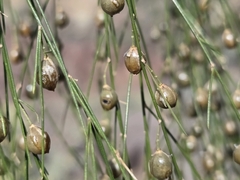 Asparagus plocamoides Photo: CC BY, Bellsprout
 Asparagus horridus Photo: CC BY, Mikko Heikkinen
 Asparagus suaveolens Bushveld Asparagus Photo: CC BY-SA, Tony Rebelo
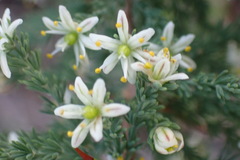 Asparagus capensis Cape Asparagus Photo: CC BY-SA, Nicola van Berkel
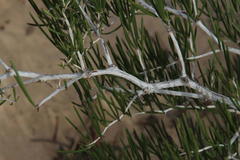 Asparagus lignosus Fire Asparagus Photo: CC BY-SA, Tony Rebelo
 Asparagus schoberioides Schoberia-like asparagus Photo: CC BY, Nina Filippova
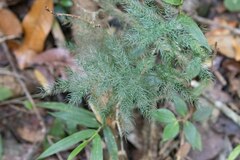 Asparagus simulans Photo: CC BY, avocat
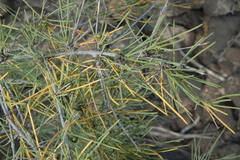 Asparagus arborescens Photo: CC BY, fmunoz
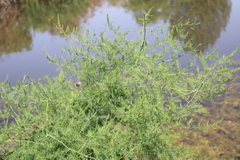 Asparagus palaestinus Photo: CC BY, yelena_antipova
 Asparagus pseudoscaber Photo: CC BY-SA, Cephas
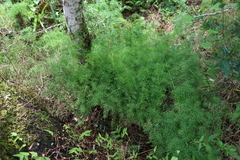 Asparagus ramosissimus Droopy Asparagus Photo: CC BY-SA, Tony Rebelo
 Asparagus filicinus Fern asparagus Photo: CC BY-SA, Raffi Kojian
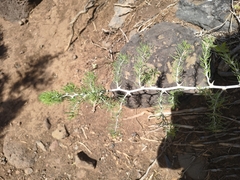 Asparagus pastorianus Hook-thorn Asparagus Photo: CC BY, Jean Jacques Godon
- no open photograph on file Asparagus drepanophyllus
 Asparagus fallax Photo: CC BY-SA, Dr. Guido Bohne
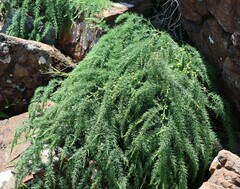 Asparagus prostratus Wild asparagus Photo: CC BY, Luke Lythgoe
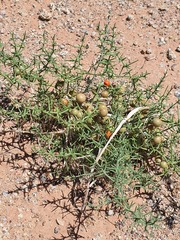 Asparagus brachyphyllus Short-leaf asparagus Photo: CC BY, Urgamal Magsar
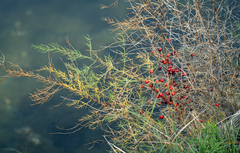 Asparagus maritimus Photo: CC BY, Wolfgang Ahlmer
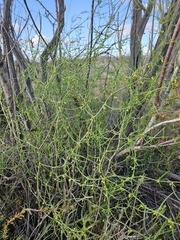 Asparagus persicus Photo: CC BY, Yeskendir Satekov
- no open photograph on file Asparagus trichophyllus
Grown: iNaturalist's observations of the species marked captive or cultivated; "not counted" where the species list does not count it. Native ranges: Kew's World Checklist of Vascular Plants (Govaerts et al., CC BY 4.0), file of 4 June 2026. Grown: iNaturalist's observations marked captive or cultivated, counted 17 October 2026 (the species list's count). Habitat climate known: the species page has a habitat climate, read from CHELSA's monthly climate and NASA POWER's daily extremes at its well-placed wild records inside Kew's native range; each page says its own sources and days. Record low: the lowest night in NASA POWER's daily series at the habitat's typical spot, as the species page gives it, held in °C to a tenth and shown in your units; each page says its own years and day read. Counts as the reference built on 19 November 2026 holds them. The CSV holds every result, not only this page's.