Boronia
10 species in the reference · family Rutaceae · 10 with a habitat climate · 10 grown, per iNaturalist
About the genus
Boronia is a genus of about 160 species of flowering plants in the citrus family Rutaceae. Most are endemic to Australia with a few species in New Caledonia, which were previously placed in the genus Boronella. They occur in all Australian states but the genus is under review and a number of species are yet to be described or have the description published. Boronias are similar to familiar plants in the genera Zieria, Eriostemon and Correa but can be distinguished from them by the number of petals or stamens. More on Wikipedia
Quoted from Wikipedia, "Boronia", its opening paragraph, revision 1354640807, read 2026-11-08, CC BY-SA 4.0.
Where Boronia is native
| New South Wales | 4 |
|---|---|
| Western Australia | 4 |
| Queensland | 3 |
| Tasmania | 1 |
| Victoria | 1 |
Species native to each region. A species counts in every region it is native to. Native ranges: Kew's World Checklist of Vascular Plants (Govaerts et al., CC BY 4.0), file of 4 June 2026.
10 species
Boronia
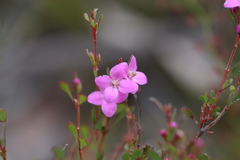 Boronia crenulata Aniseed boronia Photo: CC BY, Hugo Innes
 Boronia heterophylla Kalgan boronia Photo: CC BY-SA, Krzysztof Ziarnek, Kenraiz
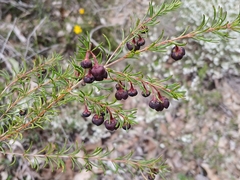 Boronia megastigma Sweet boronia Photo: CC BY, Leon Perrie
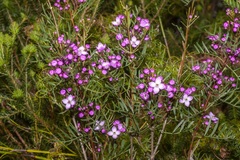 Boronia pinnata Pink Boronia Photo: CC BY, dhfischer
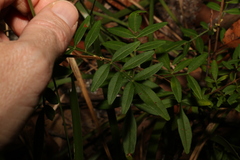 Boronia keysii Key's boronia Photo: CC BY-SA, Greg Tasney
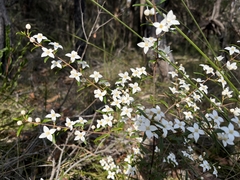 Boronia ledifolia Photo: CC BY, neilfws
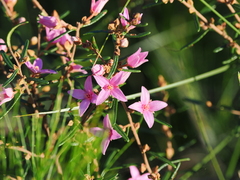 Boronia rosmarinifolia Pink Boronia Photo: CC BY, Lucas Christofides
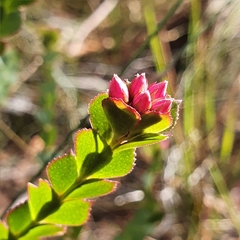 Boronia serrulata Native-rose Photo: CC BY, ronavery
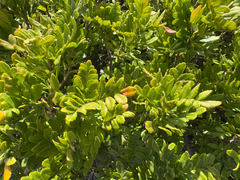 Boronia alata Winged boronia Photo: CC BY, Caleb Catto
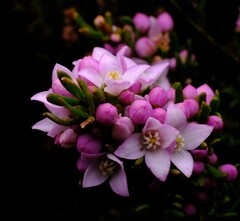 Boronia citriodora Lemon-scented Boronia Photo: CC BY, Peter Crowcroft
Grown: iNaturalist's observations of the species marked captive or cultivated; "not counted" where the species list does not count it. Native ranges: Kew's World Checklist of Vascular Plants (Govaerts et al., CC BY 4.0), file of 4 June 2026. Grown: iNaturalist's observations marked captive or cultivated, counted 17 October 2026 (the species list's count). Habitat climate known: the species page has a habitat climate, read from CHELSA's monthly climate and NASA POWER's daily extremes at its well-placed wild records inside Kew's native range; each page says its own sources and days. Record low: the lowest night in NASA POWER's daily series at the habitat's typical spot, as the species page gives it, held in °C to a tenth and shown in your units; each page says its own years and day read. Counts as the reference built on 19 November 2026 holds them. The CSV holds every result, not only this page's.