Cercis
9 species in the reference · family Fabaceae · 6 with a habitat climate · 9 grown, per iNaturalist
About the genus
Cercis is a genus of flowering plants in the subfamily Cercidoideae of the pea family Fabaceae. It contains small deciduous trees or large shrubs commonly known for the Judas tree in Europe or as redbuds in the USA. They are characterised by simple, rounded to heart-shaped leaves and pinkish-red flowers borne in the early spring on bare leafless shoots, on both branches and trunk ("cauliflory"). The genus contains ten species, native to warm temperate regions of North America, southern Europe, western and central Asia, and China.
Quoted from Wikipedia, "Cercis", its opening paragraph, revision 1373480096, read 2026-11-08, CC BY-SA 4.0.
Where Cercis is native
| China Southeast | 4 |
|---|---|
| China North-Central | 3 |
| China South-Central | 3 |
| Afghanistan | 2 |
| Iran | 2 |
| Alabama | 1 |
| Albania | 1 |
| Arizona | 1 |
| Arkansas | 1 |
| Bulgaria | 1 |
| California | 1 |
| Connecticut | 1 |
Species native to each region. A species counts in every region it is native to. Native ranges: Kew's World Checklist of Vascular Plants (Govaerts et al., CC BY 4.0), file of 4 June 2026.
9 species
Cercis
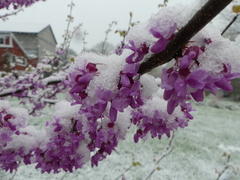 Cercis canadensis Eastern redbud Photo: CC BY, botanygirl
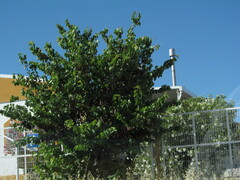 Cercis siliquastrum Judas-tree Photo: CC BY, zebedeugalinha
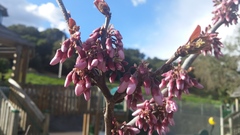 Cercis occidentalis California redbud Photo: CC BY, Jeremiah Degenhardt
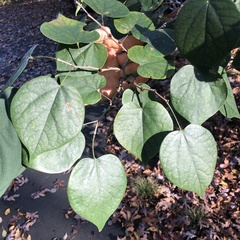 Cercis chinensis Chinese redbud Photo: CC BY, Andrew Conboy
 Cercis glabra Smooth redbud Photo: Public domain, Joshnadler
 Cercis chingii Photo: Public domain, Stickpen
 Cercis griffithii Griffith's redbud Photo: CC BY-SA, El Grafo
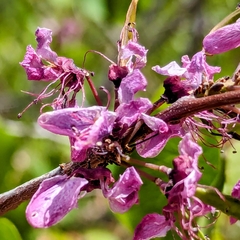 Cercis orbiculata Arizona redbud Photo: CC BY, James Fowler
 Cercis racemosa Photo: CC BY-SA, Krzysztof Golik
Grown: iNaturalist's observations of the species marked captive or cultivated; "not counted" where the species list does not count it. Native ranges: Kew's World Checklist of Vascular Plants (Govaerts et al., CC BY 4.0), file of 4 June 2026. Grown: iNaturalist's observations marked captive or cultivated, counted 17 October 2026 (the species list's count). Habitat climate known: the species page has a habitat climate, read from CHELSA's monthly climate and NASA POWER's daily extremes at its well-placed wild records inside Kew's native range; each page says its own sources and days. Record low: the lowest night in NASA POWER's daily series at the habitat's typical spot, as the species page gives it, held in °C to a tenth and shown in your units; each page says its own years and day read. Counts as the reference built on 19 November 2026 holds them. The CSV holds every result, not only this page's.