Cliffortia
8 species in the reference · family Rosaceae · 8 with a habitat climate · 8 grown, per iNaturalist
About the genus
Cliffortia, or Caperose is a genus of plants that has been assigned to the rose family, with currently 132 known species. Its species can be found in southern Africa, particularly in the Cape Floristic Region (CFR) where 124 of the species can be found, 109 of which are endemic to the CFR. Most species are ericoid shrubs, some small trees up to 5 m (161⁄2 ft) high, others more or less herbaceous groundcover. All are wind pollinated and have separate male and female flowers in the axils of the leaves, mostly individually, sometimes grouped, which may be on the same plant or on separate plants.
Quoted from Wikipedia, "Cliffortia", its opening paragraph, revision 1317783984, read 2026-11-08, CC BY-SA 4.0.
Where Cliffortia is native
| Cape Provinces | 8 |
|---|---|
| KwaZulu-Natal | 1 |
| Northern Provinces | 1 |
| Swaziland | 1 |
Species native to each region. A species counts in every region it is native to. Native ranges: Kew's World Checklist of Vascular Plants (Govaerts et al., CC BY 4.0), file of 4 June 2026.
8 species
Cliffortia
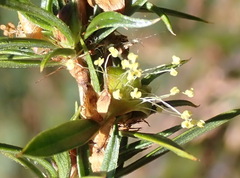 Cliffortia strobilifera Bog Rice Bush Photo: CC BY-SA, Nicola van Berkel
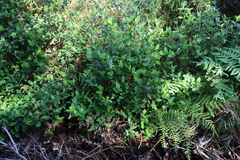 Cliffortia odorata No-odour Caperose Photo: CC BY-SA, Tony Rebelo
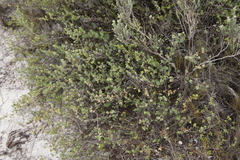 Cliffortia obcordata Diamond Caperose Photo: CC BY-SA, Tony Rebelo
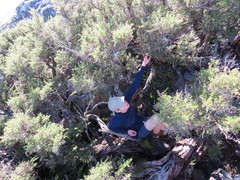 Cliffortia ruscifolia Climber's Friend Photo: CC BY, Jeremy Gilmore
 Cliffortia ferruginea Rust Caperose Photo: CC BY-SA, Nicola van Berkel
 Cliffortia ericifolia Photo: CC BY, Simon Tamblyn
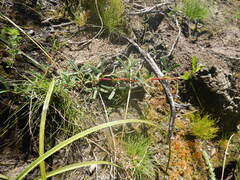 Cliffortia pedunculata Photo: CC BY-SA, James Deacon
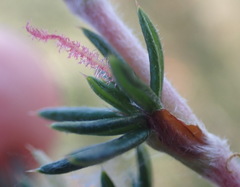 Cliffortia stricta Staid Caperose Photo: CC BY-SA, Nicola van Berkel
Grown: iNaturalist's observations of the species marked captive or cultivated; "not counted" where the species list does not count it. Native ranges: Kew's World Checklist of Vascular Plants (Govaerts et al., CC BY 4.0), file of 4 June 2026. Grown: iNaturalist's observations marked captive or cultivated, counted 17 October 2026 (the species list's count). Habitat climate known: the species page has a habitat climate, read from CHELSA's monthly climate and NASA POWER's daily extremes at its well-placed wild records inside Kew's native range; each page says its own sources and days. Record low: the lowest night in NASA POWER's daily series at the habitat's typical spot, as the species page gives it, held in °C to a tenth and shown in your units; each page says its own years and day read. Counts as the reference built on 19 November 2026 holds them. The CSV holds every result, not only this page's.