Condalia
8 species in the reference · family Rhamnaceae · 7 with a habitat climate · 8 grown, per iNaturalist
About the genus
Condalia is a genus of spiny shrubs in the tribe Rhamneae of the buckthorn family, Rhamnaceae. It was named for Antonio Condal, an 18th-century Spanish physician. Members of the genus are native to tropical and subtropical deserts and xeric shrublands in North and South America. The ranges of each species vary considerably; some are confined to only a few square miles, while others can be found on an area up to 1,000 sq mi (2,600 km2).
Quoted from Wikipedia, "Condalia", its opening paragraph, revision 1341114378, read 2026-11-08, CC BY-SA 4.0.
Where Condalia is native
| Mexico Northeast | 5 |
|---|---|
| Texas | 4 |
| Mexico Northwest | 3 |
| Arizona | 2 |
| Mexico Gulf | 2 |
| Mexico Southwest | 2 |
| New Mexico | 2 |
| Argentina Northeast | 1 |
| Argentina Northwest | 1 |
| Argentina South | 1 |
| California | 1 |
| Colombia | 1 |
Species native to each region. A species counts in every region it is native to. Native ranges: Kew's World Checklist of Vascular Plants (Govaerts et al., CC BY 4.0), file of 4 June 2026.
8 species
Condalia
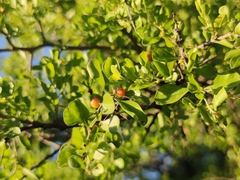 Condalia hookeri Brazilian bluewood Photo: CC BY, Liliana Ramírez-Freire
 Condalia globosa Bitter snakewood Photo: CC BY, Bob Miller
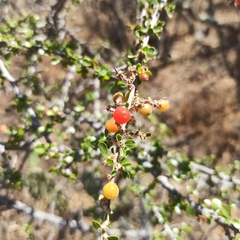 Condalia velutina Photo: CC BY, Juan Carlos Fonseca Mata
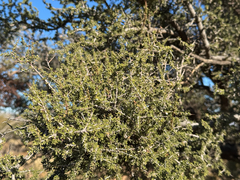 Condalia warnockii Warnock Condalia Photo: CC BY, CK2AZ
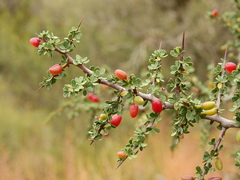 Condalia microphylla Photo: CC BY, Guillermo Debandi
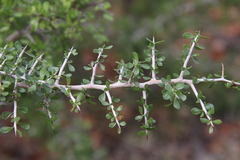 Condalia viridis Green snakewood Photo: CC BY, Millie Basden
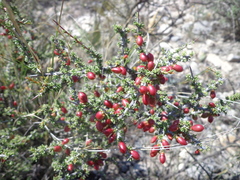 Condalia ericoides Javelina bush Photo: CC BY-SA, Leticia Jiménez Hernández
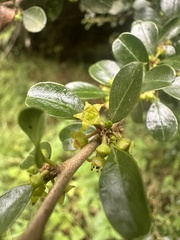 Condalia thomasiana Photo: CC BY, Nicolás Baresch Uribe
Grown: iNaturalist's observations of the species marked captive or cultivated; "not counted" where the species list does not count it. Native ranges: Kew's World Checklist of Vascular Plants (Govaerts et al., CC BY 4.0), file of 4 June 2026. Grown: iNaturalist's observations marked captive or cultivated, counted 17 October 2026 (the species list's count). Habitat climate known: the species page has a habitat climate, read from CHELSA's monthly climate and NASA POWER's daily extremes at its well-placed wild records inside Kew's native range; each page says its own sources and days. Record low: the lowest night in NASA POWER's daily series at the habitat's typical spot, as the species page gives it, held in °C to a tenth and shown in your units; each page says its own years and day read. Counts as the reference built on 19 November 2026 holds them. The CSV holds every result, not only this page's.