Coriaria
12 species in the reference · family Coriariaceae · 11 with a habitat climate · 10 grown, per iNaturalist, 2 not counted
About the genus
Coriaria is the sole genus in the family Coriariaceae, which was described by Linnaeus in 1753. It includes 14 species of small trees, shrubs and subshrubs, with a widespread but disjunct distribution across warm temperate regions of the world, occurring as far apart as the Mediterranean region, southern and eastern Asia, New Zealand (where some are alpine species), the Pacific Ocean islands, and Central and South America.
Quoted from Wikipedia, "Coriaria", its opening paragraph, revision 1306376498, read 2026-11-08, CC BY-SA 4.0.
Where Coriaria is native
| New Zealand North | 5 |
|---|---|
| New Zealand South | 4 |
| China South-Central | 2 |
| East Himalaya | 2 |
| Nepal | 2 |
| Tibet | 2 |
| Algeria | 1 |
| Argentina South | 1 |
| Baleares | 1 |
| Chatham Is. | 1 |
| Chile Central | 1 |
| Chile South | 1 |
Species native to each region. A species counts in every region it is native to. Native ranges: Kew's World Checklist of Vascular Plants (Govaerts et al., CC BY 4.0), file of 4 June 2026.
12 species
Coriaria
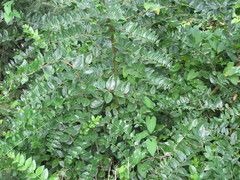 Coriaria myrtifolia Mediterranean coriaria Photo: CC BY-SA, Grzegorz Grzejszczak
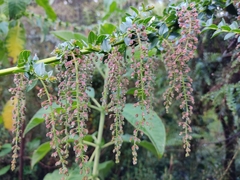 Coriaria ruscifolia Photo: CC BY, sandy-espinozaf
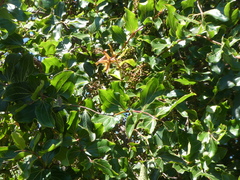 Coriaria arborea Tree Tutu Photo: CC BY, Doug Miller
 Coriaria intermedia Photo: CC0, 葉子
 Coriaria japonica Photo: CC BY-SA, harum.koh
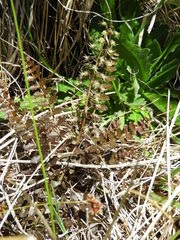 Coriaria pottsiana Hikurangi tutu Photo: CC BY, Santiago Martín-Bravo
 Coriaria sarmentosa Photo: CC BY, Saryu Mae 前 朝琉
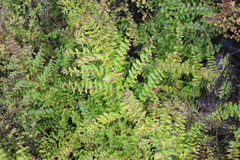 Coriaria kingiana Photo: CC BY, Joe Dillon
Coriaria plumosa Feathery tutu Photo: CC BY, John Barkla
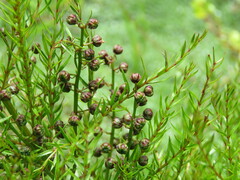 Coriaria angustissima Photo: CC BY, William Harland
 Coriaria napalensis Photo: CC BY-SA, Salicyna
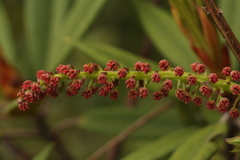 Coriaria terminalis Photo: CC BY, Siddarth Machado
Grown: iNaturalist's observations of the species marked captive or cultivated; "not counted" where the species list does not count it. Native ranges: Kew's World Checklist of Vascular Plants (Govaerts et al., CC BY 4.0), file of 4 June 2026. Grown: iNaturalist's observations marked captive or cultivated, counted 17 October 2026 (the species list's count). Habitat climate known: the species page has a habitat climate, read from CHELSA's monthly climate and NASA POWER's daily extremes at its well-placed wild records inside Kew's native range; each page says its own sources and days. Record low: the lowest night in NASA POWER's daily series at the habitat's typical spot, as the species page gives it, held in °C to a tenth and shown in your units; each page says its own years and day read. Counts as the reference built on 19 November 2026 holds them. The CSV holds every result, not only this page's.