Crambe
9 species in the reference · family Brassicaceae · 9 with a habitat climate · 8 grown, per iNaturalist, 1 not counted
About the genus
Crambe is a genus of annual and perennial flowering plants in the family Brassicaceae, native to a variety of habitats in Europe, Turkey, southwest and central Asia and eastern Africa. They carry dense racemes of tiny white or yellow flowers on (mostly leafless) stems above the basal leaves. Crambe hispanica subsp. abyssinica, formerly known as Crambe abyssinica, is grown for the oil from the seeds that has characteristics similar to whale oil.
Quoted from Wikipedia, "Crambe", its opening paragraph, revision 1354820698, read 2026-11-08, CC BY-SA 4.0.
Where Crambe is native
| North Caucasus | 5 |
|---|---|
| Transcaucasus | 4 |
| Iran | 3 |
| Kazakhstan | 3 |
| Krym | 3 |
| Turkey | 3 |
| Afghanistan | 2 |
| Bulgaria | 2 |
| Canary Is. | 2 |
| Lebanon-Syria | 2 |
| Palestine | 2 |
| Romania | 2 |
Species native to each region. A species counts in every region it is native to. Native ranges: Kew's World Checklist of Vascular Plants (Govaerts et al., CC BY 4.0), file of 4 June 2026.
9 species
Crambe
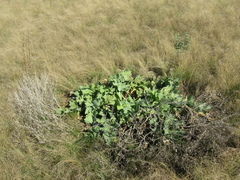 Crambe maritima Sea kale Photo: CC BY, Oleksandr Shynder
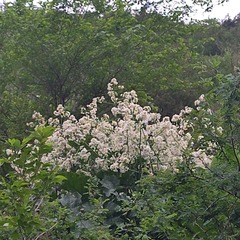 Crambe cordifolia Greater sea-kale Photo: CC BY, Alexander Dubynin
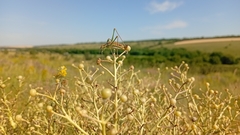 Crambe tataria Tartarian breadplant Photo: CC0, Svitlana Kyiak
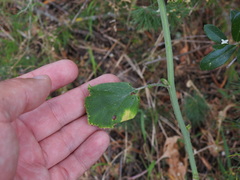 Crambe hispanica Abyssinian-kale Photo: CC BY, Duarte Frade
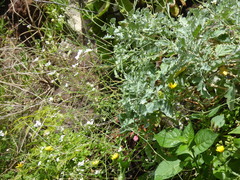 Crambe fruticosa Photo: CC BY, fmunoz
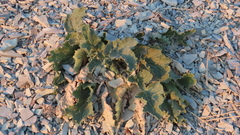 Crambe koktebelica Photo: CC BY, Виктория Билоус
 Crambe strigosa Photo: CC BY, Alessia Guggisberg
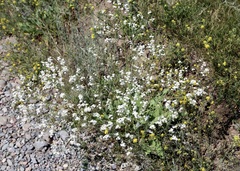 Crambe orientalis Oriental sea-kale Photo: CC BY, Dr. Alexey Yakovlev
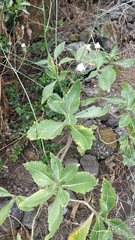 Crambe scaberrima Photo: CC BY, Ben Jobson
Grown: iNaturalist's observations of the species marked captive or cultivated; "not counted" where the species list does not count it. Native ranges: Kew's World Checklist of Vascular Plants (Govaerts et al., CC BY 4.0), file of 4 June 2026. Grown: iNaturalist's observations marked captive or cultivated, counted 17 October 2026 (the species list's count). Habitat climate known: the species page has a habitat climate, read from CHELSA's monthly climate and NASA POWER's daily extremes at its well-placed wild records inside Kew's native range; each page says its own sources and days. Record low: the lowest night in NASA POWER's daily series at the habitat's typical spot, as the species page gives it, held in °C to a tenth and shown in your units; each page says its own years and day read. Counts as the reference built on 19 November 2026 holds them. The CSV holds every result, not only this page's.