Dirca
2 species in the reference · family Thymelaeaceae · 2 with a habitat climate · 2 grown, per iNaturalist
About the genus
Dirca is a genus of three or four species of shrubby flowering plants in the family Thymelaeaceae, native to North America. The genus is named after Dirce in Greek mythology. The general common name for this deciduous shrub is leatherwood; other names include moosewood, ropebark and the Powhatan-derived name wicopy, referring to its use as a fiber, wigub in the Algonquin languages. The stems of Dirca are exceptionally pliable and the bark is difficult to tear by hand; for this reason, its stems were used by Native Americans in eastern North America as thongs or ropes. More on Wikipedia
Quoted from Wikipedia, "Dirca", its opening paragraph, revision 1338789834, read 2026-11-08, CC BY-SA 4.0.
Where Dirca is native
| Alabama | 1 |
|---|---|
| California | 1 |
| Connecticut | 1 |
| Delaware | 1 |
| District of Columbia | 1 |
| Florida | 1 |
| Georgia | 1 |
| Illinois | 1 |
| Indiana | 1 |
| Iowa | 1 |
| Kentucky | 1 |
| Louisiana | 1 |
Species native to each region. A species counts in every region it is native to. Native ranges: Kew's World Checklist of Vascular Plants (Govaerts et al., CC BY 4.0), file of 4 June 2026.
2 species
Dirca
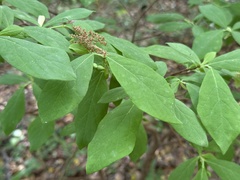 Dirca palustris Leatherwood Photo: CC BY, Matt Felperin
 Dirca occidentalis Western leatherwood Photo: CC BY, Ken-ichi Ueda
Grown: iNaturalist's observations of the species marked captive or cultivated; "not counted" where the species list does not count it. Native ranges: Kew's World Checklist of Vascular Plants (Govaerts et al., CC BY 4.0), file of 4 June 2026. Grown: iNaturalist's observations marked captive or cultivated, counted 17 October 2026 (the species list's count). Habitat climate known: the species page has a habitat climate, read from CHELSA's monthly climate and NASA POWER's daily extremes at its well-placed wild records inside Kew's native range; each page says its own sources and days. Record low: the lowest night in NASA POWER's daily series at the habitat's typical spot, as the species page gives it, held in °C to a tenth and shown in your units; each page says its own years and day read. Counts as the reference built on 19 November 2026 holds them. The CSV holds every result, not only this page's.