Eleocharis
28 species in the reference · family Cyperaceae · 28 with a habitat climate · 25 grown, per iNaturalist, 3 not counted
About the genus
Eleocharis is a virtually cosmopolitan genus of 250 or more species of flowering plants in the sedge family, Cyperaceae. The name is derived from the Greek words ἕλειος (heleios), meaning "marsh dweller," and χάρις (charis), meaning "grace." Members of the genus are known commonly as spikerushes or spikesedges. The genus has a geographically cosmopolitan distribution, with centers of diversity in the Amazon rainforest and adjacent eastern slopes of the South American Andes, northern Australia, eastern North America, California, Southern Africa, and subtropical Asia. More on Wikipedia
Quoted from Wikipedia, "Eleocharis", its opening paragraph, revision 1348083874, read 2026-11-08, CC BY-SA 4.0.
Where Eleocharis is native
| Florida | 13 |
|---|---|
| Louisiana | 13 |
| Texas | 13 |
| Mexico Northeast | 12 |
| Alabama | 11 |
| Mexico Southeast | 11 |
| Mexico Southwest | 11 |
| Bolivia | 10 |
| Georgia | 10 |
| Guatemala | 10 |
| Honduras | 10 |
| North Carolina | 10 |
Species native to each region. A species counts in every region it is native to. Native ranges: Kew's World Checklist of Vascular Plants (Govaerts et al., CC BY 4.0), file of 4 June 2026.
28 species
Eleocharis
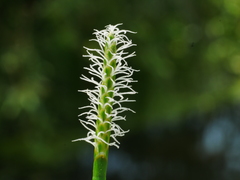 Eleocharis dulcis Chinese water chestnut Photo: CC BY, Jacy Chen
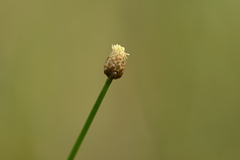 Eleocharis geniculata Canada spikesedge Photo: CC BY, 曾昱承 Yu-Cheng Zeng
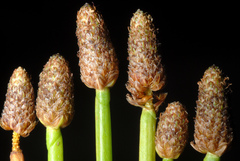 Eleocharis obtusa Blunt spikerush Photo: CC BY-SA, Douglas Goldman
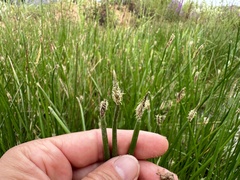 Eleocharis palustris Common spike-rush Photo: CC BY, Katrin Simon
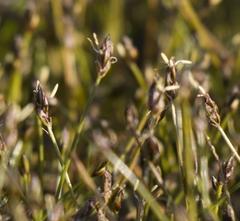 Eleocharis acicularis Needle spike-rush Photo: CC BY, Евгений Маринкин
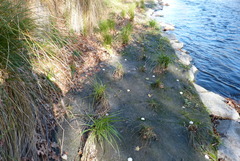 Eleocharis acuta Sharp Spike Sedge Photo: CC BY-SA, Colin Meurk
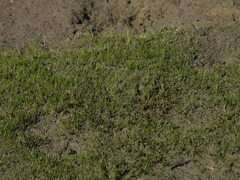 Eleocharis parvula Dwarf spike-rush Photo: CC BY, Duarte Frade
Eleocharis sphacelata Bamboo Spike Sedge Photo: CC BY-SA, Colin Meurk
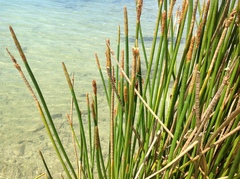 Eleocharis interstincta Knotted spikerush Photo: CC0, Bonnie Isaac
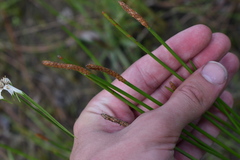 Eleocharis cellulosa Gulf Coast spikerush Photo: CC BY, Kristály Cravens-Liszak
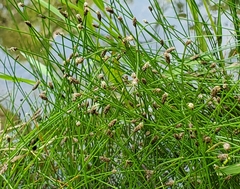 Eleocharis montevidensis Sand spike-rush Photo: CC BY, shinylatias
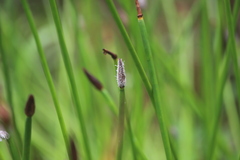 Eleocharis elegans Elegant spikerush Photo: CC BY, Steven Bodzin
 Eleocharis vivipara Viviparous spikerush Photo: CC BY, geosesarma
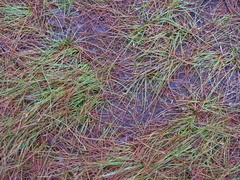 Eleocharis baldwinii Baldwin's spike-rush Photo: CC0, Yann Kemper
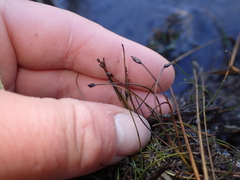 Eleocharis pusilla Photo: CC BY, Liadan Dickie
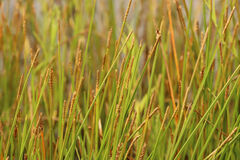 Eleocharis quadrangulata Square-stem spike-rush Photo: CC BY, hr_dragonfly
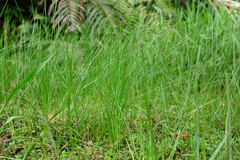 Eleocharis tetraquetra Square-stem spikerush Photo: CC BY, 國立臺灣博物館
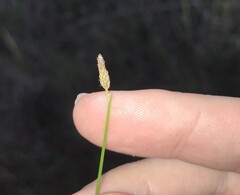 Eleocharis congesta Photo: CC0, Mason Brock
 Eleocharis exigua Rooted Spikerush Photo: CC BY, Forest & Kim Starr
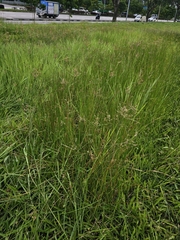 Eleocharis ochrostachys Spikerush Photo: CC BY, pbsg
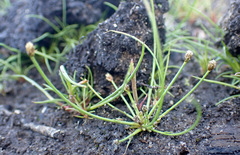 Eleocharis ovata Ovate spikerush Photo: CC BY, Thomas Gyselinck
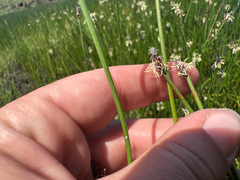 Eleocharis macrostachya Pale spikerush Photo: CC BY, Melanie J. Davis
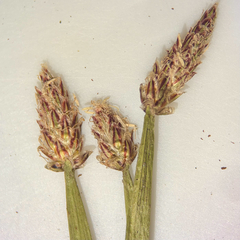 Eleocharis mamillata Soft-stem spikerush Photo: CC BY, Dustin Snider
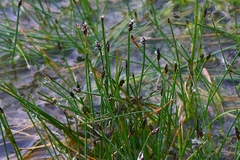 Eleocharis multicaulis Many-stalked Spike-rush Photo: CC0, Patrick Le Mao
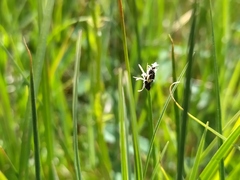 Eleocharis uniglumis Slender Spike-rush Photo: CC BY, arthur_haendler
- no open photograph on file Eleocharis dombeyana
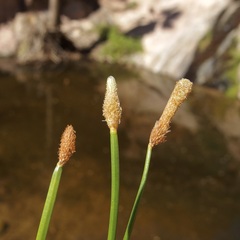 Eleocharis montana Mountain spikerush Photo: CC BY, Sue Carnahan
 Eleocharis quinqueflora Few-flowered spike-rush Photo: CC BY, Steve Matson
Grown: iNaturalist's observations of the species marked captive or cultivated; "not counted" where the species list does not count it. Native ranges: Kew's World Checklist of Vascular Plants (Govaerts et al., CC BY 4.0), file of 4 June 2026. Grown: iNaturalist's observations marked captive or cultivated, counted 17 October 2026 (the species list's count). Habitat climate known: the species page has a habitat climate, read from CHELSA's monthly climate and NASA POWER's daily extremes at its well-placed wild records inside Kew's native range; each page says its own sources and days. Record low: the lowest night in NASA POWER's daily series at the habitat's typical spot, as the species page gives it, held in °C to a tenth and shown in your units; each page says its own years and day read. Counts as the reference built on 19 November 2026 holds them. The CSV holds every result, not only this page's.