Erodium
29 species in the reference · family Geraniaceae · 24 with a habitat climate · 24 grown, per iNaturalist, 5 not counted
About the genus
Erodium is a genus of flowering plants in the botanical family Geraniaceae. The genus includes about 120 species with a subcosmopolitan distribution, native to Europe, North Africa, Asia, Australia, and more locally in North and South America. They are perennials, annuals, or subshrubs, with five-petalled flowers in shades of white, pink, and purple, that strongly resemble the better-known Geranium (crane's-bills). In English-speaking areas of Europe, the species are known as stork's-bills. More on Wikipedia
Quoted from Wikipedia, "Erodium", its opening paragraph, revision 1264499717, read 2026-11-08, CC BY-SA 4.0.
Where Erodium is native
| Spain | 16 |
|---|---|
| Greece | 10 |
| Turkey | 10 |
| Algeria | 9 |
| France | 9 |
| Morocco | 9 |
| Palestine | 9 |
| Lebanon-Syria | 8 |
| Corse | 7 |
| East Aegean Is. | 7 |
| Iran | 7 |
| Kriti | 7 |
Species native to each region. A species counts in every region it is native to. Native ranges: Kew's World Checklist of Vascular Plants (Govaerts et al., CC BY 4.0), file of 4 June 2026.
29 species
Erodium
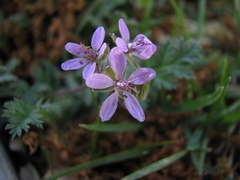 Erodium cicutarium Common stork's-bill Photo: CC BY, Rick Robb
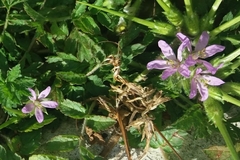 Erodium moschatum Musk stork's-bill Photo: CC BY, eyrezer
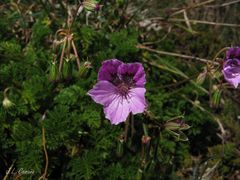 Erodium glandulosum Photo: CC0, José Luis Camaño
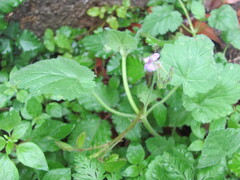 Erodium malacoides Soft stork's-bill Photo: CC BY, zebedeugalinha
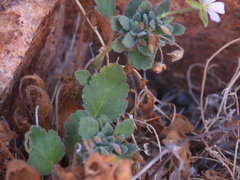 Erodium corsicum Corsican Stork's-bill Photo: CC BY, Yves Bas
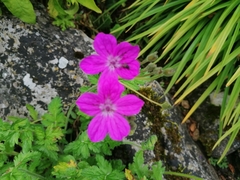 Erodium manescavi Garden stork's-bill Photo: CC BY, Daniel Buczkiewicz
 Erodium chrysanthum Photo: CC BY-SA, Meneerke bloem
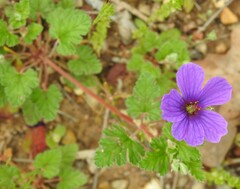 Erodium texanum Texas stork's-bill Photo: CC BY, saltyhiker
 Erodium trifolium Photo: CC BY, Michel Langeveld
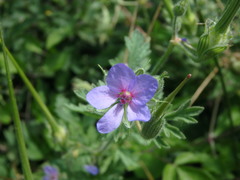 Erodium ciconium Common stork's bill Photo: CC BY, Daniel Cahen
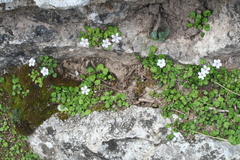 Erodium reichardii Alpine-geranium Photo: CC BY, fmunoz
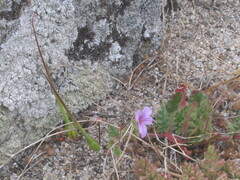 Erodium botrys Mediterranean stork's-bill Photo: CC BY, zebedeugalinha
 Erodium absinthoides Photo: CC BY-SA, ghislain118…
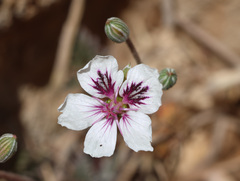 Erodium cheilanthifolium Photo: CC BY, Joey Bom
 Erodium daucoides Photo: CC BY, Denys Vynokurov
 Erodium foetidum Rock Stork's-bill Photo: CC BY, Thomas Koffel
Erodium rupicola Photo: CC BY-SA, Copernico Man
- no open photograph on file Erodium astragaloides
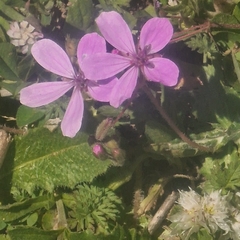 Erodium maculatum Early Stork's-bill Photo: CC BY, Bernd De Bosscher
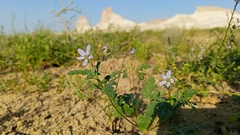 Erodium oxyrhinchum Photo: CC BY, kirinzi
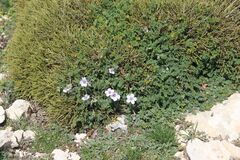 Erodium saxatile Photo: CC BY, Olivier Argagnon
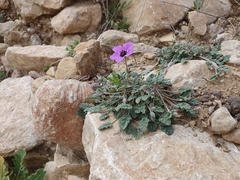 Erodium guttatum Photo: CC BY, Mehdi Chetibi
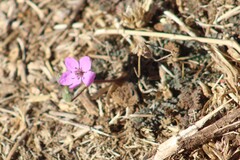 Erodium acaule Photo: CC BY, yelena_antipova
Erodium carvifolium Photo: CC BY-SA, Cesar Silvestre
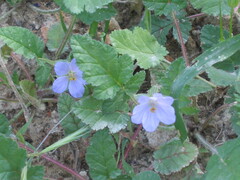 Erodium gruinum Long-beaked Stork's-bill Photo: CC BY, zebedeugalinha
 Erodium hartvigianum Golden Stork's-bill Photo: CC BY-SA, Pethan
- no open photograph on file Erodium pelargoniiflorum
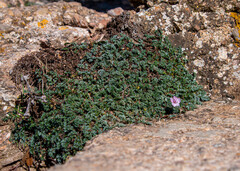 Erodium rupestre Photo: CC BY, saydelah
 Erodium vetteri Photo: CC BY-SA, Averater
Grown: iNaturalist's observations of the species marked captive or cultivated; "not counted" where the species list does not count it. Native ranges: Kew's World Checklist of Vascular Plants (Govaerts et al., CC BY 4.0), file of 4 June 2026. Grown: iNaturalist's observations marked captive or cultivated, counted 17 October 2026 (the species list's count). Habitat climate known: the species page has a habitat climate, read from CHELSA's monthly climate and NASA POWER's daily extremes at its well-placed wild records inside Kew's native range; each page says its own sources and days. Record low: the lowest night in NASA POWER's daily series at the habitat's typical spot, as the species page gives it, held in °C to a tenth and shown in your units; each page says its own years and day read. Counts as the reference built on 19 November 2026 holds them. The CSV holds every result, not only this page's.