Erythronium
29 species in the reference · family Liliaceae · 28 with a habitat climate · 23 grown, per iNaturalist, 6 not counted
About the genus
Erythronium, the fawn lily, trout lily, dog's-tooth-violet or adder's tongue, is a genus of Eurasian and North American plants in the lily family, most closely related to tulips. The name Erythronium derives from Ancient Greek ἐρυθρός (eruthrós) "red" in Greek, referring to the red flowers of E. dens-canis. Of all the established species, most live in North America; only seven species are found in Europe and Asia.
Quoted from Wikipedia, "Erythronium", its opening paragraph, revision 1349354867, read 2026-11-08, CC BY-SA 4.0.
Where Erythronium is native
| California | 14 |
|---|---|
| Oregon | 9 |
| Washington | 5 |
| Alabama | 4 |
| British Columbia | 4 |
| Kentucky | 4 |
| Missouri | 4 |
| Tennessee | 4 |
| Arkansas | 3 |
| Georgia | 3 |
| Illinois | 3 |
| Iowa | 3 |
Species native to each region. A species counts in every region it is native to. Native ranges: Kew's World Checklist of Vascular Plants (Govaerts et al., CC BY 4.0), file of 4 June 2026.
29 species
Erythronium
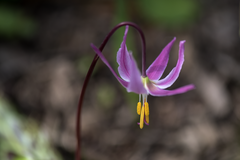 Erythronium revolutum Pink fawn lily Photo: CC BY-SA, David Badke
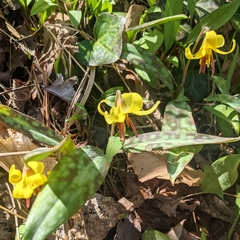 Erythronium americanum Trout-lily Photo: CC BY, C Fishtahler
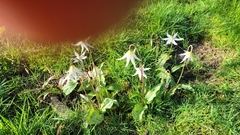 Erythronium oregonum Giant white fawn lily Photo: CC BY, Kevin Krebs
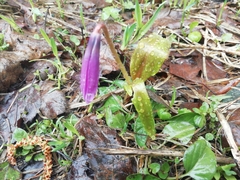 Erythronium sibiricum Siberian Fawn Lily Photo: CC0, Marina Potapova
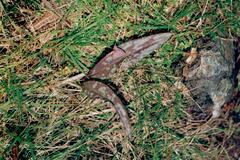 Erythronium dens-canis Dog's-tooth-violet Photo: CC BY, zebedeugalinha
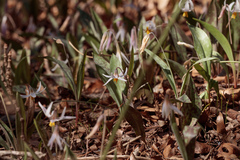 Erythronium albidum White trout lily Photo: CC BY, Victor Engel
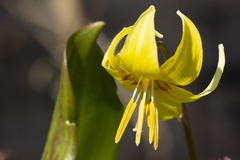 Erythronium grandiflorum Glacier lily Photo: CC BY, Tina Ellegaard Poulsen
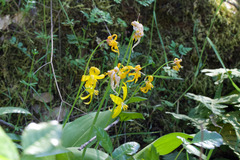 Erythronium tuolumnense Tuolumne fawn-lily Photo: CC BY, Arvel Hernandez
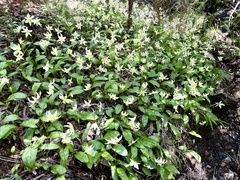 Erythronium californicum California fawn-lily Photo: CC BY, Roger Raiche
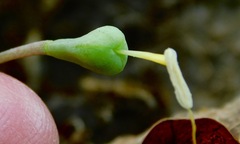 Erythronium umbilicatum Dimpled trout lily Photo: CC BY, Michael J. Papay
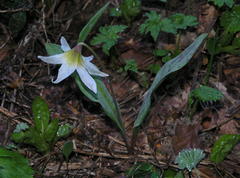 Erythronium caucasicum Caucasian Dog's Tooth Violet Photo: CC BY, Oleg Kosterin
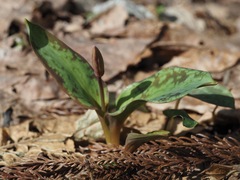 Erythronium japonicum Asian fawnlily Photo: CC BY, ITÔ, Hiroki
- no open photograph on file Erythronium krylovii Tuvan Trout-lily
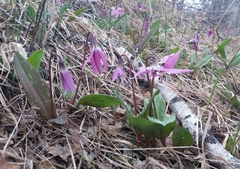 Erythronium sulevii Photo: CC BY, Nina Filippova
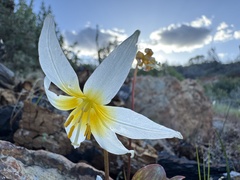 Erythronium helenae Pacific fawnlily Photo: CC BY, wonton_soup
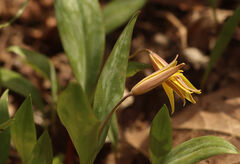 Erythronium rostratum Beaked trout-lily Photo: CC BY, hr_dragonfly
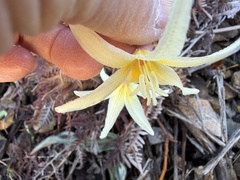 Erythronium citrinum Cream Fawn Lily Photo: CC BY, Dee Shea Himes
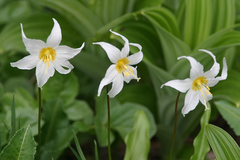 Erythronium montanum White avalanche lily Photo: CC BY, Cindy Bell
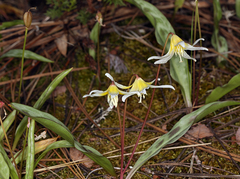 Erythronium multiscapideum Sierra Fawn Lily Photo: CC BY, Steve Matson
 Erythronium hendersonii Henderson's fawn-lily Photo: CC BY-SA, J Brew
 Erythronium propullans Minnesota dwarf trout lily Photo: CC BY, Liren Varghese
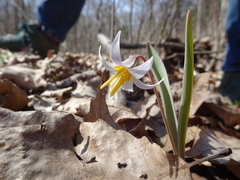 Erythronium mesochoreum Midland fawnlily Photo: CC BY, Thomas Koffel
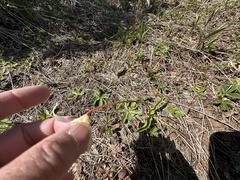 Erythronium elegans Coast Range Fawn-lily Photo: CC BY, Dee Shea Himes
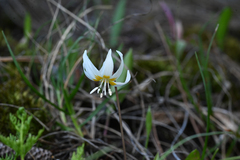 Erythronium howellii Howell's fawn lily Photo: CC BY, Trevor Van Loon
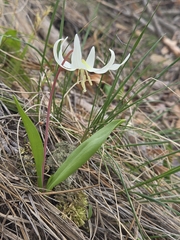 Erythronium idahoense Photo: CC BY, RJ Baltierra
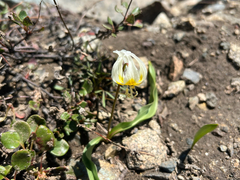 Erythronium klamathense Klamath fawn-lily Photo: CC0, calibas
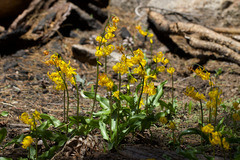 Erythronium pluriflorum Manyflower fawnlily Photo: CC BY, Arvel Hernandez
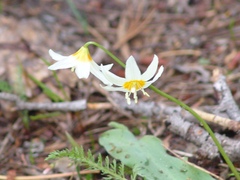 Erythronium purpurascens Purple Fawn Lily Photo: CC BY, Michael Warner
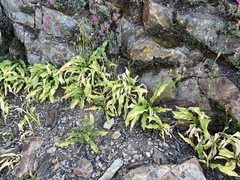 Erythronium pusaterii Kaweah Lakes fawnlily Photo: CC BY, Ryan Donnelly
Grown: iNaturalist's observations of the species marked captive or cultivated; "not counted" where the species list does not count it. Native ranges: Kew's World Checklist of Vascular Plants (Govaerts et al., CC BY 4.0), file of 4 June 2026. Grown: iNaturalist's observations marked captive or cultivated, counted 17 October 2026 (the species list's count). Habitat climate known: the species page has a habitat climate, read from CHELSA's monthly climate and NASA POWER's daily extremes at its well-placed wild records inside Kew's native range; each page says its own sources and days. Record low: the lowest night in NASA POWER's daily series at the habitat's typical spot, as the species page gives it, held in °C to a tenth and shown in your units; each page says its own years and day read. Counts as the reference built on 19 November 2026 holds them. The CSV holds every result, not only this page's.