Furcraea
26 species in the reference · family Asparagaceae · 16 with a habitat climate · 12 grown, per iNaturalist, 14 not counted
About the genus
Furcraea is a genus of succulent plants belonging to the family Asparagaceae, native to tropical regions of Mexico, the Caribbean, Central America and northern South America. Some species are also naturalized in parts of Africa, the United States (Florida), Portugal, Thailand, India, and Australia, as well as on various oceanic islands. Plants of this genus are the origin of fique or cabuyo, a natural fiber.
Quoted from Wikipedia, "Furcraea", its opening paragraph, revision 1366137105, read 2026-11-08, CC BY-SA 4.0.
Where Furcraea is native
| Mexico Southeast | 7 |
|---|---|
| Mexico Southwest | 7 |
| Colombia | 5 |
| Venezuela | 4 |
| Bolivia | 3 |
| Cuba | 3 |
| Dominican Republic | 3 |
| Ecuador | 3 |
| El Salvador | 3 |
| Guatemala | 3 |
| Haiti | 3 |
| Honduras | 3 |
Species native to each region. A species counts in every region it is native to. Native ranges: Kew's World Checklist of Vascular Plants (Govaerts et al., CC BY 4.0), file of 4 June 2026.
26 species
Furcraea
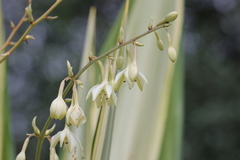 Furcraea foetida Mauritius hemp Photo: CC BY, 胡正恆(Jackson Hu)
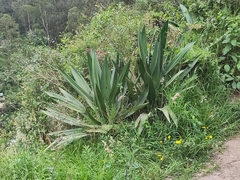 Furcraea andina Photo: CC0, Andra Waagmeester
 Furcraea cabuya Photo: CC BY, Carlos Domínguez-Rodríguez
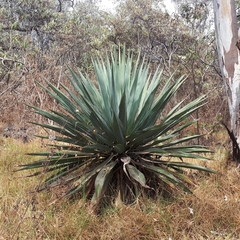 Furcraea parmentieri Weeping furcraea Photo: CC BY, Lilian Molina
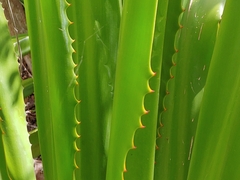 Furcraea tuberosa Karata Photo: CC BY-SA, Kurt Miller
 Furcraea macdougallii MacDougall's Century Plant Photo: CC BY, Drew Avery
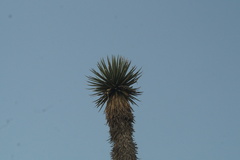 Furcraea longaeva Photo: CC BY, Carlos Domínguez-Rodríguez
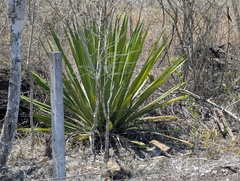 Furcraea hexapetala Cuban hemp Photo: CC0, Zoltán Stekkelpak
- no open photograph on file Furcraea pubescens
- no open photograph on file Furcraea samalana
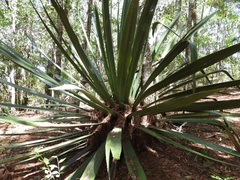 Furcraea guatemalensis Photo: CC BY, Neptalí Ramírez Marcial
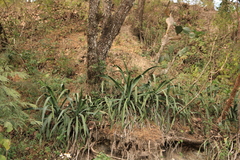 Furcraea guerrerensis Photo: CC BY, Ricardo Betancourt Sánchez
- no open photograph on file Furcraea abisaii
- no open photograph on file Furcraea acaulis
- no open photograph on file Furcraea antillana
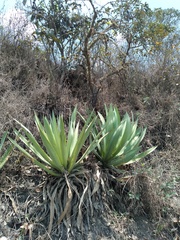 Furcraea boliviensis Photo: CC0, Alfredo F. Fuentes Claros
- no open photograph on file Furcraea depauperata
- no open photograph on file Furcraea flavoviridis
- no open photograph on file Furcraea martinezii
- no open photograph on file Furcraea niquivilensis
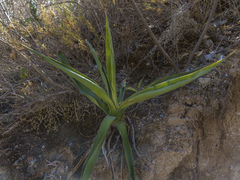 Furcraea occidentalis Photo: CC BY, Frank Dietze
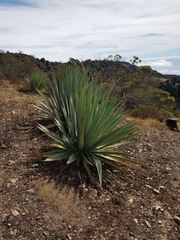 Furcraea quicheensis Photo: CC BY, Dan Riley
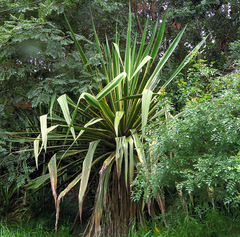 Furcraea selloa Wild sisal Photo: CC BY, Rodrigo Paiva Lázaro
- no open photograph on file Furcraea stratiotes
- no open photograph on file Furcraea stricta
 Furcraea undulata Photo: CC BY-SA, NasserHalaweh
Grown: iNaturalist's observations of the species marked captive or cultivated; "not counted" where the species list does not count it. Native ranges: Kew's World Checklist of Vascular Plants (Govaerts et al., CC BY 4.0), file of 4 June 2026. Grown: iNaturalist's observations marked captive or cultivated, counted 17 October 2026 (the species list's count). Habitat climate known: the species page has a habitat climate, read from CHELSA's monthly climate and NASA POWER's daily extremes at its well-placed wild records inside Kew's native range; each page says its own sources and days. Record low: the lowest night in NASA POWER's daily series at the habitat's typical spot, as the species page gives it, held in °C to a tenth and shown in your units; each page says its own years and day read. Counts as the reference built on 19 November 2026 holds them. The CSV holds every result, not only this page's.