Grusonia
10 species in the reference · family Cactaceae · 10 with a habitat climate · 10 grown, per iNaturalist
About the genus
Grusonia is a genus of opuntioid cacti (family Cactaceae), originating from the North American Deserts in Southwest United States and northern Mexico, including Baja California. Authors differ on precise boundaries of the genus, which has been included in Cylindropuntia. Corynopuntia, also known as club chollas (or "perritos" in Mexico), is now a synonym, with the genus originally being described by Knuth in 1935. Molecular phylogenetic studies suggest that it should be included in Grusonia, a view accepted by Plants of the World Online as of June 2021.
Quoted from Wikipedia, "Grusonia", its opening paragraph, revision 1377808301, read 2026-11-08, CC BY-SA 4.0.
Where Grusonia is native
| Mexico Northeast | 7 |
|---|---|
| Texas | 4 |
| Mexico Northwest | 3 |
| New Mexico | 3 |
| Arizona | 2 |
| California | 1 |
| Mexico Southwest | 1 |
Species native to each region. A species counts in every region it is native to. Native ranges: Kew's World Checklist of Vascular Plants (Govaerts et al., CC BY 4.0), file of 4 June 2026.
10 species
Grusonia
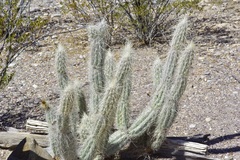 Grusonia bradtiana Photo: CC BY, Michelle W. (鍾偉瑋)
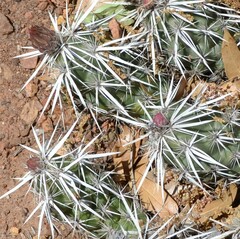 Grusonia clavata Club-cholla Photo: CC BY, Craig Hensley
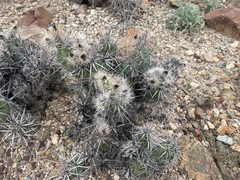 Grusonia invicta Photo: CC BY-SA, lejones417
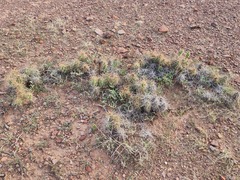 Grusonia emoryi Devil club cholla Photo: CC BY, Trevor Harding
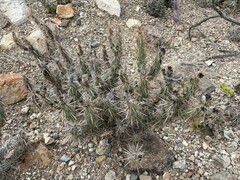 Grusonia kunzei Kunze club-cholla Photo: CC BY-SA, lejones417
 Grusonia grahamii Graham's club cholla Photo: CC BY, Ad Konings
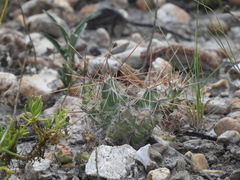 Grusonia schottii Big Bend Pricklypear Photo: CC BY, Joseph Aubert
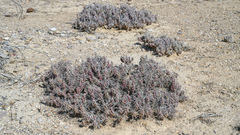 Grusonia aggeria Big Bend Club-cholla Photo: CC BY, Frank Sengpiel
 Grusonia bulbispina Tiny Mound Cholla Photo: CC BY, P Gonzalez Zamora
 Grusonia moelleri Photo: CC BY-SA, C T Johansson
Grown: iNaturalist's observations of the species marked captive or cultivated; "not counted" where the species list does not count it. Native ranges: Kew's World Checklist of Vascular Plants (Govaerts et al., CC BY 4.0), file of 4 June 2026. Grown: iNaturalist's observations marked captive or cultivated, counted 17 October 2026 (the species list's count). Habitat climate known: the species page has a habitat climate, read from CHELSA's monthly climate and NASA POWER's daily extremes at its well-placed wild records inside Kew's native range; each page says its own sources and days. Record low: the lowest night in NASA POWER's daily series at the habitat's typical spot, as the species page gives it, held in °C to a tenth and shown in your units; each page says its own years and day read. Counts as the reference built on 19 November 2026 holds them. The CSV holds every result, not only this page's.