Hydnophytum
3 species in the reference · family Rubiaceae · 2 with a habitat climate · 3 grown, per iNaturalist
About the genus
Hydnophytum is a genus of epiphytic myrmecophytes (ant plants) native to Southeast Asia, the Pacific region and also extending into Queensland in northern Australia. The name is derived from the Ancient Greek hydnon "tuber", and phyton "plant", after their appearance with their swollen succulent stems. The species grow in tree branches and on trunks. Like the related genus Myrmecodia, they are known as antplants or ant-house plants. More on Wikipedia
Quoted from Wikipedia, "Hydnophytum", its opening paragraph, revision 1267131334, read 2026-11-08, CC BY-SA 4.0.
Where Hydnophytum is native
| Maluku | 3 |
|---|---|
| New Guinea | 3 |
| Philippines | 2 |
| Andaman Is. | 1 |
| Bismarck Archipelago | 1 |
| Borneo | 1 |
| Cambodia | 1 |
| Jawa | 1 |
| Malaya | 1 |
| Myanmar | 1 |
| Solomon Is. | 1 |
| Sulawesi | 1 |
Species native to each region. A species counts in every region it is native to. Native ranges: Kew's World Checklist of Vascular Plants (Govaerts et al., CC BY 4.0), file of 4 June 2026.
3 species
Hydnophytum
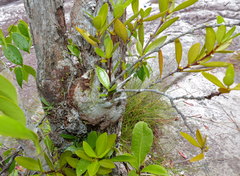 Hydnophytum formicarum Ant plant Photo: CC BY, Bernard DUPONT
 Hydnophytum moseleyanum Smooth Ant Plant Photo: CC BY, Murray Fagg
 Hydnophytum radicans Photo: CC BY-SA, Steve Fitzgerald
Grown: iNaturalist's observations of the species marked captive or cultivated; "not counted" where the species list does not count it. Native ranges: Kew's World Checklist of Vascular Plants (Govaerts et al., CC BY 4.0), file of 4 June 2026. Grown: iNaturalist's observations marked captive or cultivated, counted 17 October 2026 (the species list's count). Habitat climate known: the species page has a habitat climate, read from CHELSA's monthly climate and NASA POWER's daily extremes at its well-placed wild records inside Kew's native range; each page says its own sources and days. Record low: the lowest night in NASA POWER's daily series at the habitat's typical spot, as the species page gives it, held in °C to a tenth and shown in your units; each page says its own years and day read. Counts as the reference built on 19 November 2026 holds them. The CSV holds every result, not only this page's.