Illicium
13 species in the reference · family Schisandraceae · 5 with a habitat climate · 13 grown, per iNaturalist
About the genus
Illicium is a genus of flowering plants treated as part of the family Schisandraceae, or alternately as the sole genus of the Illiciaceae. It has a disjunct distribution, with most species native to subtropical and tropical areas of East and Southeast Asia and several in parts of North America, including the southeastern United States, Mexico, and the Caribbean. General common names include star anise and anisetree. The genus name comes from the Latin illicere ("to allure").
Quoted from Wikipedia, "Illicium", its opening paragraph, revision 1356057768, read 2026-11-08, CC BY-SA 4.0.
Where Illicium is native
| China Southeast | 7 |
|---|---|
| China South-Central | 6 |
| Myanmar | 3 |
| Vietnam | 3 |
| Florida | 2 |
| Taiwan | 2 |
| Alabama | 1 |
| Assam | 1 |
| China North-Central | 1 |
| Dominican Republic | 1 |
| East Himalaya | 1 |
| Georgia | 1 |
Species native to each region. A species counts in every region it is native to. Native ranges: Kew's World Checklist of Vascular Plants (Govaerts et al., CC BY 4.0), file of 4 June 2026.
13 species
Illicium
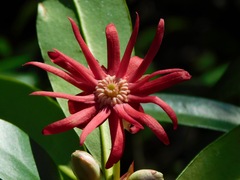 Illicium floridanum Florida anise-tree Photo: CC BY, Michael J. Papay
 Illicium parviflorum Swamp star anise Photo: CC0, Lauren Gillett
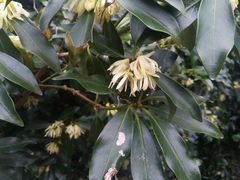 Illicium anisatum Aniseed tree Photo: CC BY-SA, harum.koh
 Illicium verum Chinese star-anise Photo: CC BY-SA, David J. Stang
 Illicium lanceolatum Guandong Star Anise Photo: CC BY-SA, Krzysztof Golik
 Illicium henryi Henry's Anise Photo: CC BY-SA, Camphora
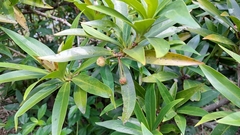 Illicium dunnianum Photo: CC BY, CYL
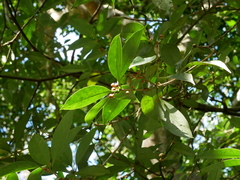 Illicium arborescens Photo: CC BY, Jacy Chen
 Illicium simonsii Anise Tree Photo: CC BY-SA, Krzysztof Ziarnek, Kenraiz
- no open photograph on file Illicium leiophyllum
- no open photograph on file Illicium merrillianum
- no open photograph on file Illicium parvifolium
 Illicium majus Photo: CC BY-SA, Krzysztof Golik
Grown: iNaturalist's observations of the species marked captive or cultivated; "not counted" where the species list does not count it. Native ranges: Kew's World Checklist of Vascular Plants (Govaerts et al., CC BY 4.0), file of 4 June 2026. Grown: iNaturalist's observations marked captive or cultivated, counted 17 October 2026 (the species list's count). Habitat climate known: the species page has a habitat climate, read from CHELSA's monthly climate and NASA POWER's daily extremes at its well-placed wild records inside Kew's native range; each page says its own sources and days. Record low: the lowest night in NASA POWER's daily series at the habitat's typical spot, as the species page gives it, held in °C to a tenth and shown in your units; each page says its own years and day read. Counts as the reference built on 19 November 2026 holds them. The CSV holds every result, not only this page's.