Isodon
10 species in the reference · family Lamiaceae · 9 with a habitat climate · 10 grown, per iNaturalist
About the genus
Isodon (teacost) is a genus of flowering plants in the family Lamiaceae described in 1840. It is native to tropical and subtropical parts of the Old World, primarily Asia but two species are from Africa. Many of the species are endemic to China, where it is called xiangchacai or "fragrant tea". In China, a rapid radiation of Isodon occurred during the Pliocene that coincided with a shift from herbs inhabiting humid areas to shrubs inhabiting dry valleys.
Quoted from Wikipedia, "Isodon", its opening paragraph, revision 1355340766, read 2026-11-08, CC BY-SA 4.0.
Where Isodon is native
| China North-Central | 6 |
|---|---|
| China South-Central | 6 |
| China Southeast | 6 |
| Japan | 4 |
| Korea | 3 |
| Manchuria | 3 |
| Primorye | 2 |
| Taiwan | 2 |
| Amur | 1 |
| Assam | 1 |
| Bangladesh | 1 |
| East Himalaya | 1 |
Species native to each region. A species counts in every region it is native to. Native ranges: Kew's World Checklist of Vascular Plants (Govaerts et al., CC BY 4.0), file of 4 June 2026.
10 species
Isodon
- no open photograph on file Isodon serra Purple-leaf bangahpul
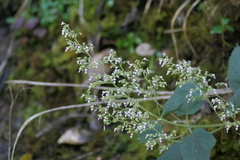 Isodon lophanthoides Photo: CC BY-SA, Dinesh Valke
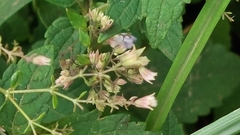 Isodon amethystoides Photo: CC BY, 賴碧珠
 Isodon rubescens Blushred Teacost Photo: CC BY-SA, Lixiaozhuo123
 Isodon effusus Raincloud Teacost Photo: CC BY, WATANABE Hitoshi 渡辺仁
 Isodon excisus Tailed-leaf isodon Photo: CC BY, Nina Filippova
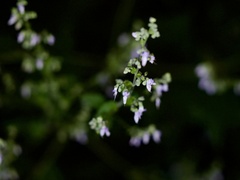 Isodon japonicus Bangahpul (East Asian soup-mint) Photo: CC BY, りなべる
 Isodon nervosus Photo: CC BY-SA, Farm
 Isodon umbrosus Photo: CC BY, Andreas Taeger
 Isodon longitubus Heavenly Teacost Photo: CC BY, りなべる
Grown: iNaturalist's observations of the species marked captive or cultivated; "not counted" where the species list does not count it. Native ranges: Kew's World Checklist of Vascular Plants (Govaerts et al., CC BY 4.0), file of 4 June 2026. Grown: iNaturalist's observations marked captive or cultivated, counted 17 October 2026 (the species list's count). Habitat climate known: the species page has a habitat climate, read from CHELSA's monthly climate and NASA POWER's daily extremes at its well-placed wild records inside Kew's native range; each page says its own sources and days. Record low: the lowest night in NASA POWER's daily series at the habitat's typical spot, as the species page gives it, held in °C to a tenth and shown in your units; each page says its own years and day read. Counts as the reference built on 19 November 2026 holds them. The CSV holds every result, not only this page's.