Larix
11 species in the reference · family Pinaceae · 10 with a habitat climate · 11 grown, per iNaturalist
About the genus
Larches are deciduous conifers in the genus Larix, of the pine family, Pinaceae. Growing to as much as 60 m (195 ft) tall, they are native to the cooler regions of the Northern Hemisphere. They grow in lowland forests in the far north, and high in mountains further south. Larches are among the dominant plants in the boreal forests of Siberia and Canada, making them the most abundant genus of trees on earth. More on Wikipedia
Quoted from Wikipedia, "Larch", its opening paragraph, revision 1380538236, read 2026-11-08, CC BY-SA 4.0.
Where Larix is native
| Alberta | 3 |
|---|---|
| British Columbia | 3 |
| China South-Central | 3 |
| Irkutsk | 3 |
| Mongolia | 3 |
| Yakutskiya | 3 |
| China North-Central | 2 |
| Idaho | 2 |
| Krasnoyarsk | 2 |
| Montana | 2 |
| Myanmar | 2 |
| Nepal | 2 |
Species native to each region. A species counts in every region it is native to. Native ranges: Kew's World Checklist of Vascular Plants (Govaerts et al., CC BY 4.0), file of 4 June 2026.
11 species
Larix
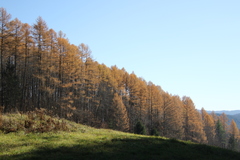 Larix decidua European larch Photo: CC BY, er-birds
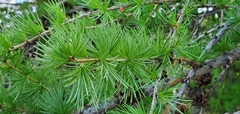 Larix sibirica Siberian larch Photo: CC BY, Sarah Vermaak
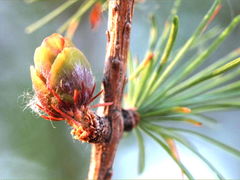 Larix laricina American larch Photo: CC BY, Peter Chen 2.0
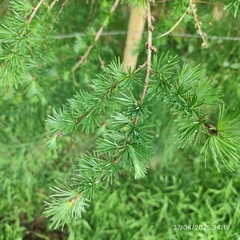 Larix kaempferi Japanese larch Photo: CC BY, Aaron Wallace
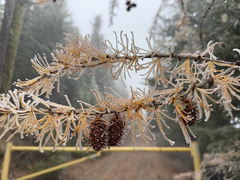 Larix occidentalis Western larch Photo: CC BY, Caleb Catto
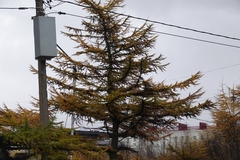 Larix gmelinii Dahurian Larch Photo: CC BY, Валерия Ковалева
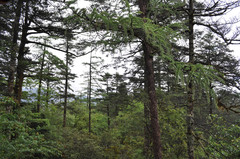 Larix potaninii Chinese larch Photo: CC BY, Ryan McMinds
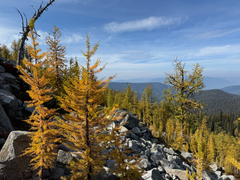 Larix lyallii Subalpine larch Photo: CC BY, Caleb Catto
 Larix × czekanowskii Photo: CC BY, Konstantin Malanchev from Moscow, Russia
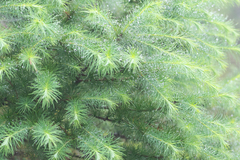 Larix griffithii Sikkim larch Photo: CC BY, Morten Ross
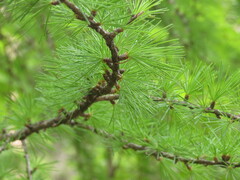 Larix mastersiana Masters' Larch Photo: CC0, Chris Wyse
Grown: iNaturalist's observations of the species marked captive or cultivated; "not counted" where the species list does not count it. Native ranges: Kew's World Checklist of Vascular Plants (Govaerts et al., CC BY 4.0), file of 4 June 2026. Grown: iNaturalist's observations marked captive or cultivated, counted 17 October 2026 (the species list's count). Habitat climate known: the species page has a habitat climate, read from CHELSA's monthly climate and NASA POWER's daily extremes at its well-placed wild records inside Kew's native range; each page says its own sources and days. Record low: the lowest night in NASA POWER's daily series at the habitat's typical spot, as the species page gives it, held in °C to a tenth and shown in your units; each page says its own years and day read. Counts as the reference built on 19 November 2026 holds them. The CSV holds every result, not only this page's.