Lecanopteris
11 species in the reference · family Polypodiaceae · 8 with a habitat climate · 11 grown, per iNaturalist
About the genus
Lecanopteris is a genus of ferns in the family Polypodiaceae, subfamily Microsoroideae, according to the Pteridophyte Phylogeny Group classification of 2016 (PPG I). They have swollen hollow rhizomes that provide homes for symbiotic ants. All are epiphytic plants that naturally occur from Southeast Asia to New Guinea. Several species are in commerce, being grown as houseplants and greenhouse curiosities.
Quoted from Wikipedia, "Lecanopteris", its opening paragraph, revision 1329364262, read 2026-11-08, CC BY-SA 4.0.
Where Lecanopteris is native
| Sulawesi | 6 |
|---|---|
| Borneo | 5 |
| Sumatera | 5 |
| Maluku | 4 |
| New Guinea | 4 |
| Philippines | 4 |
| Malaya | 3 |
| Queensland | 3 |
| Thailand | 3 |
| Bismarck Archipelago | 2 |
| Chatham Is. | 2 |
| Jawa | 2 |
Species native to each region. A species counts in every region it is native to. Native ranges: Kew's World Checklist of Vascular Plants (Govaerts et al., CC BY 4.0), file of 4 June 2026.
11 species
Lecanopteris
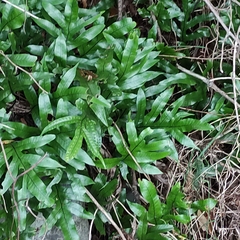 Lecanopteris pustulata Photo: CC BY, Jenny Saito
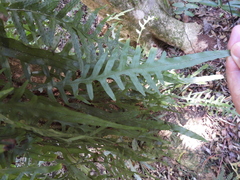 Lecanopteris scandens Photo: CC BY, Mark Clarke
 Lecanopteris deparioides Photo: CC BY, desertnaturalist
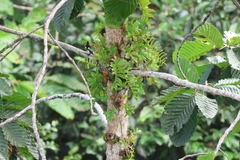 Lecanopteris crustacea Photo: CC BY, 呂一起(Lyu yi-chi)
 Lecanopteris carnosa Photo: CC BY-SA, Bernard DUPONT from FRANCE
 Lecanopteris mirabilis Photo: CC BY-SA, Steven Walling
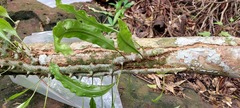 Lecanopteris sinuosa Photo: CC BY, Nguyen-Khanh-Trinh Tram
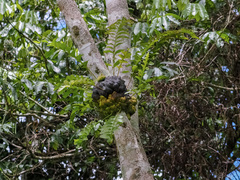 Lecanopteris celebica Photo: CC BY, Cheongweei Gan
Lecanopteris linguiformis Photo: CC BY, Cheng-Wei CHEN
- no open photograph on file Lecanopteris lomarioides
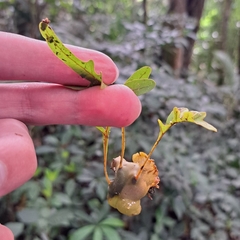 Lecanopteris pumila Photo: CC BY, Daniel Onneweer
Grown: iNaturalist's observations of the species marked captive or cultivated; "not counted" where the species list does not count it. Native ranges: Kew's World Checklist of Vascular Plants (Govaerts et al., CC BY 4.0), file of 4 June 2026. Grown: iNaturalist's observations marked captive or cultivated, counted 17 October 2026 (the species list's count). Habitat climate known: the species page has a habitat climate, read from CHELSA's monthly climate and NASA POWER's daily extremes at its well-placed wild records inside Kew's native range; each page says its own sources and days. Record low: the lowest night in NASA POWER's daily series at the habitat's typical spot, as the species page gives it, held in °C to a tenth and shown in your units; each page says its own years and day read. Counts as the reference built on 19 November 2026 holds them. The CSV holds every result, not only this page's.