Lycium
27 species in the reference · family Solanaceae · 26 with a habitat climate · 27 grown, per iNaturalist
About the genus
Lycium is a genus of flowering plants in the nightshade family, Solanaceae. The genus has a disjunct distribution around the globe, with species occurring on most continents in temperate and subtropical regions. South America has the most species, followed by North America and southern Africa. There are several scattered across Europe and Asia, and one is native to Australia. More on Wikipedia
Quoted from Wikipedia, "Lycium", its opening paragraph, revision 1365960161, read 2026-11-08, CC BY-SA 4.0.
Where Lycium is native
| Mexico Northwest | 10 |
|---|---|
| Arizona | 9 |
| California | 8 |
| Mexico Northeast | 7 |
| Cape Provinces | 5 |
| Nevada | 5 |
| Argentina Northeast | 4 |
| Argentina Northwest | 4 |
| Bolivia | 4 |
| New Mexico | 4 |
| Texas | 4 |
| Turkey | 4 |
Species native to each region. A species counts in every region it is native to. Native ranges: Kew's World Checklist of Vascular Plants (Govaerts et al., CC BY 4.0), file of 4 June 2026.
27 species
Lycium
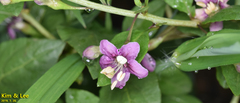 Lycium barbarum Duke of Argyll's teaplant Photo: CC BY, Kim, Hyun-tae
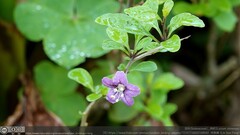 Lycium chinense Chinese teaplant Photo: CC BY-SA, 林孫鋒(Lin Sun Fong)
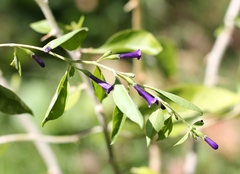 Lycium cestroides Herzog cestrum Photo: CC BY, Romi Galeota Lencina
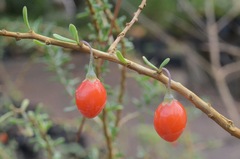 Lycium carolinianum Carolina Wolfberry Photo: CC BY, Gabriel Campbell-Martinez
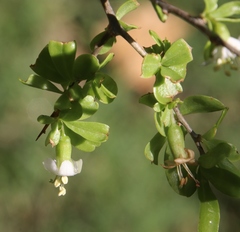 Lycium ferocissimum African boxthorn Photo: CC BY-SA, Tony Rebelo
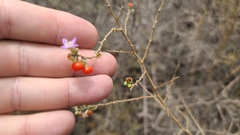 Lycium brevipes Baja desert-thorn Photo: CC0, E-C Cox
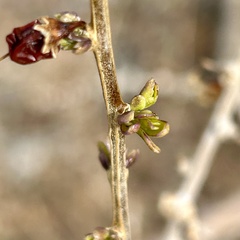 Lycium torreyi Torrey wolfberry Photo: CC BY, Elliott Gordon
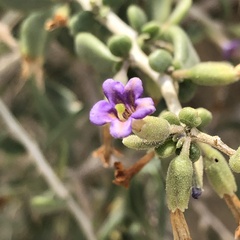 Lycium fremontii Fremont's desert-thorn Photo: CC BY, Marc Whitaker
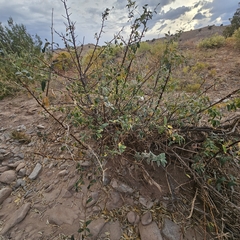 Lycium pallidum Pale desert-thorn Photo: CC BY, Indio Brown
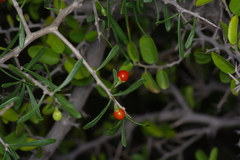 Lycium berlandieri Berlandier wolfberry Photo: CC BY, Michelle W. (鍾偉瑋)
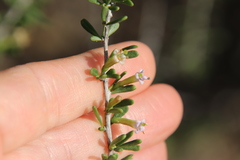 Lycium andersonii Water-jacket Photo: CC BY, Millie Basden
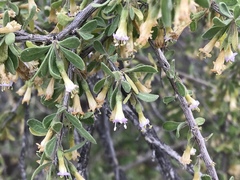 Lycium exsertum Arizona desert-thorn Photo: CC BY, CK2AZ
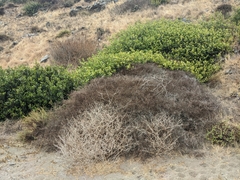 Lycium californicum California boxthorn Photo: CC BY, Aaron Kreisberg
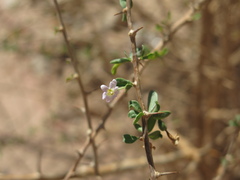 Lycium shawii Desert-thorn Photo: CC BY, Nachman bones
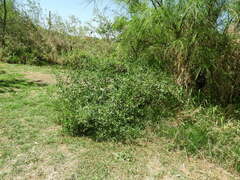 Lycium boerhaviifolium Photo: CC BY, Pablo H Capovilla
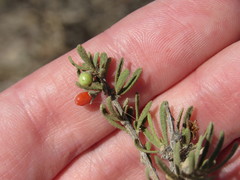 Lycium chilense Photo: CC BY, Nicolas Olejnik
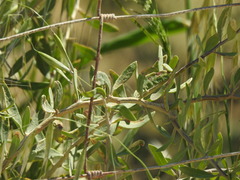 Lycium europaeum European matrimony-vine Photo: CC BY, Duarte Frade
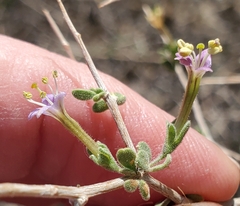 Lycium parishii Parish wolfberry Photo: CC BY, Bob Miller
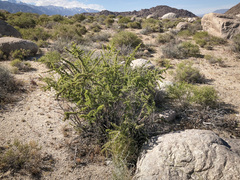 Lycium cooperi Peach-thorn Photo: CC BY, Tim Messick
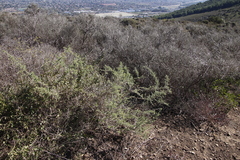 Lycium afrum Kaffir boxthorn Photo: CC BY-SA, Tony Rebelo
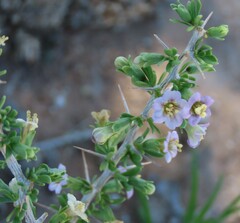 Lycium cinereum Blue Honeythorn Photo: CC0, dune_ninja
 Lycium ruthenicum Russian Box Thorn Photo: CC BY, Юрий Данилевский (Yuriy Danilevsky)
 Lycium intricatum Southern Boxthorn Photo: CC BY, Andre Hosper
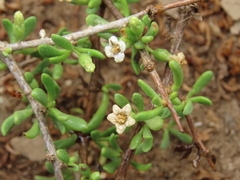 Lycium tetrandrum Cape Box-Thorn Photo: CC0, dune_ninja
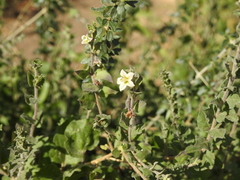 Lycium ciliatum Photo: CC BY, Eduardo Luis Beltrocco
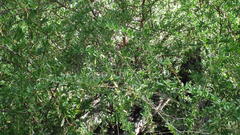 Lycium oxycarpum Cape honey-thorn Photo: CC BY, Shaun Swanepoel
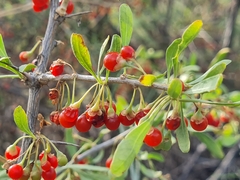 Lycium depressum Photo: CC BY, Mohammad Sohrabi
Grown: iNaturalist's observations of the species marked captive or cultivated; "not counted" where the species list does not count it. Native ranges: Kew's World Checklist of Vascular Plants (Govaerts et al., CC BY 4.0), file of 4 June 2026. Grown: iNaturalist's observations marked captive or cultivated, counted 17 October 2026 (the species list's count). Habitat climate known: the species page has a habitat climate, read from CHELSA's monthly climate and NASA POWER's daily extremes at its well-placed wild records inside Kew's native range; each page says its own sources and days. Record low: the lowest night in NASA POWER's daily series at the habitat's typical spot, as the species page gives it, held in °C to a tenth and shown in your units; each page says its own years and day read. Counts as the reference built on 19 November 2026 holds them. The CSV holds every result, not only this page's.