Phoradendron
11 species in the reference · family Santalaceae · 11 with a habitat climate · 11 grown, per iNaturalist
About the genus
Phoradendron is a genus of mistletoe, native to warm temperate and tropical regions of the Americas. The center of diversity is the Amazon rainforest. Phoradendron is the largest genus of mistletoe in the Americas, and possibly the largest genus of mistletoes in the world. Traditionally, the genus has been placed in the family Viscaceae, but recent genetic research acknowledged by the Angiosperm Phylogeny Group shows this family to be correctly placed within a larger circumscription of the sandalwood family, Santalaceae.
Quoted from Wikipedia, "Phoradendron", its opening paragraph, revision 1328845605, read 2026-11-08, CC BY-SA 4.0.
Where Phoradendron is native
| Mexico Northeast | 9 |
|---|---|
| Mexico Northwest | 8 |
| Mexico Central | 7 |
| Mexico Southwest | 7 |
| Mexico Gulf | 5 |
| Mexico Southeast | 5 |
| Texas | 5 |
| Arizona | 4 |
| California | 4 |
| New Mexico | 4 |
| Costa Rica | 3 |
| Oregon | 3 |
Species native to each region. A species counts in every region it is native to. Native ranges: Kew's World Checklist of Vascular Plants (Govaerts et al., CC BY 4.0), file of 4 June 2026.
11 species
Phoradendron
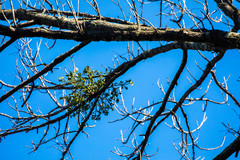 Phoradendron leucarpum Oak mistletoe Photo: CC BY, Melissa McMasters
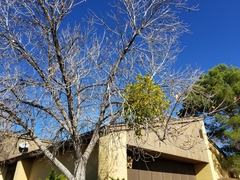 Phoradendron macrophyllum Colorado Desert mistletoe Photo: CC0, Ben Sims
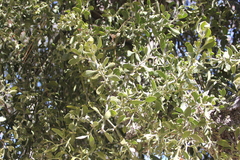 Phoradendron villosum Pacific mistletoe Photo: CC BY, Millie Basden
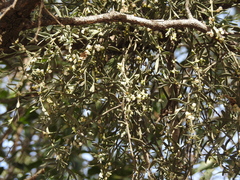 Phoradendron quadrangulare Quacimmila de canario Photo: CC BY, Eduardo Luis Beltrocco
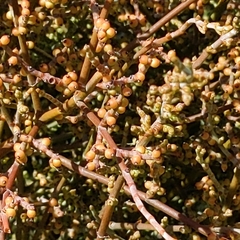 Phoradendron californicum Acacia mistletoe Photo: CC0, Vasily Reinkymov
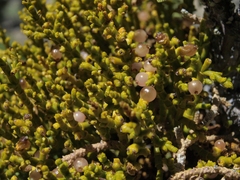 Phoradendron juniperinum Incense cedar mistletoe Photo: CC BY, Jim Morefield
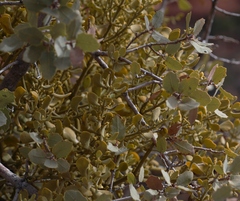 Phoradendron coryae Cory's mistletoe Photo: CC BY, Gail A Baker
 Phoradendron brachystachyum Photo: CC BY, Jose Luis Leon de la Luz
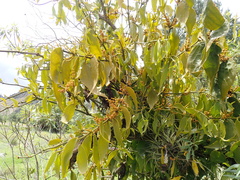 Phoradendron nervosum Photo: CC BY, Skjold Søndergaard
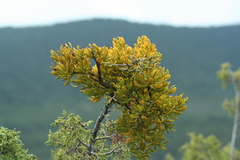 Phoradendron bolleanum Bollean mistletoe Photo: CC BY, Luis F. Ramírez
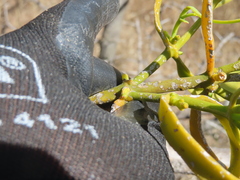 Phoradendron carneum Photo: CC BY, Ulises Pinedo
Grown: iNaturalist's observations of the species marked captive or cultivated; "not counted" where the species list does not count it. Native ranges: Kew's World Checklist of Vascular Plants (Govaerts et al., CC BY 4.0), file of 4 June 2026. Grown: iNaturalist's observations marked captive or cultivated, counted 17 October 2026 (the species list's count). Habitat climate known: the species page has a habitat climate, read from CHELSA's monthly climate and NASA POWER's daily extremes at its well-placed wild records inside Kew's native range; each page says its own sources and days. Record low: the lowest night in NASA POWER's daily series at the habitat's typical spot, as the species page gives it, held in °C to a tenth and shown in your units; each page says its own years and day read. Counts as the reference built on 19 November 2026 holds them. The CSV holds every result, not only this page's.