Polemonium
20 species in the reference · family Polemoniaceae · 19 with a habitat climate · 17 grown, per iNaturalist, 3 not counted
About the genus
Polemonium, commonly called Jacob's ladders or Jacob's-ladders (the name derived from the Biblical story), is a genus of between 25 and 40 species of flowering plants in the family Polemoniaceae, native to cool temperate to arctic regions of the Northern Hemisphere. One species, Polemonium micranthum, also occurs in the southern Andes in South America. Many of the species grow at high altitudes, in mountainous areas. Most of the uncertainty in the number of species relates to those in Eurasia, many of which have been synonymized with Polemonium caeruleum.
Quoted from Wikipedia, "Polemonium", its opening paragraph, revision 1364583070, read 2026-11-08, CC BY-SA 4.0.
Where Polemonium is native
| California | 8 |
|---|---|
| British Columbia | 7 |
| Washington | 7 |
| Colorado | 6 |
| Nevada | 6 |
| New Mexico | 6 |
| Oregon | 6 |
| Utah | 6 |
| Alberta | 5 |
| Idaho | 5 |
| Wyoming | 5 |
| Arizona | 4 |
Species native to each region. A species counts in every region it is native to. Native ranges: Kew's World Checklist of Vascular Plants (Govaerts et al., CC BY 4.0), file of 4 June 2026.
20 species
Polemonium
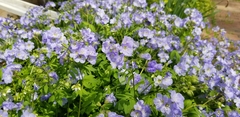 Polemonium reptans Greek valerian Photo: CC0, Ben Sims
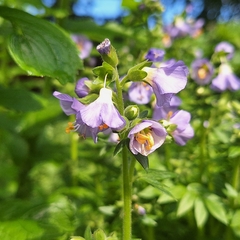 Polemonium caeruleum Jacob's-ladder Photo: CC0, Marek Hrušovský
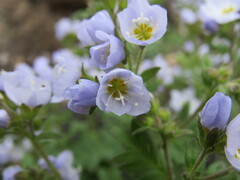 Polemonium pulcherrimum Showy Jacob's-ladder Photo: CC BY, Anders Hastings
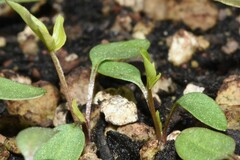 Polemonium carneum Oregon polemonium Photo: CC BY, Gabriel Campbell-Martinez
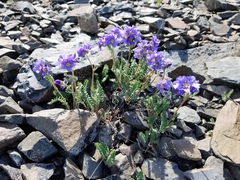 Polemonium boreale Boreal Jacob's-ladder Photo: CC BY, Syd Cannings
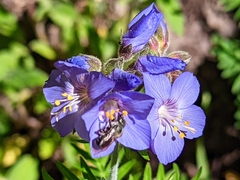 Polemonium foliosissimum Leafy Jacob's-ladder Photo: CC BY, James Fowler
Polemonium villosum Tall Jacob's-ladder Photo: CC BY-SA, Elisa Pietikäinen
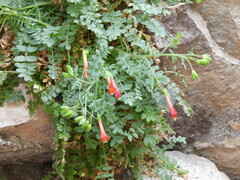 Polemonium pauciflorum Fewflower Jacob's-ladder Photo: CC0, Sinaloa Silvestre
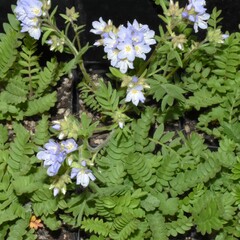 Polemonium californicum California Jacob's ladder Photo: CC BY, Gabriel Campbell-Martinez
 Polemonium lacustre Photo: CC BY, Norma Malinowski
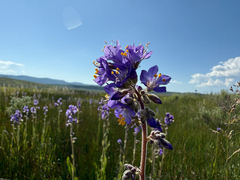 Polemonium occidentale Western Jacob's-ladder Photo: CC BY, Zach Earl
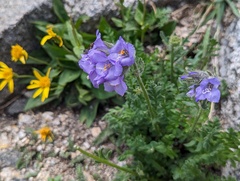 Polemonium viscosum Sticky Jacob's-ladder Photo: CC BY, Zac Peterson
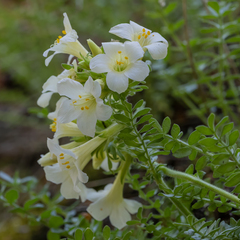 Polemonium brandegeei Brandegee's Jacob's-ladder Photo: CC BY, Dan Vickers
- no open photograph on file Polemonium chinense Chinese Jacob's-ladder
 Polemonium eximium Sierra Nevada Sky Pilot Photo: CC BY, marek
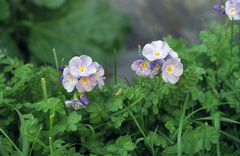 Polemonium pulchellum Photo: CC BY, Oleg Kosterin
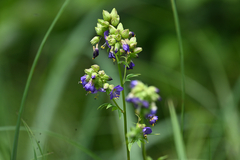 Polemonium vanbruntiae Van Brunt's Jacob's-ladder Photo: CC BY, Kevin Speray
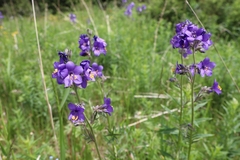 Polemonium caucasicum Photo: CC BY, Yeskendir Satekov
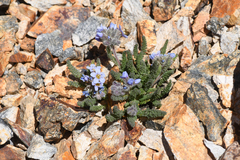 Polemonium chartaceum Mason's sky-pilot Photo: CC BY, Trevor Van Loon
 Polemonium elegans Elegant Jacob's-ladder Photo: CC BY, John Brew
Grown: iNaturalist's observations of the species marked captive or cultivated; "not counted" where the species list does not count it. Native ranges: Kew's World Checklist of Vascular Plants (Govaerts et al., CC BY 4.0), file of 4 June 2026. Grown: iNaturalist's observations marked captive or cultivated, counted 17 October 2026 (the species list's count). Habitat climate known: the species page has a habitat climate, read from CHELSA's monthly climate and NASA POWER's daily extremes at its well-placed wild records inside Kew's native range; each page says its own sources and days. Record low: the lowest night in NASA POWER's daily series at the habitat's typical spot, as the species page gives it, held in °C to a tenth and shown in your units; each page says its own years and day read. Counts as the reference built on 19 November 2026 holds them. The CSV holds every result, not only this page's.