Rhaphiolepis
3 species in the reference · family Rosaceae · 2 with a habitat climate · 2 grown, per iNaturalist, 1 not counted
About the genus
Rhaphiolepis ( RAF-ee-OL-ip-iss or RAF-ee-oh-LEP-iss) is a genus of about fifteen species of evergreen shrubs and small trees in the family Rosaceae, native to warm temperate and subtropical East Asia and Southeast Asia, from southern Japan, southern Korea and southern China, south to Thailand and Vietnam. In searching literature it is well to remember that the name commonly is misspelt "Raphiolepsis". The genus is closely related to Eriobotrya (loquats), so closely in fact, that members of the two genera have hybridised with each other; for example × Rhaphiobotrya, the "Coppertone loquat", is a hybrid of Eriobotrya deflexa X Rhaphiolepis indica. The common name hawthorn, originally specifically applied to the related genus Crataegus, now also appears in the common names for some Rhaphiolepis species. More on Wikipedia
Quoted from Wikipedia, "Rhaphiolepis", its opening paragraph, revision 1366535518, read 2026-11-08, CC BY-SA 4.0.
Where Rhaphiolepis is native
| Nansei-shoto | 3 |
|---|---|
| Taiwan | 3 |
| China Southeast | 2 |
| Japan | 2 |
| Cambodia | 1 |
| China South-Central | 1 |
| Hainan | 1 |
| Jawa | 1 |
| Korea | 1 |
| Laos | 1 |
| Ogasawara-shoto | 1 |
| Thailand | 1 |
Species native to each region. A species counts in every region it is native to. Native ranges: Kew's World Checklist of Vascular Plants (Govaerts et al., CC BY 4.0), file of 4 June 2026.
3 species
Rhaphiolepis
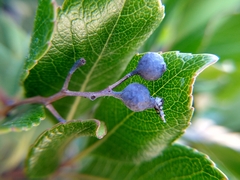 Rhaphiolepis indica India-hawthorn Photo: CC0, August Frisk
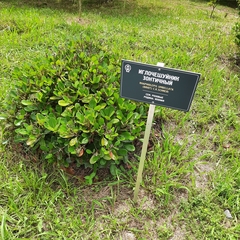 Rhaphiolepis umbellata Japanese-hawthorn Photo: CC BY, Виктория Билоус
- no open photograph on file Rhaphiolepis integerrima
Grown: iNaturalist's observations of the species marked captive or cultivated; "not counted" where the species list does not count it. Native ranges: Kew's World Checklist of Vascular Plants (Govaerts et al., CC BY 4.0), file of 4 June 2026. Grown: iNaturalist's observations marked captive or cultivated, counted 17 October 2026 (the species list's count). Habitat climate known: the species page has a habitat climate, read from CHELSA's monthly climate and NASA POWER's daily extremes at its well-placed wild records inside Kew's native range; each page says its own sources and days. Record low: the lowest night in NASA POWER's daily series at the habitat's typical spot, as the species page gives it, held in °C to a tenth and shown in your units; each page says its own years and day read. Counts as the reference built on 19 November 2026 holds them. The CSV holds every result, not only this page's.