Rhizophora
5 species in the reference · family Rhizophoraceae · 5 with a habitat climate · 5 grown, per iNaturalist
About the genus
Rhizophora is a genus of tropical mangrove trees, sometimes collectively called true mangroves. The most notable species is the red mangrove (Rhizophora mangle) but some other species and a few natural hybrids are known. Rhizophora species generally live in intertidal zones which are inundated daily by the ocean. They exhibit a number of adaptations to this environment, including pneumatophores that elevate the plants above the water and allow them to respire oxygen even while their lower roots are submerged and a cytological molecular "pump" mechanism that allows them to remove excess salts from their cells. More on Wikipedia
Quoted from Wikipedia, "Rhizophora", its opening paragraph, revision 1376434897, read 2026-11-08, CC BY-SA 4.0.
Where Rhizophora is native
| Andaman Is. | 3 |
|---|---|
| Cambodia | 3 |
| Caroline Is. | 3 |
| India | 3 |
| Jawa | 3 |
| Lesser Sunda Is. | 3 |
| Malaya | 3 |
| Maluku | 3 |
| Marianas | 3 |
| New Guinea | 3 |
| Nicobar Is. | 3 |
| Northern Territory | 3 |
Species native to each region. A species counts in every region it is native to. Native ranges: Kew's World Checklist of Vascular Plants (Govaerts et al., CC BY 4.0), file of 4 June 2026.
5 species
Rhizophora
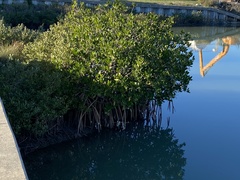 Rhizophora mangle Red mangrove Photo: CC BY, Reid Hardin
 Rhizophora mucronata Loop-root mangrove Photo: CC BY-SA, Douglas Goldman
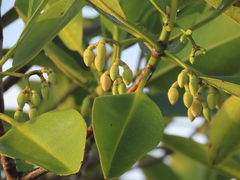 Rhizophora stylosa Spotted mangrove Photo: CC BY, P Jeganathan
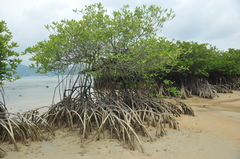 Rhizophora apiculata Corky stilt mangrove Photo: CC0, Philipp
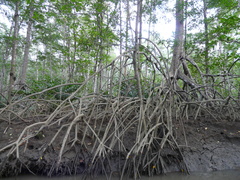 Rhizophora racemosa Gentleman giant Mangrove Photo: CC BY, Dan Riley
Grown: iNaturalist's observations of the species marked captive or cultivated; "not counted" where the species list does not count it. Native ranges: Kew's World Checklist of Vascular Plants (Govaerts et al., CC BY 4.0), file of 4 June 2026. Grown: iNaturalist's observations marked captive or cultivated, counted 17 October 2026 (the species list's count). Habitat climate known: the species page has a habitat climate, read from CHELSA's monthly climate and NASA POWER's daily extremes at its well-placed wild records inside Kew's native range; each page says its own sources and days. Record low: the lowest night in NASA POWER's daily series at the habitat's typical spot, as the species page gives it, held in °C to a tenth and shown in your units; each page says its own years and day read. Counts as the reference built on 19 November 2026 holds them. The CSV holds every result, not only this page's.