Rhus
20 species in the reference · family Anacardiaceae · 18 with a habitat climate · 20 grown, per iNaturalist
About the genus
Sumac or sumach ( S(H)OO-mak, UK also )—not to be confused with poison sumac—is any of the roughly 35 species of flowering plants in the genus Rhus (and related genera) of the cashew and mango tree family, Anacardiaceae. Rhus coriaria is the species that is most commonly used for culinary purposes. Sumac is prized as a spice—especially in Middle Eastern cuisine—and used as a dye and holistic remedy. The plants grow in subtropical and temperate regions, on nearly every continent except Antarctica and South America.
Quoted from Wikipedia, "Sumac", its opening paragraph, revision 1384501875, read 2026-11-08, CC BY-SA 4.0.
Where Rhus is native
| Mexico Northwest | 9 |
|---|---|
| Mexico Northeast | 8 |
| Arizona | 7 |
| North Carolina | 6 |
| Virginia | 6 |
| California | 5 |
| Georgia | 5 |
| Massachusetts | 5 |
| New Jersey | 5 |
| New Mexico | 5 |
| New York | 5 |
| Ontario | 5 |
Species native to each region. A species counts in every region it is native to. Native ranges: Kew's World Checklist of Vascular Plants (Govaerts et al., CC BY 4.0), file of 4 June 2026.
20 species
Rhus
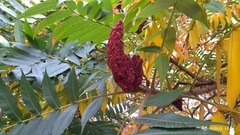 Rhus typhina Staghorn sumac Photo: CC BY, Екатерина Гущина
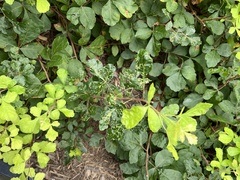 Rhus aromatica Fragrant sumac Photo: CC BY, Frederick Nunley
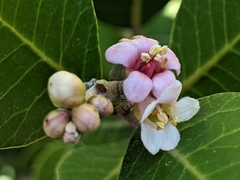 Rhus integrifolia Lemonade sumac Photo: CC BY, Ken-ichi Ueda
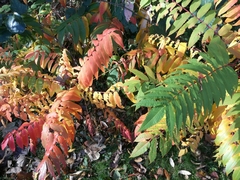 Rhus glabra Smooth sumac Photo: CC BY, Mattia Menchetti
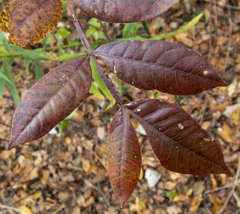 Rhus copallinum Winged sumac Photo: CC BY, Randy A Nonenmacher
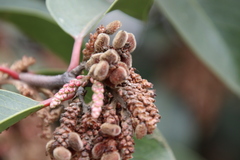 Rhus ovata Sugar sumac Photo: CC BY, Millie Basden
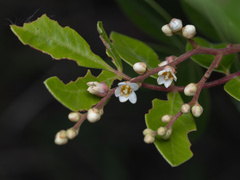 Rhus virens Evergreen sumac Photo: CC BY-SA, Turner Brockman
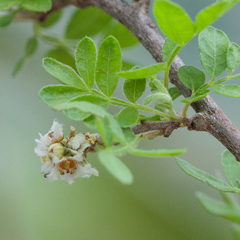 Rhus microphylla Desert sumac Photo: CC BY, Victor Engel
 Rhus chinensis Chinese sumac Photo: CC0, 葉子
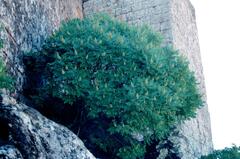 Rhus coriaria Tanner's sumach Photo: CC BY, zebedeugalinha
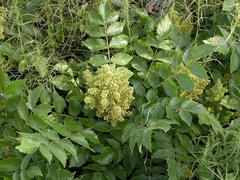 Rhus michauxii Michaux's sumac Photo: CC BY, Alpha Wolf
 Rhus lentii Pink-flowering Sumac Photo: CC BY, Amy
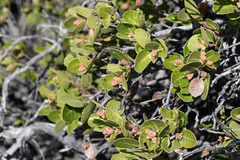 Rhus kearneyi Kearney's sumac Photo: CC BY, Trevor Van Loon
 Rhus potaninii Potanin Sumac Photo: CC BY-SA, Michael Wolf
 Rhus × pulvinata Northern smooth sumac Photo: CC BY, Derek
 Rhus taitensis Photo: CC BY-SA, Steve Fitzgerald
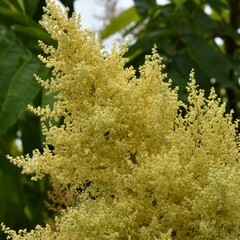 Rhus sandwicensis Hawaiian sumac Photo: CC0, kbkash
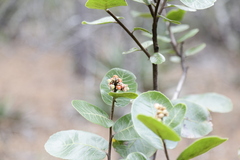 Rhus standleyi Photo: CC BY, quirino
 Rhus hartmanii Photo: CC BY-SA, Krzysztof Ziarnek, Kenraiz
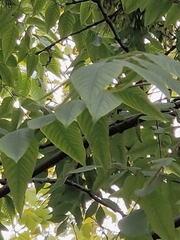 Rhus punjabensis Photo: CC BY, Clive Freedman
Grown: iNaturalist's observations of the species marked captive or cultivated; "not counted" where the species list does not count it. Native ranges: Kew's World Checklist of Vascular Plants (Govaerts et al., CC BY 4.0), file of 4 June 2026. Grown: iNaturalist's observations marked captive or cultivated, counted 17 October 2026 (the species list's count). Habitat climate known: the species page has a habitat climate, read from CHELSA's monthly climate and NASA POWER's daily extremes at its well-placed wild records inside Kew's native range; each page says its own sources and days. Record low: the lowest night in NASA POWER's daily series at the habitat's typical spot, as the species page gives it, held in °C to a tenth and shown in your units; each page says its own years and day read. Counts as the reference built on 19 November 2026 holds them. The CSV holds every result, not only this page's.