Scaevola
15 species in the reference · family Goodeniaceae · 14 with a habitat climate · 15 grown, per iNaturalist
Where Scaevola is native
| Western Australia | 7 |
|---|---|
| Queensland | 6 |
| Victoria | 6 |
| New South Wales | 5 |
| South Australia | 5 |
| Hawaii | 4 |
| Northern Territory | 3 |
| Vietnam | 3 |
| Andaman Is. | 2 |
| China Southeast | 2 |
| Kenya | 2 |
| KwaZulu-Natal | 2 |
Species native to each region. A species counts in every region it is native to. Native ranges: Kew's World Checklist of Vascular Plants (Govaerts et al., CC BY 4.0), file of 4 June 2026.
15 species
Scaevola
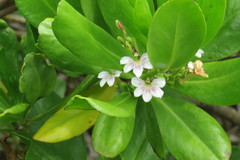 Scaevola taccada Beach naupaka Photo: CC BY, johnyochum
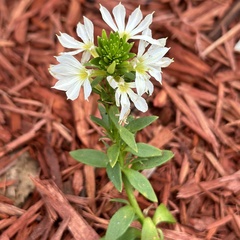 Scaevola aemula Common fanflower Photo: CC0, wilderbombyx
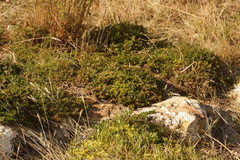 Scaevola albida White fan-flower Photo: CC BY, Rod Lowther
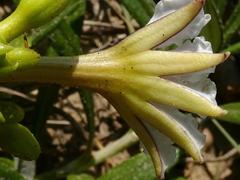 Scaevola plumieri Gull feed Photo: CC BY-SA, Ronald Flipphi
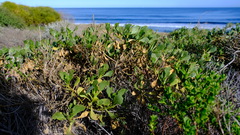 Scaevola crassifolia Cushion Fanflower Photo: CC BY, Peter Crowcroft
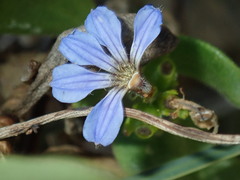 Scaevola calendulacea Dune fan-flower Photo: CC BY, Thomas Mesaglio
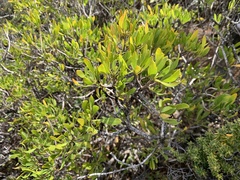 Scaevola gaudichaudii Ridgetop naupaka Photo: CC BY, Neal Kelso
 Scaevola coriacea Dwarf naupaka Photo: CC BY, Kevin Faccenda
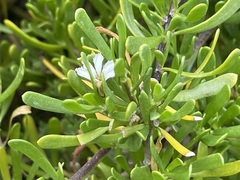 Scaevola hainanensis Photo: CC BY, lansan
 Scaevola nitida Shining fanflower Photo: CC BY-SA, Tony Rebelo
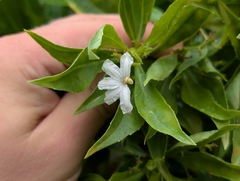 Scaevola gaudichaudiana Mountain naupaka Photo: CC0, Damien Wallace
 Scaevola gracilis Photo: CC BY, Murray NZ
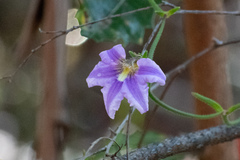 Scaevola ramosissima Hairy Fan-flower Photo: CC BY, Proteros
 Scaevola cunninghamii Photo: CC BY, T. Hammer
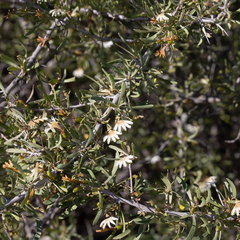 Scaevola spinescens Spiny Fan-flower Photo: CC BY, Kym Nicolson
Grown: iNaturalist's observations of the species marked captive or cultivated; "not counted" where the species list does not count it. Native ranges: Kew's World Checklist of Vascular Plants (Govaerts et al., CC BY 4.0), file of 4 June 2026. Grown: iNaturalist's observations marked captive or cultivated, counted 17 October 2026 (the species list's count). Habitat climate known: the species page has a habitat climate, read from CHELSA's monthly climate and NASA POWER's daily extremes at its well-placed wild records inside Kew's native range; each page says its own sources and days. Record low: the lowest night in NASA POWER's daily series at the habitat's typical spot, as the species page gives it, held in °C to a tenth and shown in your units; each page says its own years and day read. Counts as the reference built on 19 November 2026 holds them. The CSV holds every result, not only this page's.