Schlumbergera
5 species in the reference · family Cactaceae · 1 with a habitat climate · 3 grown, per iNaturalist, 2 not counted
About the genus
Schlumbergera is a small genus of cacti with six to nine species native to the coastal mountains of southeastern Brazil. These plants grow on trees or rocks in habitats that are generally shady with high humidity, and can be quite different in appearance from their desert-dwelling cousins. Most species of Schlumbergera have stems which resemble leaf-like pads joined one to the other and flowers which appear from areoles at the joints and tips of the stems. Two species have cylindrical stems more similar to other cacti.
Quoted from Wikipedia, "Schlumbergera", its opening paragraph, revision 1365856860, read 2026-11-08, CC BY-SA 4.0.
Where Schlumbergera is native
| Brazil Southeast | 5 |
|---|
Species native to each region. A species counts in every region it is native to. Native ranges: Kew's World Checklist of Vascular Plants (Govaerts et al., CC BY 4.0), file of 4 June 2026.
5 species
Schlumbergera
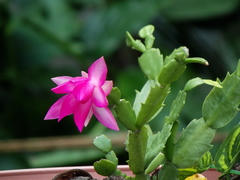 Schlumbergera truncata False Christmas cactus Photo: CC BY, Luis Romero
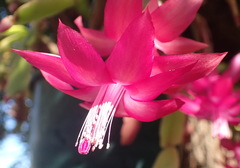 Schlumbergera russelliana Photo: CC BY-SA, Nicola van Berkel
- no open photograph on file Schlumbergera kautskyi Christmas Cactus
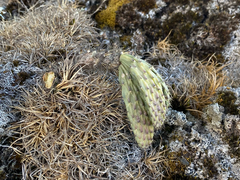 Schlumbergera opuntioides Christmas Cactus Photo: CC BY, topeuna
- no open photograph on file Schlumbergera orssichiana
Grown: iNaturalist's observations of the species marked captive or cultivated; "not counted" where the species list does not count it. Native ranges: Kew's World Checklist of Vascular Plants (Govaerts et al., CC BY 4.0), file of 4 June 2026. Grown: iNaturalist's observations marked captive or cultivated, counted 17 October 2026 (the species list's count). Habitat climate known: the species page has a habitat climate, read from CHELSA's monthly climate and NASA POWER's daily extremes at its well-placed wild records inside Kew's native range; each page says its own sources and days. Record low: the lowest night in NASA POWER's daily series at the habitat's typical spot, as the species page gives it, held in °C to a tenth and shown in your units; each page says its own years and day read. Counts as the reference built on 19 November 2026 holds them. The CSV holds every result, not only this page's.