Setaria
14 species in the reference · family Poaceae · 13 with a habitat climate · 14 grown, per iNaturalist
About the genus
Setaria is a widespread genus of plants in the grass family. The name is derived from the Latin word seta, meaning "bristle" or "hair", which refers to the bristly spikelets.
Quoted from Wikipedia, "Setaria", its opening paragraph, revision 1372489079, read 2026-11-08, CC BY-SA 4.0.
Where Setaria is native
| Cameroon | 5 |
|---|---|
| China South-Central | 5 |
| China Southeast | 5 |
| Eritrea | 5 |
| Ethiopia | 5 |
| Ghana | 5 |
| Kenya | 5 |
| Malawi | 5 |
| Mauritania | 5 |
| Mexico Northeast | 5 |
| Mozambique | 5 |
| Niger | 5 |
Species native to each region. A species counts in every region it is native to. Native ranges: Kew's World Checklist of Vascular Plants (Govaerts et al., CC BY 4.0), file of 4 June 2026.
14 species
Setaria
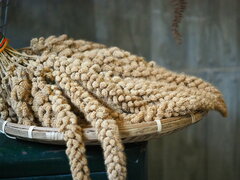 Setaria italica Foxtail bristle-grass Photo: CC0, 葉子
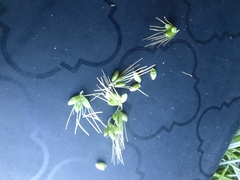 Setaria viridis Green bristlegrass Photo: CC BY, Alice Shanks
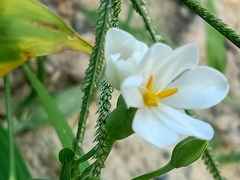 Setaria palmifolia Palm grass Photo: CC BY-SA, Ong Jyh Seng
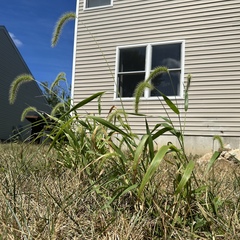 Setaria faberi Giant foxtail Photo: CC0, wilderbombyx
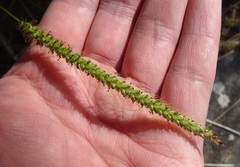 Setaria parviflora Knotroot bristle-grass Photo: CC BY, Y. Liu
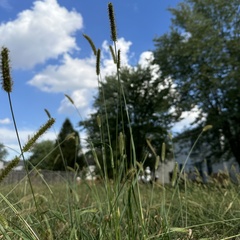 Setaria pumila Yellow bristle-grass Photo: CC0, wilderbombyx
 Setaria verticillata Rough bristle-grass Photo: CC BY, Patrick Hacker
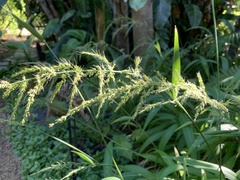 Setaria megaphylla Big-leaf bristle grass Photo: CC BY, Dave Richardson
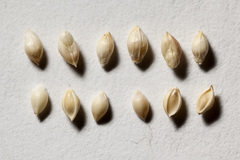 Setaria leucopila Plains bristle grass Photo: CC0, Cecelia Alexander
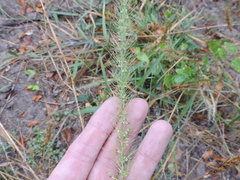 Setaria scheelei Southwestern bristle grass Photo: CC BY, Sam Kieschnick
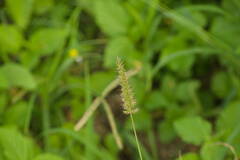 Setaria adhaerens Adherent bristle-grass Photo: CC BY, Kevin Faccenda
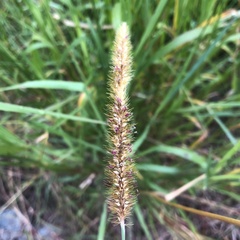 Setaria sphacelata African bristlegrass Photo: CC BY-SA, James K. Douch
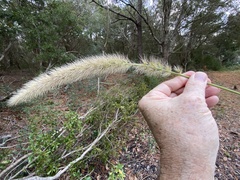 Setaria magna Giant bristle grass Photo: CC0, Alan Weakley
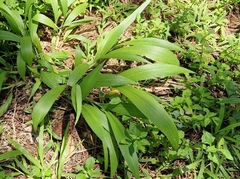 Setaria sulcata Photo: CC BY, Jens-Christian Svenning
Grown: iNaturalist's observations of the species marked captive or cultivated; "not counted" where the species list does not count it. Native ranges: Kew's World Checklist of Vascular Plants (Govaerts et al., CC BY 4.0), file of 4 June 2026. Grown: iNaturalist's observations marked captive or cultivated, counted 17 October 2026 (the species list's count). Habitat climate known: the species page has a habitat climate, read from CHELSA's monthly climate and NASA POWER's daily extremes at its well-placed wild records inside Kew's native range; each page says its own sources and days. Record low: the lowest night in NASA POWER's daily series at the habitat's typical spot, as the species page gives it, held in °C to a tenth and shown in your units; each page says its own years and day read. Counts as the reference built on 19 November 2026 holds them. The CSV holds every result, not only this page's.