Stephania
70 species in the reference · family Menispermaceae · 11 with a habitat climate · 8 grown, per iNaturalist, 62 not counted
About the genus
Stephania is a genus of flowering plants in the family Menispermaceae. It includes 70 species native to tropical and southern Africa, eastern and southern Asia, Australia, and the tropical Pacific Islands. They are herbaceous perennial vines, growing to around four metres tall, with a large tuber. The leaves are arranged spirally on the stem and are peltate, with the leaf petiole attached near the centre of the leaf. More on Wikipedia
Quoted from Wikipedia, "Stephania", its opening paragraph, revision 1357130175, read 2026-11-08, CC BY-SA 4.0.
Where Stephania is native
| China South-Central | 27 |
|---|---|
| Thailand | 16 |
| China Southeast | 15 |
| Vietnam | 14 |
| Myanmar | 10 |
| Laos | 9 |
| Cambodia | 7 |
| New Guinea | 7 |
| Bangladesh | 5 |
| Borneo | 5 |
| Jawa | 5 |
| Nepal | 5 |
Species native to each region. A species counts in every region it is native to. Native ranges: Kew's World Checklist of Vascular Plants (Govaerts et al., CC BY 4.0), file of 4 June 2026.
70 species
Stephania
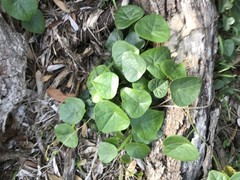 Stephania japonica Snake vine Photo: CC BY, libby hepburn
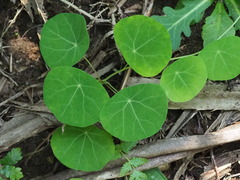 Stephania cephalantha Photo: CC0, 葉子
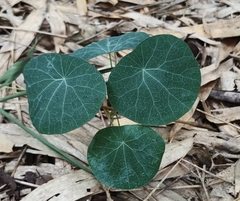 Stephania pierrei Photo: CC BY, Thomas Gyselinck
- no open photograph on file Stephania hainanensis
- no open photograph on file Stephania dielsiana
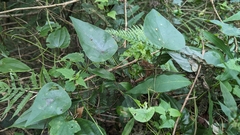 Stephania longa Long Stephania Photo: CC BY, 潘立傑 LICHIEH_PAN
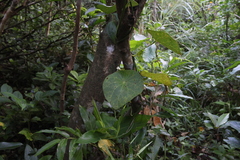 Stephania merrillii Photo: CC BY, 林正文
 Stephania epigaea Photo: CC BY-SA, 維基小霸王
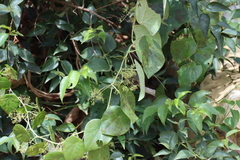 Stephania abyssinica Photo: CC BY-SA, Tony Rebelo
- no open photograph on file Stephania andamanica
 Stephania bancroftii Photo: CC BY, Centre for National Biodiversity…
- no open photograph on file Stephania brachyandra
- no open photograph on file Stephania brevipedunculata
- no open photograph on file Stephania brevipes
- no open photograph on file Stephania cambodica
 Stephania capitata Photo: CC BY-SA, Len Worthington
- no open photograph on file Stephania chingtungensis
- no open photograph on file Stephania corymbosa
- no open photograph on file Stephania crebra
- no open photograph on file Stephania cyanantha
 Stephania delavayi Photo: CC BY, BotBN
- no open photograph on file Stephania dentifolia
- no open photograph on file Stephania dicentrinifera
- no open photograph on file Stephania dictyoneura
- no open photograph on file Stephania dinklagei
- no open photograph on file Stephania dolichopoda
- no open photograph on file Stephania ebracteata
- no open photograph on file Stephania elegans
- no open photograph on file Stephania excentrica
- no open photograph on file Stephania formanii
- no open photograph on file Stephania glandulifera
 Stephania gracilenta Photo: CC BY-SA, Dinesh Valke
- no open photograph on file Stephania grandiflora
- no open photograph on file Stephania herbacea
- no open photograph on file Stephania intermedia
 Stephania kaweesakii Photo: CC BY-SA, Kornbatman
- no open photograph on file Stephania kuinanensis
- no open photograph on file Stephania kwangsiensis
- no open photograph on file Stephania lincangensis
- no open photograph on file Stephania longipes
- no open photograph on file Stephania macrantha
- no open photograph on file Stephania mashanica
- no open photograph on file Stephania micrantha
- no open photograph on file Stephania mildbraedii
- no open photograph on file Stephania miyiensis
- no open photograph on file Stephania moluccana
- no open photograph on file Stephania montana
- no open photograph on file Stephania neoguineensis
Grown: iNaturalist's observations of the species marked captive or cultivated; "not counted" where the species list does not count it. Native ranges: Kew's World Checklist of Vascular Plants (Govaerts et al., CC BY 4.0), file of 4 June 2026. Grown: iNaturalist's observations marked captive or cultivated, counted 17 October 2026 (the species list's count). Habitat climate known: the species page has a habitat climate, read from CHELSA's monthly climate and NASA POWER's daily extremes at its well-placed wild records inside Kew's native range; each page says its own sources and days. Record low: the lowest night in NASA POWER's daily series at the habitat's typical spot, as the species page gives it, held in °C to a tenth and shown in your units; each page says its own years and day read. Counts as the reference built on 19 November 2026 holds them. The CSV holds every result, not only this page's.