Trichoglottis
7 species in the reference · family Orchidaceae · 1 with a habitat climate · 5 grown, per iNaturalist, 2 not counted
About the genus
Trichoglottis, commonly known as cherub orchids or 毛舌兰属 (mao she lan shu), is a genus of flowering plants in the family Orchidaceae. Orchids in this genus are epiphytic plants with thick roots, relatively thick, fibrous stems and many large, thick, leathery leaves arranged in two ranks. The flowers are usually small and yellowish with light brown or purple markings. The flowers have broad sepals, narrower petals and a labellum which has three lobes and is often hairy. More on Wikipedia
Quoted from Wikipedia, "Trichoglottis", its opening paragraph, revision 1380930573, read 2026-11-08, CC BY-SA 4.0.
Where Trichoglottis is native
| Philippines | 4 |
|---|---|
| Thailand | 3 |
| Borneo | 2 |
| Laos | 2 |
| Myanmar | 2 |
| Taiwan | 2 |
| Cambodia | 1 |
| China South-Central | 1 |
| Malaya | 1 |
| Nansei-shoto | 1 |
| Vietnam | 1 |
Species native to each region. A species counts in every region it is native to. Native ranges: Kew's World Checklist of Vascular Plants (Govaerts et al., CC BY 4.0), file of 4 June 2026.
7 species
Trichoglottis
 Trichoglottis luchuensis Photo: CC0, 葉子
 Trichoglottis atropurpurea Photo: CC BY-SA, Dalton Holland Baptista
 Trichoglottis rosea Photo: CC BY-SA, 阿橋 HQ
- no open photograph on file Trichoglottis dawsoniana
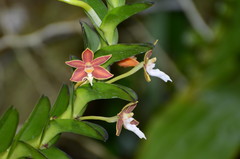 Trichoglottis philippinensis Photo: CC BY, Jay Pruett
 Trichoglottis bipunctata Photo: CC BY-SA, Averater
 Trichoglottis seidenfadenii Photo: CC BY-SA, Dalton Holland Baptista
Grown: iNaturalist's observations of the species marked captive or cultivated; "not counted" where the species list does not count it. Native ranges: Kew's World Checklist of Vascular Plants (Govaerts et al., CC BY 4.0), file of 4 June 2026. Grown: iNaturalist's observations marked captive or cultivated, counted 17 October 2026 (the species list's count). Habitat climate known: the species page has a habitat climate, read from CHELSA's monthly climate and NASA POWER's daily extremes at its well-placed wild records inside Kew's native range; each page says its own sources and days. Record low: the lowest night in NASA POWER's daily series at the habitat's typical spot, as the species page gives it, held in °C to a tenth and shown in your units; each page says its own years and day read. Counts as the reference built on 19 November 2026 holds them. The CSV holds every result, not only this page's.