Tristerix
3 species in the reference · family Loranthaceae · 3 with a habitat climate · 3 grown, per iNaturalist
About the genus
Tristerix is a genus of mistletoe in the family Loranthaceae, native to the Andes, ranging from Colombia and Ecuador to Chile and Argentina. They are woody perennials usually occurring as aerial parasites, are pollinated by hummingbirds and flowerpiercers, with seed-dispersal generally by birds but occasionally by mammals (Dromiciops). The genus is distinguished from other New World Loranthaceae by its simple, terminal, racemose inflorescences, together with its of 4- or 5-merous flowers, versatile anthers, and the presence of endosperm. Further differences include fused cotyledons and the absence of epicortical roots.
Quoted from Wikipedia, "Tristerix", its opening paragraph, revision 1366273725, read 2026-11-08, CC BY-SA 4.0.
Where Tristerix is native
| Chile Central | 2 |
|---|---|
| Argentina South | 1 |
| Bolivia | 1 |
| Chile North | 1 |
| Chile South | 1 |
| Peru | 1 |
Species native to each region. A species counts in every region it is native to. Native ranges: Kew's World Checklist of Vascular Plants (Govaerts et al., CC BY 4.0), file of 4 June 2026.
3 species
Tristerix
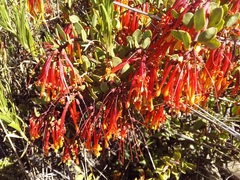 Tristerix penduliflorus Photo: CC BY, Humber Alberto
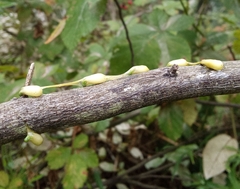 Tristerix corymbosus Photo: CC BY, Hector Montero
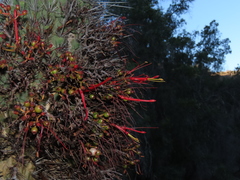 Tristerix aphyllus Photo: CC BY, Nicolás Lavandero
Grown: iNaturalist's observations of the species marked captive or cultivated; "not counted" where the species list does not count it. Native ranges: Kew's World Checklist of Vascular Plants (Govaerts et al., CC BY 4.0), file of 4 June 2026. Grown: iNaturalist's observations marked captive or cultivated, counted 17 October 2026 (the species list's count). Habitat climate known: the species page has a habitat climate, read from CHELSA's monthly climate and NASA POWER's daily extremes at its well-placed wild records inside Kew's native range; each page says its own sources and days. Record low: the lowest night in NASA POWER's daily series at the habitat's typical spot, as the species page gives it, held in °C to a tenth and shown in your units; each page says its own years and day read. Counts as the reference built on 19 November 2026 holds them. The CSV holds every result, not only this page's.