Tubuai Is.
TDWG level-3 region TUB
| Species native here | 147 |
|---|---|
| Native nowhere else | 0 |
| With a habitat climate | 147 |
| Grown, per iNaturalist | 145 (2 not counted) |
| Genera, families | 111, 55 |
Beside it in South-Central Pacific: Cook Is. 124Easter Is. 21Line Is. 35Marquesas 100Pitcairn Is. 62Society Is. 171Tuamotu 80
Regions: TDWG's World Geographical Scheme for Recording Plant Distributions, 2nd edition (Brummitt 2001); countries' regions as round eighty's shapes assign Natural Earth's states and provinces (public domain). Next door: regions whose outlines touch, read from those shapes (TDWG's own tables give no neighbours).
147 species
Species native to Tubuai Is.
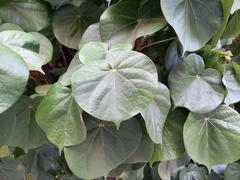 Hibiscus tiliaceus Waru Photo: CC BY, nasua
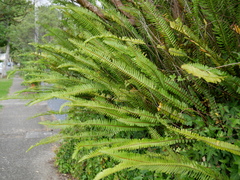 Nephrolepis cordifolia Narrow sword fern Photo: CC BY, Alice Shanks
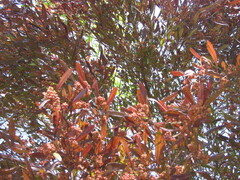 Dodonaea viscosa Hopbush Photo: CC BY, zebedeugalinha
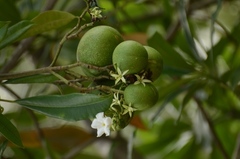 Cerbera manghas Madagascar ordeal-bean Photo: CC BY, P Jeganathan
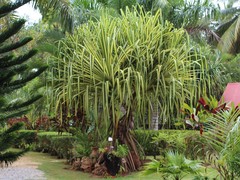 Pandanus tectorius Photo: CC BY-SA, lejones417
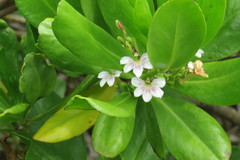 Scaevola taccada Beach naupaka Photo: CC BY, johnyochum
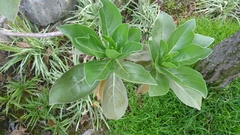 Heliotropium arboreum Photo: CC BY, Jason
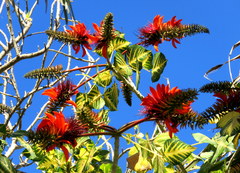 Erythrina variegata Indian coral tree Photo: CC BY, Alexis López Hernández
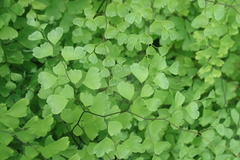 Adiantum capillus-veneris Maidenhair fern Photo: CC0, Di Turner
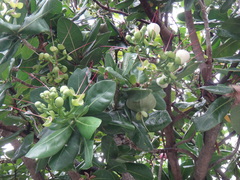 Barringtonia asiatica Sea putat Photo: CC BY, 呂一起(Lyu yi-chi)
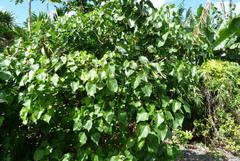 Thespesia populnea Portia tree Photo: CC BY-SA, Colin Meurk
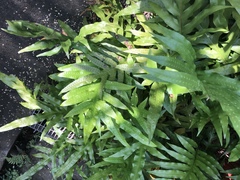 Phymatosorus scolopendria Monarch fern Photo: CC BY, Cheng-Tao Lin
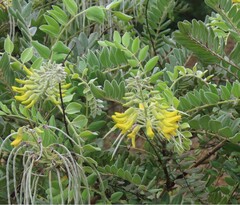 Sophora tomentosa Yellow necklacepod Photo: CC0, margohj
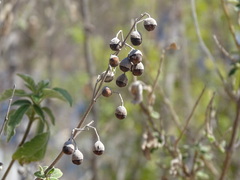 Vitex trifolia Simple-leaf chaste-tree Photo: CC BY, Alexis López Hernández
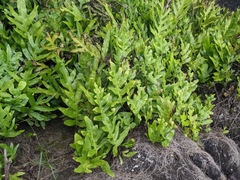 Phymatosorus grossus Musk fern Photo: CC0, Zoltán Stekkelpak
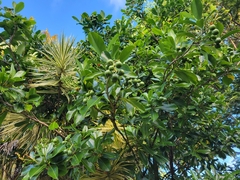 Fagraea berteroana Cape jitta Photo: CC BY, Keenan Pepper
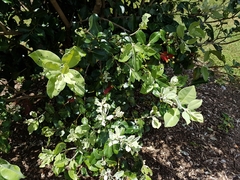 Metrosideros collina Vunga Photo: CC BY, Lek Khauv
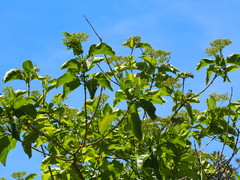 Premna serratifolia Bastard guelder Photo: CC0, 葉子
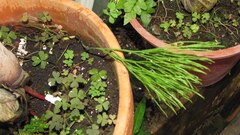 Psilotum nudum Whisk fern Photo: CC BY, zebedeugalinha
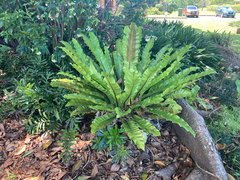 Asplenium australasicum Bird's-nest fern Photo: CC BY, Samuel Cooper
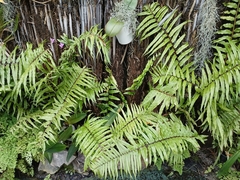 Nephrolepis biserrata Photo: CC BY, Leon Perrie
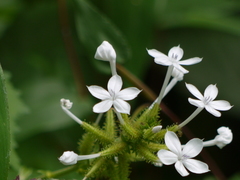 Plumbago zeylanica Wild leadwort Photo: CC BY-SA, Dinesh Valke
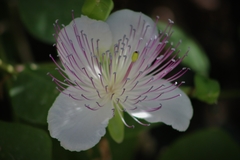 Capparis spinosa Caper Photo: CC0, Murielle Desrois
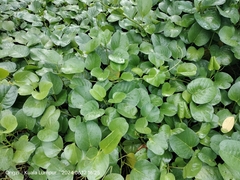 Ipomoea pes-caprae Beach morning glory Photo: CC BY-SA, Ong Jyh Seng
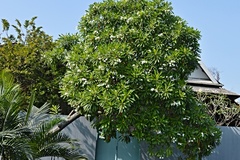 Cerbera odollam Suicide tree Photo: CC BY, Petr Harant
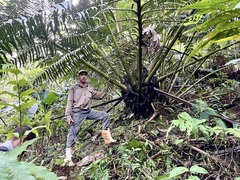 Angiopteris evecta Madagascar tree fern Photo: CC BY, Roberto Jovel
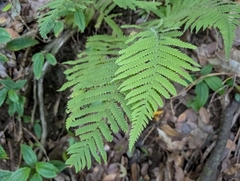 Thelypteris parasitica Parasitic maiden fern Photo: CC0, Damien Wallace
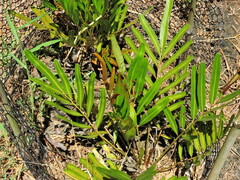 Acrostichum aureum Golden Leather Fern Photo: CC BY, Jacy Chen
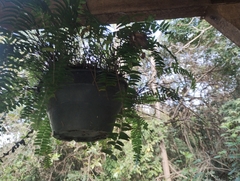 Nephrolepis brownii Asian Sword Fern Photo: CC BY, The Great Walter
 Davallia fejeensis Lacy hare's-foot fern Photo: CC BY, Kevin Faccenda
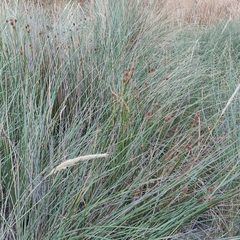 Ficinia nodosa Knobby Club-rush Photo: CC BY, Jenny Saito
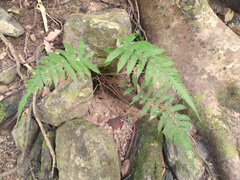 Thelypteris dentata Downy maiden fern Photo: CC BY-SA, Steve Fitzgerald
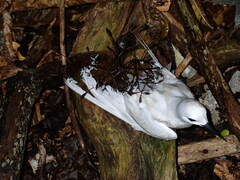 Pisonia grandis Grand devil's-claws Photo: CC BY, Mike Burnett
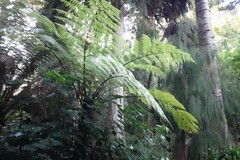 Sphaeropteris medullaris Black tree fern Photo: CC BY, Jon Sullivan
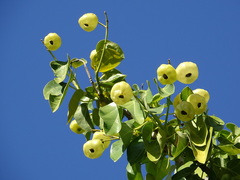 Hernandia nymphaeifolia Sea hearse Photo: CC0, 葉子
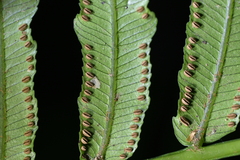 Ptisana salicina Photo: CC BY-SA, Christopher Stephens
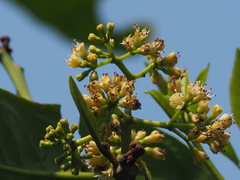 Ceodes umbellifera Birdcatcher Tree Photo: CC0, 葉子
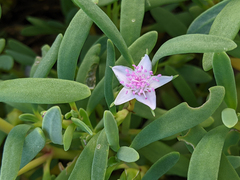 Sesuvium portulacastrum Sea purslane Photo: CC BY, Kristof Zyskowski
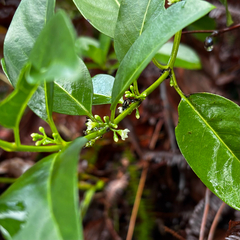 Geniostoma rupestre Photo: CC BY, Gabriel
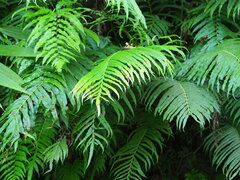 Blechnum orientale Photo: CC0, 葉子
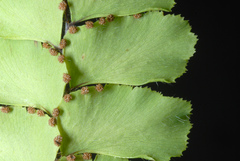 Adiantum hispidulum Rough maidenhair Photo: CC BY-SA, Douglas Goldman
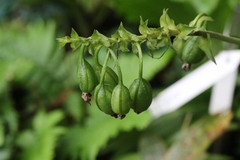 Calanthe triplicata Christmas Orchid Photo: CC0, Agnes Trekker
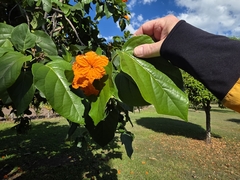 Cordia subcordata Kou Photo: CC BY, Elise Smith
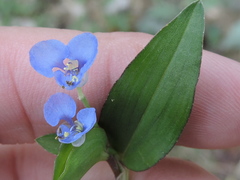 Commelina diffusa Climbing dayflower Photo: CC BY, Sam Kieschnick
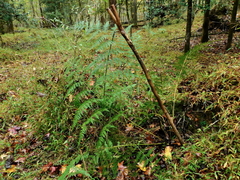 Macrothelypteris torresiana Swordfern Photo: CC BY, Michael J. Papay
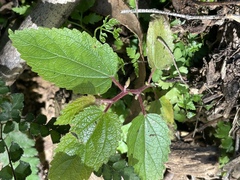 Pipturus argenteus False Stinger Photo: CC BY, Tim Albers
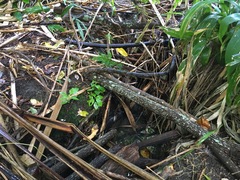 Pteris tremula Australian brake Photo: CC0, Jenny Christianson
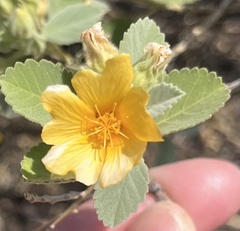 Sida fallax Yellow `ilima Photo: CC BY, drnancyjackson
Grown: iNaturalist's observations of the species marked captive or cultivated; "not counted" where the species list does not count it. Native ranges: Kew's World Checklist of Vascular Plants (Govaerts et al., CC BY 4.0), file of 4 June 2026. Grown: iNaturalist's observations marked captive or cultivated, counted 17 October 2026 (the species list's count). Habitat climate known: the species page has a habitat climate, read from CHELSA's monthly climate and NASA POWER's daily extremes at its well-placed wild records inside Kew's native range; each page says its own sources and days. Record low: the lowest night in NASA POWER's daily series at the habitat's typical spot, as the species page gives it, held in °C to a tenth and shown in your units; each page says its own years and day read. Counts as the reference built on 19 November 2026 holds them. The CSV holds every result, not only this page's.