Euphorbiaceae
656 species in 72 genera · 503 with a habitat climate · 592 grown, per iNaturalist, 64 not counted
Most native to: Mexico Northeast 84Mexico Southwest 78Madagascar 71Mexico Northwest 67Cape Provinces 65Mexico Southeast 62Mexico Gulf 61Colombia 54Mexico Central 52Texas 52Honduras 51Nicaragua 51
A species counts in every region it is native to. Native ranges: Kew's World Checklist of Vascular Plants (Govaerts et al., CC BY 4.0), file of 4 June 2026.
656 species
Euphorbiaceae
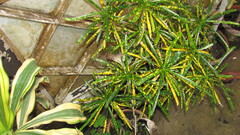 Codiaeum variegatum Garden croton Photo: CC BY, zebedeugalinha
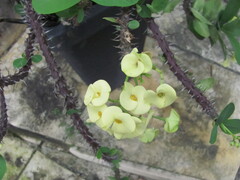 Euphorbia milii Christ plant Photo: CC BY, zebedeugalinha
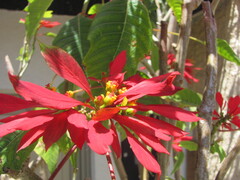 Euphorbia pulcherrima Poinsettia Photo: CC BY, zebedeugalinha
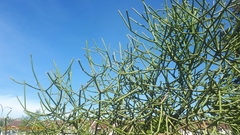 Euphorbia tirucalli Indiantree spurge Photo: CC BY-SA, Ong Jyh Seng
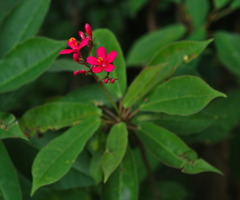 Jatropha integerrima Peregrina Photo: CC BY, portioid
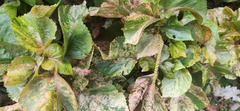 Acalypha wilkesiana Jacob's coat Photo: CC BY, 胡正恆(Jackson Hu)
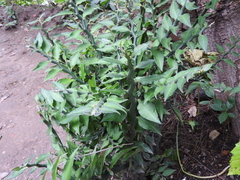 Euphorbia tithymaloides Redbird flower Photo: CC BY-SA, Oscar Alejandro Morales Juárez
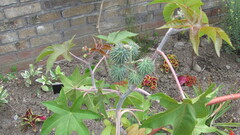 Ricinus communis Castor-oil-plant Photo: CC BY, zebedeugalinha
 Euphorbia characias Mediterranean spurge Photo: CC BY, Jon Sullivan
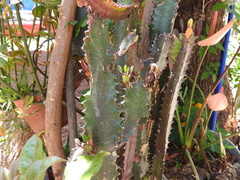 Euphorbia trigona African milktree Photo: CC BY-SA, Oscar Alejandro Morales Juárez
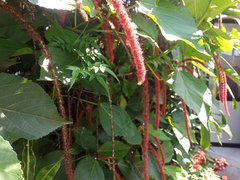 Acalypha hispida Philippine-medusa Photo: CC BY, Sagnik Dutta Roy
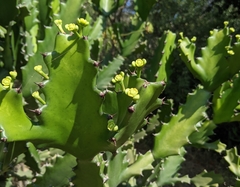 Euphorbia lactea Mottled spurge Photo: CC BY, Lyrae
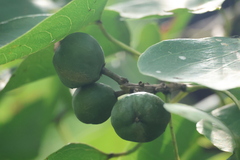 Triadica sebifera Chinese tallow Photo: CC BY, 張家瑜
 Excoecaria cochinchinensis Photo: CC BY-SA, Ong Jyh Seng
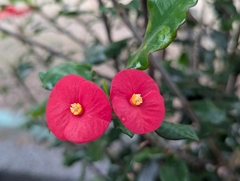 Euphorbia geroldii Thornless Crown of Thorns Photo: CC BY, jackywu
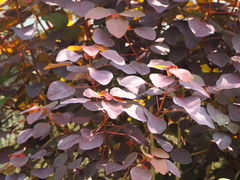 Euphorbia cotinifolia Caribbean copperplant Photo: CC0, 葉子
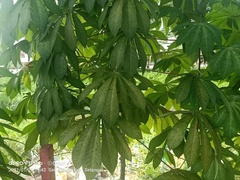 Manihot esculenta Cassava Photo: CC BY-SA, Ong Jyh Seng
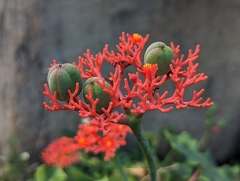 Jatropha podagrica Gout stalk Photo: CC0, Zoltán Stekkelpak
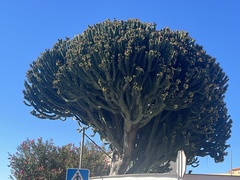 Euphorbia ingens Cactus spurge Photo: CC BY, Steve Taylor
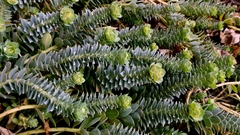 Euphorbia myrsinites Myrtle spurge Photo: CC0, Patrick Le Mao
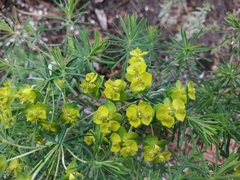 Euphorbia cyparissias Cypress spurge Photo: CC BY, Yurii Basov
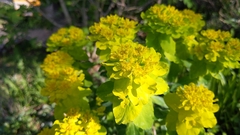 Euphorbia epithymoides Cushion spurge Photo: CC BY, Philipp
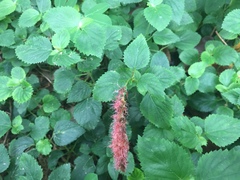 Acalypha herzogiana Dwarf chenilleplant Photo: CC BY, Jason Grant
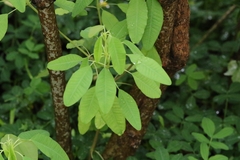 Euphorbia leucocephala Pascuita Photo: CC0, Agnes Trekker
 Aleurites moluccanus Candlenut tree Photo: CC0, 葉子
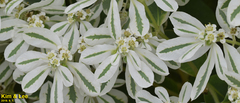 Euphorbia marginata Snow-on-the-mountain Photo: CC BY, Kim, Hyun-tae
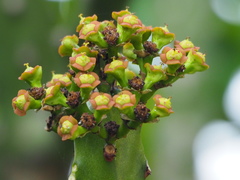 Euphorbia neriifolia Indian spurgetree Photo: CC0, 葉子
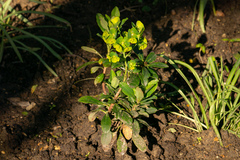 Euphorbia amygdaloides Wood spurge Photo: CC BY, Andrew Skotnicki
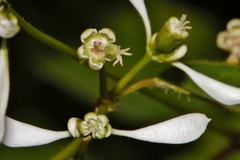 Euphorbia graminea Grassleaf spurge Photo: CC BY, i_c_riddell
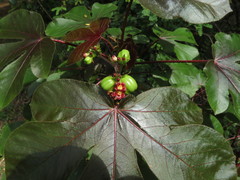 Jatropha gossypiifolia Bellyache bush Photo: CC0, Ajit Ampalakkad
 Jatropha multifida Coralbush Photo: CC BY, Annika Lindqvist
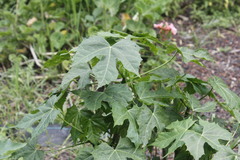 Cnidoscolus aconitifolius Treadsoftly Photo: CC BY-SA, Juan Cruzado Cortés
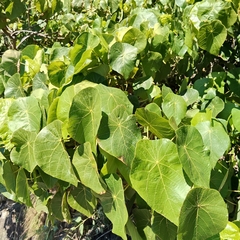 Macaranga tanarius Parasol leaf tree Photo: CC BY, John Barkla
 Hura crepitans Sandbox tree Photo: CC BY-SA, Ong Jyh Seng
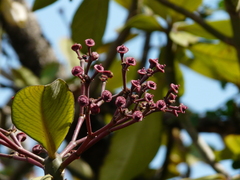 Euphorbia umbellata Photo: CC BY-SA, Dinesh Valke
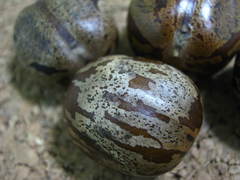 Hevea brasiliensis Rubber tree Photo: CC BY-SA, Ong Jyh Seng
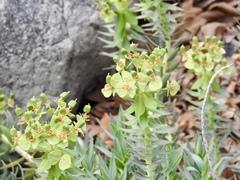 Euphorbia rigida Upright myrtle spurge Photo: CC BY, CK2AZ
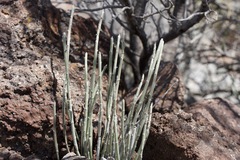 Euphorbia antisyphilitica Candelilla Photo: CC BY, Gary Bowers
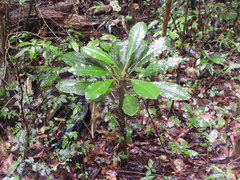 Euphorbia leuconeura Madagascar jewel Photo: CC BY, amantedarmanin
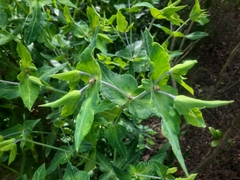 Euphorbia lathyris Caper spurge Photo: CC BY, Alice Shanks
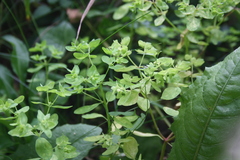 Euphorbia peplus Petty spurge Photo: CC BY, Bartosz Czołczyński
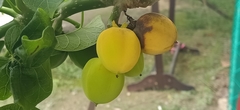 Jatropha curcas Barbados nut Photo: CC BY-SA, Ong Jyh Seng
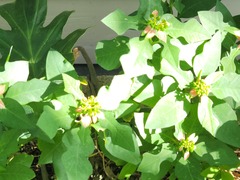 Euphorbia cyathophora Fire on the mountain Photo: CC BY, johnyochum
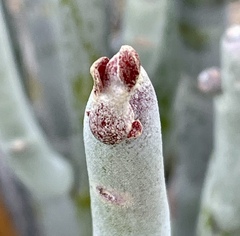 Euphorbia lomelii Slipper Plant Photo: CC0, Irene
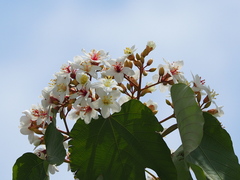 Vernicia montana Mu oil tree Photo: CC0, 葉子
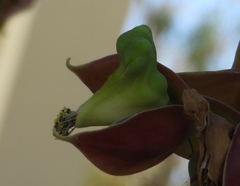 Euphorbia bracteata Photo: CC BY, Francisco Farriols Sarabia
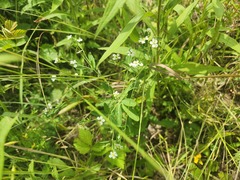 Euphorbia corollata Flowering spurge Photo: CC BY, Summit Metro Parks
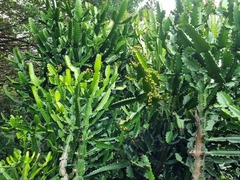 Euphorbia antiquorum Triangular spurge Photo: CC BY, Cesar Ormazabal
Grown: iNaturalist's observations of the species marked captive or cultivated; "not counted" where the species list does not count it. Native ranges: Kew's World Checklist of Vascular Plants (Govaerts et al., CC BY 4.0), file of 4 June 2026. Grown: iNaturalist's observations marked captive or cultivated, counted 17 October 2026 (the species list's count). Habitat climate known: the species page has a habitat climate, read from CHELSA's monthly climate and NASA POWER's daily extremes at its well-placed wild records inside Kew's native range; each page says its own sources and days. Record low: the lowest night in NASA POWER's daily series at the habitat's typical spot, as the species page gives it, held in °C to a tenth and shown in your units; each page says its own years and day read. Counts as the reference built on 19 November 2026 holds them. The CSV holds every result, not only this page's.