Adenia
105 species in the reference · family Passifloraceae · 28 with a habitat climate · 11 grown, per iNaturalist, 94 not counted
About the genus
Adenia is a genus of flowering plants in the passionflower family Passifloraceae. It contains about 100 species distributed in the Old World tropics and subtropics. The centers of diversity are in Madagascar, eastern and western tropical Africa, and Southeast Asia. The genus name Adenia comes from "aden", reported as the Arabic name for the plant by Peter Forsskål, the author of the genus.
Quoted from Wikipedia, "Adenia", its opening paragraph, revision 1366005705, read 2026-11-08, CC BY-SA 4.0.
Where Adenia is native
| Madagascar | 26 |
|---|---|
| Tanzania | 26 |
| Kenya | 19 |
| Angola | 15 |
| Zaïre | 15 |
| Cameroon | 13 |
| Congo | 13 |
| Uganda | 13 |
| Zambia | 12 |
| Central African Republic | 11 |
| Mozambique | 11 |
| Ethiopia | 10 |
Species native to each region. A species counts in every region it is native to. Native ranges: Kew's World Checklist of Vascular Plants (Govaerts et al., CC BY 4.0), file of 4 June 2026.
105 species
Adenia
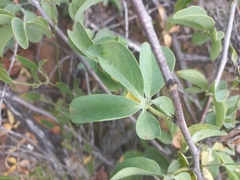 Adenia glauca Blueleaf Elephantfoot Photo: CC0, Kelly Abram
 Adenia gummifera Photo: CC BY, Sunčana Bradley
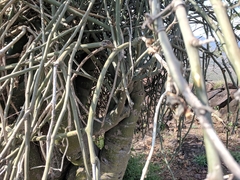 Adenia venenata Photo: CC BY, Elliot Kulakow
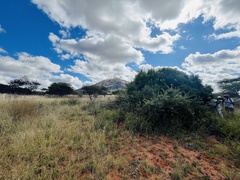 Adenia fruticosa Greenstem Photo: CC0, Prince Molokomme
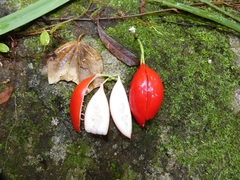 Adenia heterophylla Photo: CC BY, Kai Squires
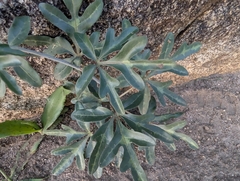 Adenia digitata Wild Granadilla Photo: CC BY, Shedron Mukhumo
 Adenia globosa Photo: CC BY-SA, C T Johansson
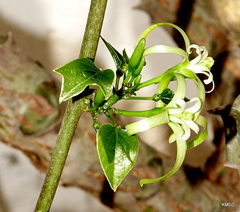 Adenia firingalavensis Photo: CC0, Romer N. Rabarijaona
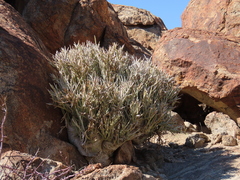 Adenia pechuelii Elephant's foot Photo: CC0, dune_ninja
 Adenia spinosa Spiny Elephantfoot Photo: CC BY-SA, Schubbay
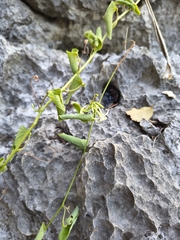 Adenia olaboensis Photo: CC BY, Jean Jacques Godon
- no open photograph on file Adenia aculeata
- no open photograph on file Adenia acuta
- no open photograph on file Adenia adenifera
- no open photograph on file Adenia angulosa
- no open photograph on file Adenia antongilliana
- no open photograph on file Adenia ballyi
- no open photograph on file Adenia banaensis
- no open photograph on file Adenia barthelatii
- no open photograph on file Adenia bequaertii
- no open photograph on file Adenia boivinii
- no open photograph on file Adenia cardiophylla
 Adenia cissampeloides Photo: CC0, Vijay Barve
- no open photograph on file Adenia cladosepala
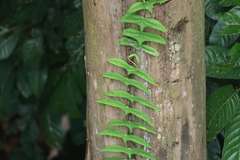 Adenia cordifolia Photo: CC BY, 呂一起(Lyu yi-chi)
- no open photograph on file Adenia crassa
- no open photograph on file Adenia cynanchifolia
 Adenia densiflora Photo: CC0, Romer N. Rabarijaona
- no open photograph on file Adenia dinklagei
- no open photograph on file Adenia dolichosiphon
- no open photograph on file Adenia ecirrosa
- no open photograph on file Adenia elegans
 Adenia ellenbeckii Photo: CC BY-SA, Joachim Beyenbach
- no open photograph on file Adenia epigea
- no open photograph on file Adenia erecta
- no open photograph on file Adenia fasciculata
- no open photograph on file Adenia fernandesiana
- no open photograph on file Adenia gedoensis
 Adenia goetzei Photo: CC BY-SA, Michael Wolf (Webseite)
- no open photograph on file Adenia gracilis
- no open photograph on file Adenia hastata
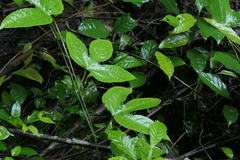 Adenia hondala Photo: CC BY-SA, Dinesh Valke
- no open photograph on file Adenia huillensis
- no open photograph on file Adenia inermis
- no open photograph on file Adenia isaloensis
- no open photograph on file Adenia karibaensis
 Adenia keramanthus Photo: CC BY-SA, Michael Wolf (Webseite)
- no open photograph on file Adenia kigogoensis
Grown: iNaturalist's observations of the species marked captive or cultivated; "not counted" where the species list does not count it. Native ranges: Kew's World Checklist of Vascular Plants (Govaerts et al., CC BY 4.0), file of 4 June 2026. Grown: iNaturalist's observations marked captive or cultivated, counted 17 October 2026 (the species list's count). Habitat climate known: the species page has a habitat climate, read from CHELSA's monthly climate and NASA POWER's daily extremes at its well-placed wild records inside Kew's native range; each page says its own sources and days. Record low: the lowest night in NASA POWER's daily series at the habitat's typical spot, as the species page gives it, held in °C to a tenth and shown in your units; each page says its own years and day read. Counts as the reference built on 19 November 2026 holds them. The CSV holds every result, not only this page's.