Aquilegia
57 species in the reference · family Ranunculaceae · 50 with a habitat climate · 46 grown, per iNaturalist, 11 not counted
About the genus
Aquilegia, commonly known as columbines, is a genus of perennial flowering plants in subfamily Thalictroideae of the family Ranunculaceae (buttercups). The genus includes between 70 and 400 taxa (described species and subspecies) with natural ranges across the Northern Hemisphere. Natural and introduced populations of Aquilegia exist on all continents but Antarctica. Known for their high physical variability and ease of hybridization, columbines are popular garden plants and have created many cultivated varieties.
Quoted from Wikipedia, "Aquilegia", its opening paragraph, revision 1382176542, read 2026-11-08, CC BY-SA 4.0.
Where Aquilegia is native
| Utah | 9 |
|---|---|
| Yugoslavia | 8 |
| Inner Mongolia | 7 |
| Manchuria | 7 |
| Arizona | 6 |
| China North-Central | 6 |
| Colorado | 6 |
| Italy | 6 |
| Mexico Northeast | 6 |
| Mongolia | 6 |
| Wyoming | 6 |
| Amur | 5 |
Species native to each region. A species counts in every region it is native to. Native ranges: Kew's World Checklist of Vascular Plants (Govaerts et al., CC BY 4.0), file of 4 June 2026.
57 species
Aquilegia
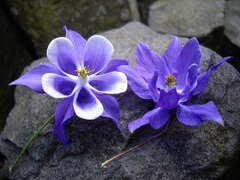 Aquilegia vulgaris Columbine Photo: CC BY, bernhard_hiller
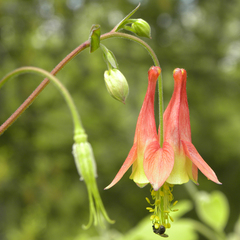 Aquilegia canadensis Honeysuckle Photo: CC BY, M. Whitson
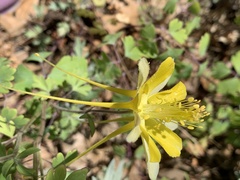 Aquilegia chrysantha Golden columbine Photo: CC0, jeanhm
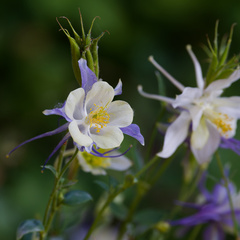 Aquilegia coerulea Rocky Mountain columbine Photo: CC BY, Daughter Dad
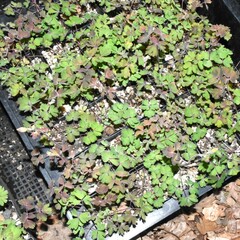 Aquilegia formosa Western columbine Photo: CC BY, Gabriel Campbell-Martinez
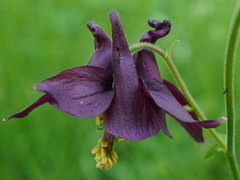 Aquilegia atrata Dark Columbine Photo: CC BY, Patrick Hacker
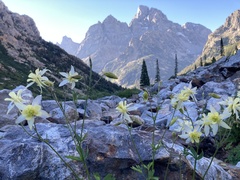 Aquilegia flavescens Yellow columbine Photo: CC BY, Loren Cassin Sackett
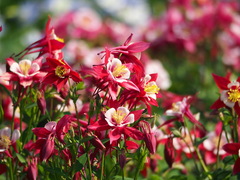 Aquilegia alpina Photo: CC0, 葉子
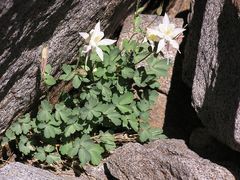 Aquilegia pubescens Sierra columbine Photo: CC BY, Justin Johnsen
 Aquilegia longissima Long-spur columbine Photo: CC BY, M. Whitson
 Aquilegia oxysepala Oriental columbine Photo: CC BY, Marco Mussita
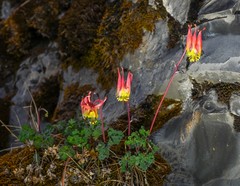 Aquilegia elegantula Shooting-star columbine Photo: CC BY, Alan Rockefeller
 Aquilegia flabellata Fan columbine Photo: CC BY, Yoshimasa Uchiyama
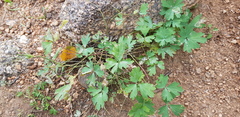 Aquilegia viridiflora Green Columbine Photo: CC BY, Urgamal Magsar
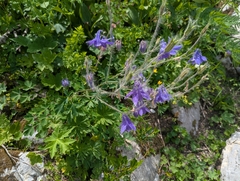 Aquilegia nigricans Blackish Columbine Photo: CC BY, Elias
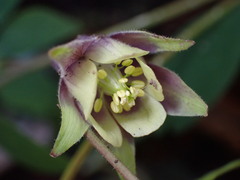 Aquilegia brevistyla Blue columbine Photo: CC BY, Jared Shorma
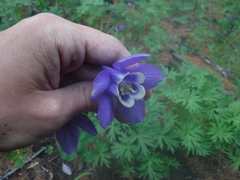 Aquilegia sibirica Photo: CC BY, Rose Zappa
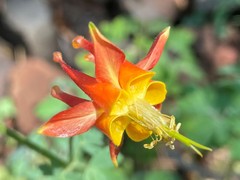 Aquilegia desertorum Desert columbine Photo: CC BY-SA, lejones417
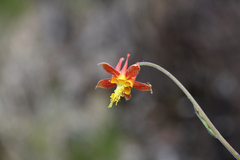 Aquilegia eximia Serpentine Columbine Photo: CC BY, Trevor Van Loon
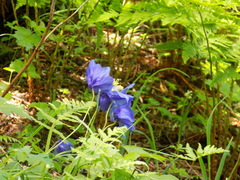 Aquilegia glandulosa Photo: CC0, Marina Potapova
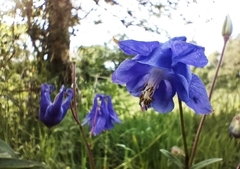 Aquilegia dumeticola Photo: CC BY, Natacha Roullé
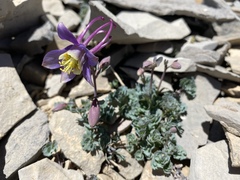 Aquilegia scopulorum Rock columbine Photo: CC BY, Matt Berger
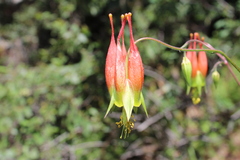 Aquilegia skinneri Skinner's Columbine Photo: CC BY, Rodolfo Maximiliano Gutiérrez-Sánchez
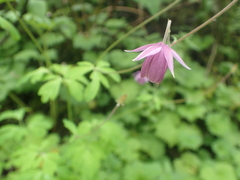 Aquilegia ecalcarata Photo: CC BY, Étienne Léveillé-Bourret
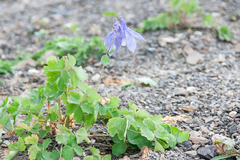 Aquilegia olympica Photo: CC BY, Mikhail Nevsky
- no open photograph on file Aquilegia kamelinii
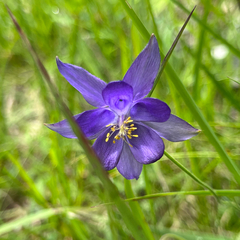 Aquilegia einseleana Einsel's Columbine Photo: CC0, Hubert Sztyler
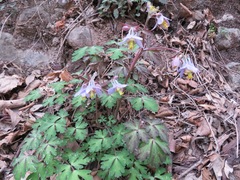 Aquilegia hebeica Photo: CC BY, Marco Mussita
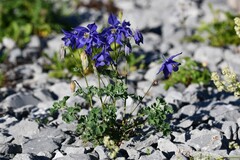 Aquilegia pyrenaica Pyrenean columbine Photo: CC BY, Flavien Saboureau
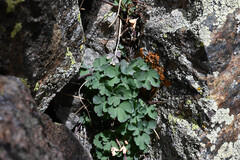 Aquilegia saximontana Rocky Mountain blue columbine Photo: CC BY, Anders Hastings
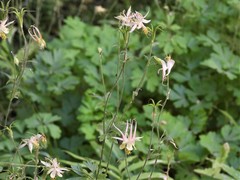 Aquilegia micrantha Mancos columbine Photo: CC BY, P Holroyd
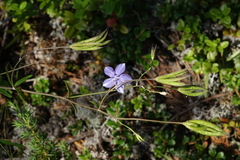 Aquilegia parviflora Photo: CC BY, Oleg Kosterin
 Aquilegia nevadensis Photo: Public domain, Javier martin
- no open photograph on file Aquilegia rockii
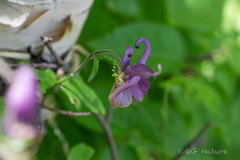 Aquilegia yabeana Photo: CC BY, Wang.QG
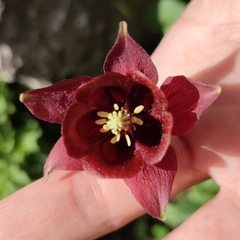 Aquilegia atrovinosa Photo: CC0, Federico Biguzzi
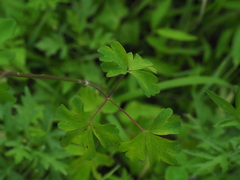 Aquilegia buergeriana Dwarf columbine Photo: CC BY, ippanjin
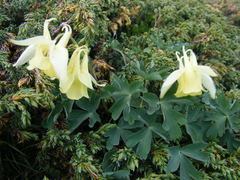 Aquilegia aurea Photo: CC BY, Annie Evankow
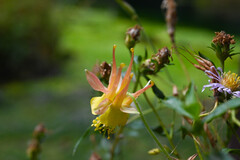 Aquilegia barnebyi Shale columbine Photo: CC BY, Anders Hastings
 Aquilegia bertolonii Photo: CC BY-SA, Lionnel Rousset
 Aquilegia dinarica Photo: CC BY-SA, Orjen
- no open photograph on file Aquilegia kansuensis
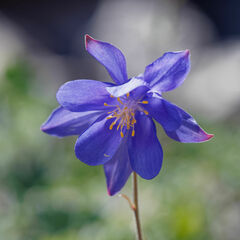 Aquilegia kitaibelii Photo: CC0, Thierry Arbault
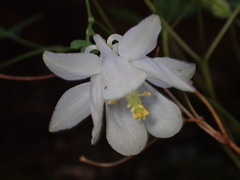 Aquilegia laramiensis Laramie columbine Photo: CC BY, Jared Shorma
 Aquilegia transsilvanica Photo: CC BY-SA, Ghislain118 (AD)…
 Aquilegia viscosa Photo: CC BY, Flavien Saboureau
- no open photograph on file Aquilegia aragonensis
 Aquilegia barbaricina Barbaricina Colombine Photo: CC BY, Mario Pappacoda
Grown: iNaturalist's observations of the species marked captive or cultivated; "not counted" where the species list does not count it. Native ranges: Kew's World Checklist of Vascular Plants (Govaerts et al., CC BY 4.0), file of 4 June 2026. Grown: iNaturalist's observations marked captive or cultivated, counted 17 October 2026 (the species list's count). Habitat climate known: the species page has a habitat climate, read from CHELSA's monthly climate and NASA POWER's daily extremes at its well-placed wild records inside Kew's native range; each page says its own sources and days. Record low: the lowest night in NASA POWER's daily series at the habitat's typical spot, as the species page gives it, held in °C to a tenth and shown in your units; each page says its own years and day read. Counts as the reference built on 19 November 2026 holds them. The CSV holds every result, not only this page's.