Echinacea
9 species in the reference · family Asteraceae · 9 with a habitat climate · 9 grown, per iNaturalist
About the genus
Echinacea [ek-in-NAY-shee-a] is a genus of herbaceous flowering plants in the daisy family. It has ten species, which are commonly called coneflowers. They are native only in eastern and central North America, where they grow in wet to dry prairies and open wooded areas. They have large, showy heads of composite flowers, blooming in summer. More on Wikipedia
Quoted from Wikipedia, "Echinacea", its opening paragraph, revision 1374317936, read 2026-11-08, CC BY-SA 4.0.
Where Echinacea is native
| Oklahoma | 6 |
|---|---|
| Texas | 6 |
| Arkansas | 5 |
| Missouri | 5 |
| Georgia | 4 |
| Kansas | 4 |
| Louisiana | 4 |
| Tennessee | 4 |
| Illinois | 3 |
| Indiana | 3 |
| Iowa | 3 |
| North Carolina | 3 |
Species native to each region. A species counts in every region it is native to. Native ranges: Kew's World Checklist of Vascular Plants (Govaerts et al., CC BY 4.0), file of 4 June 2026.
9 species
Echinacea
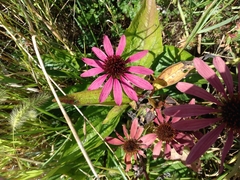 Echinacea purpurea Eastern purple coneflower Photo: CC0, juniem
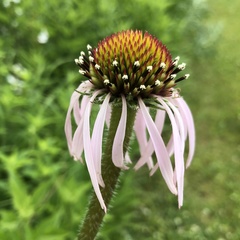 Echinacea pallida Pale purple coneflower Photo: CC BY, zancat
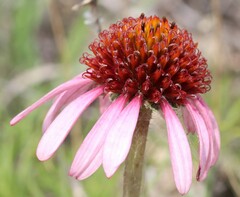 Echinacea angustifolia Black-samson echinacea Photo: CC BY, Catherine C. Galley
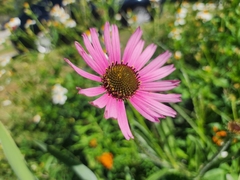 Echinacea tennesseensis Tennessee purple-coneflower Photo: CC BY, Kaden Slone
 Echinacea paradoxa Bush's purple coneflower Photo: CC0, stlmark
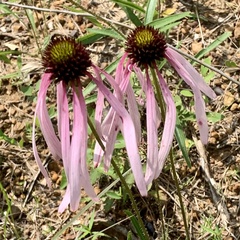 Echinacea sanguinea Sanguine purple-coneflower Photo: CC BY, Laura Clark
 Echinacea laevigata Smooth coneflower Photo: CC BY, Nick Doty
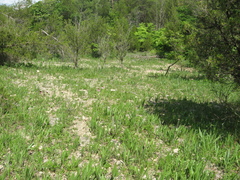 Echinacea simulata Photo: CC0, Mason Brock
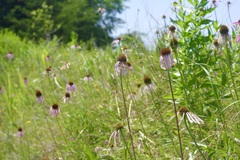 Echinacea atrorubens Topeka purple-coneflower Photo: CC BY, Michelle W. (鍾偉瑋)
Grown: iNaturalist's observations of the species marked captive or cultivated; "not counted" where the species list does not count it. Native ranges: Kew's World Checklist of Vascular Plants (Govaerts et al., CC BY 4.0), file of 4 June 2026. Grown: iNaturalist's observations marked captive or cultivated, counted 17 October 2026 (the species list's count). Habitat climate known: the species page has a habitat climate, read from CHELSA's monthly climate and NASA POWER's daily extremes at its well-placed wild records inside Kew's native range; each page says its own sources and days. Record low: the lowest night in NASA POWER's daily series at the habitat's typical spot, as the species page gives it, held in °C to a tenth and shown in your units; each page says its own years and day read. Counts as the reference built on 19 November 2026 holds them. The CSV holds every result, not only this page's.