Eugenia
46 species in the reference · family Myrtaceae · 41 with a habitat climate · 46 grown, per iNaturalist
About the genus
Eugenia is a genus of flowering plants in the myrtle family Myrtaceae. It has a worldwide, although highly uneven, distribution in tropical and subtropical regions. The bulk of the approximately 1,100 species occur in the New World tropics, especially in the eastern Brazil's northern Andes, the Caribbean, and the Atlantic Forest (coastal forests). Other centers of diversity include New Caledonia and Madagascar. More on Wikipedia
Quoted from Wikipedia, "Eugenia", its opening paragraph, revision 1379223812, read 2026-11-08, CC BY-SA 4.0.
Where Eugenia is native
| Brazil Southeast | 21 |
|---|---|
| Brazil South | 16 |
| Puerto Rico | 14 |
| Brazil Northeast | 13 |
| Bolivia | 11 |
| Brazil West-Central | 11 |
| Leeward Is. AB Ant | 11 |
| Dominican Republic | 9 |
| Paraguay | 9 |
| Windward Is. | 9 |
| Argentina Northeast | 8 |
| Haiti | 8 |
Species native to each region. A species counts in every region it is native to. Native ranges: Kew's World Checklist of Vascular Plants (Govaerts et al., CC BY 4.0), file of 4 June 2026.
46 species
Eugenia
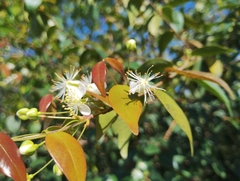 Eugenia uniflora Surinam cherry Photo: CC BY, The Great Walter
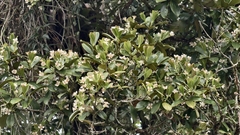 Eugenia brasiliensis Grumichama Photo: CC BY, fmunoz
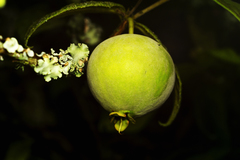 Eugenia stipitata Photo: CC BY, Daniel Mesa
 Eugenia involucrata Cherry-of-the-Rio Grande Photo: CC0, Paula Romano
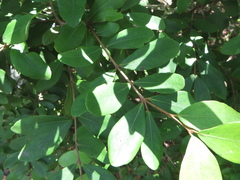 Eugenia foetida Boxleaf stopper Photo: CC BY, Ben Machado
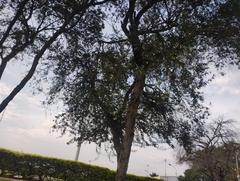 Eugenia pyriformis Photo: CC BY, The Great Walter
 Eugenia axillaris White stopper Photo: CC BY-SA, Douglas Goldman
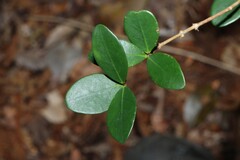 Eugenia reinwardtiana Cedar Bay-cherry Photo: CC BY-SA, Greg Tasney
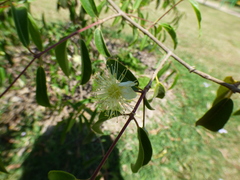 Eugenia myrcianthes Photo: CC BY, Pablo H Capovilla
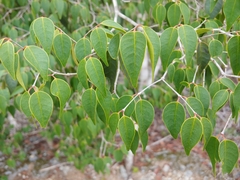 Eugenia rhombea Red stopper Photo: CC BY-SA, Kurt Miller
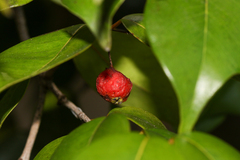 Eugenia confusa Redberry stopper Photo: CC BY, Tom Field
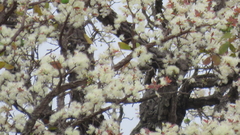 Eugenia dysenterica Photo: CC0, Tiago Lubiana
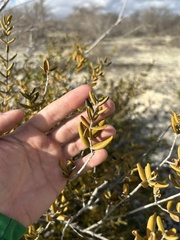 Eugenia azeda Photo: CC BY, Thomaz de Carvalho Callado
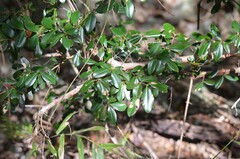 Eugenia ligustrina Privet stopper Photo: CC BY, Josiah Londerée
 Eugenia mattosii Photo: CC BY, Fabrício Mil Homens Riella
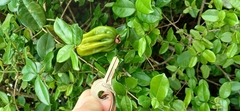 Eugenia selloi Photo: CC BY-SA, Maria Luísa Assunção
- no open photograph on file Eugenia fajardensis
 Eugenia woodburyana Woodbury's stopper Photo: Public domain, author not stated
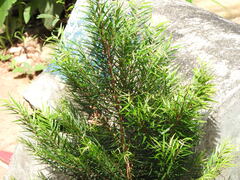 Eugenia biflora Blackrodwood Photo: CC BY, Alexis López Hernández
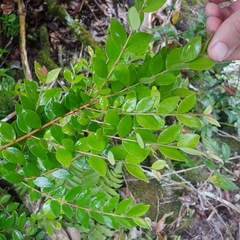 Eugenia monticola Birdcherry Photo: CC BY-SA, Kurt Miller
- no open photograph on file Eugenia noumeensis
 Eugenia capensis Dune myrtle Photo: CC BY-SA, Tony Rebelo
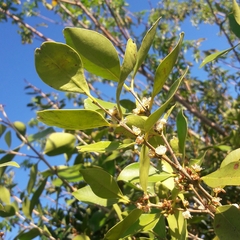 Eugenia uruguayensis Photo: CC BY-SA, Daniel Dias
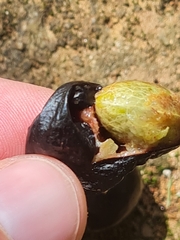 Eugenia candolleana Rainforest Plum Photo: CC0, Tiago Lubiana
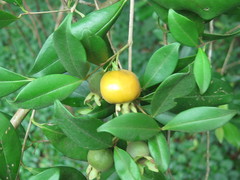 Eugenia luschnathiana Photo: CC BY, Helio Lourencini
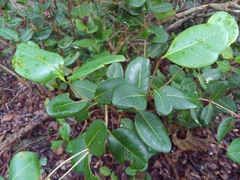 Eugenia sessiliflora Sessileleaf stopper Photo: CC BY-SA, Kurt Miller
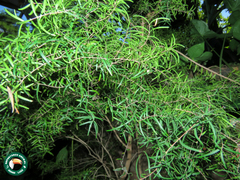 Eugenia sprengelii Photo: CC BY, Diogo Luiz
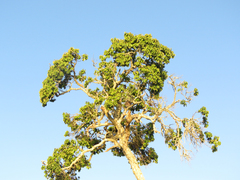 Eugenia astringens Photo: CC BY, Diogo Luiz
- no open photograph on file Eugenia copacabanensis
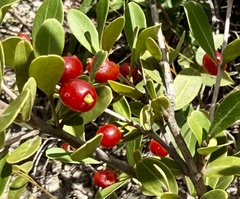 Eugenia punicifolia Photo: CC BY-SA, Suzana Ehlin Martins
 Eugenia victoriana Woodbury's stopper Photo: CC0, Daderot
 Eugenia pitanga Photo: CC0, Jefferson Gomes Lima
 Eugenia pseudopsidium Christmas cherry Photo: CC BY-SA, Kurt Miller
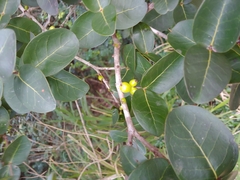 Eugenia cordata Lathberry Photo: CC BY-SA, Kurt Miller
- no open photograph on file Eugenia sulcata
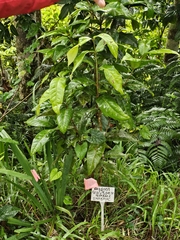 Eugenia haematocarpa Luquillo Mountain stopper Photo: CC BY, ritirene
 Eugenia koolauensis Koʻolau Eugenia Photo: CC BY, David Eickhoff
- no open photograph on file Eugenia melanogyna
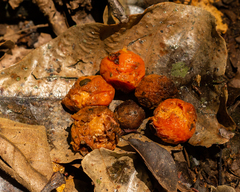 Eugenia ternatifolia Photo: CC BY, Denis Zabin
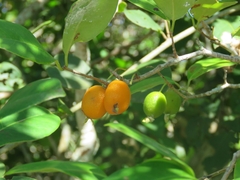 Eugenia bunchosiifolia Photo: CC BY, Pablo Cauã da Silva Toledo
- no open photograph on file Eugenia grandissima
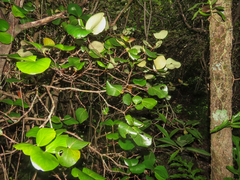 Eugenia lucida Photo: CC BY-SA, Emanuele Santarelli
 Eugenia buxifolia Photo: CC BY, Augustin Soulard
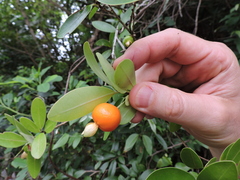 Eugenia speciosa Photo: CC BY, Fabrício Mil Homens Riella
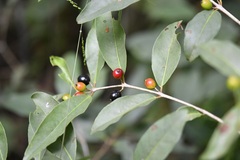 Eugenia capuli Photo: CC BY, Neptalí Ramírez Marcial
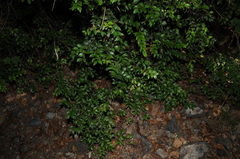 Eugenia procera Bastard Blackberry Photo: CC BY, Grace Merkert
Grown: iNaturalist's observations of the species marked captive or cultivated; "not counted" where the species list does not count it. Native ranges: Kew's World Checklist of Vascular Plants (Govaerts et al., CC BY 4.0), file of 4 June 2026. Grown: iNaturalist's observations marked captive or cultivated, counted 17 October 2026 (the species list's count). Habitat climate known: the species page has a habitat climate, read from CHELSA's monthly climate and NASA POWER's daily extremes at its well-placed wild records inside Kew's native range; each page says its own sources and days. Record low: the lowest night in NASA POWER's daily series at the habitat's typical spot, as the species page gives it, held in °C to a tenth and shown in your units; each page says its own years and day read. Counts as the reference built on 19 November 2026 holds them. The CSV holds every result, not only this page's.