Fraxinus
41 species in the reference · family Oleaceae · 34 with a habitat climate · 36 grown, per iNaturalist, 5 not counted
About the genus
Fraxinus, commonly called ash, is a genus of plants in the olive and lilac family, Oleaceae, and comprises 45–65 species of usually medium-to-large trees, most of which are deciduous (dropping their leaves in autumn), although some subtropical species are evergreen. The genus is widespread throughout much of Europe, Asia, and North America.
Quoted from Wikipedia, "Fraxinus", its opening paragraph, revision 1383973804, read 2026-11-08, CC BY-SA 4.0.
Where Fraxinus is native
| China South-Central | 10 |
|---|---|
| China North-Central | 9 |
| China Southeast | 9 |
| Texas | 9 |
| Japan | 8 |
| Mexico Northeast | 8 |
| Afghanistan | 5 |
| Alabama | 5 |
| Arizona | 5 |
| Arkansas | 5 |
| Georgia | 5 |
| Illinois | 5 |
Species native to each region. A species counts in every region it is native to. Native ranges: Kew's World Checklist of Vascular Plants (Govaerts et al., CC BY 4.0), file of 4 June 2026.
41 species
Fraxinus
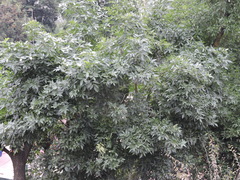 Fraxinus uhdei Shamel ash Photo: CC BY-SA, Martín Sánchez Vilchis
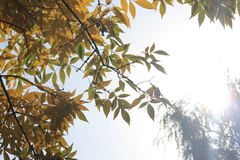 Fraxinus pennsylvanica Green ash Photo: CC0, KsenoSnake
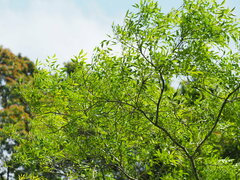 Fraxinus griffithii Formosan ash Photo: CC0, 葉子
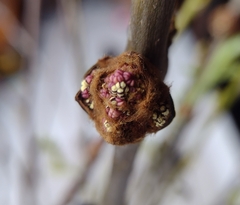 Fraxinus excelsior European ash Photo: CC BY, Bartosz Czołczyński
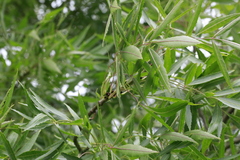 Fraxinus angustifolia Narrow-leaved Ash Photo: CC0, Stephen James McWilliam
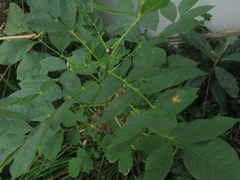 Fraxinus americana White ash Photo: CC0, Diego Carús
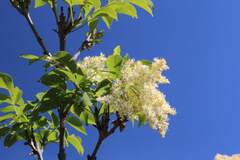 Fraxinus ornus Manna ash Photo: CC BY, Cesar Ormazabal
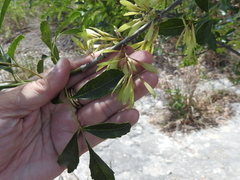 Fraxinus berlandieriana Berlandier ash Photo: CC BY, Sam Kieschnick
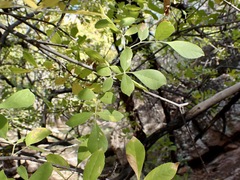 Fraxinus velutina Arizon ash Photo: CC BY, Sue Carnahan
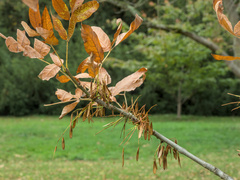 Fraxinus latifolia Oregon ash Photo: CC BY, Daniel Cahen
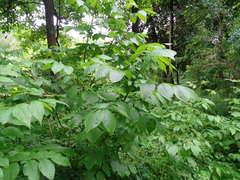 Fraxinus quadrangulata Blue ash Photo: CC0, Reuven Martin
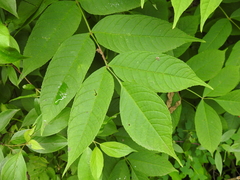 Fraxinus nigra Black ash Photo: CC0, Yann Kemper
 Fraxinus chinensis Chinese ash Photo: CC BY, Yi CHEN
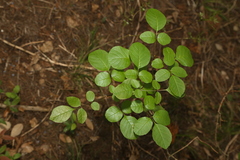 Fraxinus albicans Texas ash Photo: CC BY, Reid Hardin
 Fraxinus mandshurica Manchurian ash Photo: CC BY, Георгий Виноградов (Georgy Vinogradov)
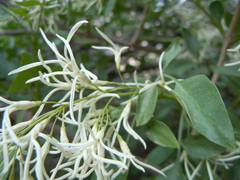 Fraxinus cuspidata Flowering ash Photo: CC BY, Matt Lavin
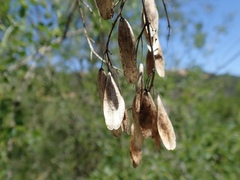 Fraxinus dipetala Two-petal ash Photo: CC BY, joergmlpts
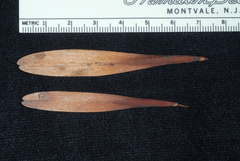 Fraxinus profunda Pumpkin ash Photo: CC BY-SA, Douglas Goldman
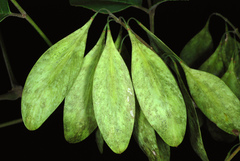 Fraxinus caroliniana Carolina ash Photo: CC BY-SA, Douglas Goldman
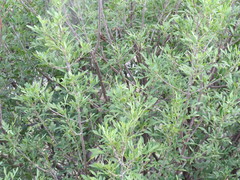 Fraxinus greggii Gregg ash Photo: CC BY, johnyochum
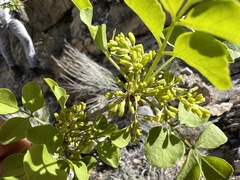 Fraxinus anomala Single-leaf ash Photo: CC BY, Steve Matson
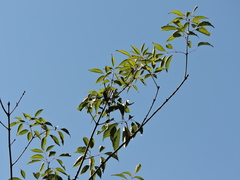 Fraxinus insularis Chinese flowering ash Photo: CC BY, Jacy Chen
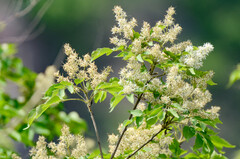 Fraxinus bungeana Northern ash Photo: CC BY, Jay Pruett
- no open photograph on file Fraxinus hubeiensis
 Fraxinus xanthoxyloides Afghan ash Photo: CC BY-SA, Kurt Stüber
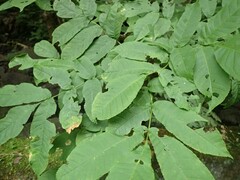 Fraxinus platypoda Photo: CC0, renshuchu
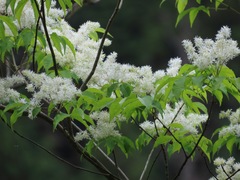 Fraxinus sieboldiana Chinese flowering ash Photo: CC BY, Marco Mussita
 Fraxinus lanuginosa Japanese Ash Photo: CC BY, りなべる
 Fraxinus floribunda Himalayan manna ash Photo: CC BY-SA, Krish Dulal
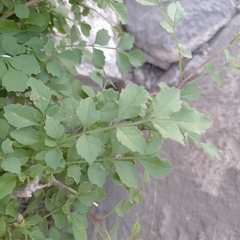 Fraxinus sogdiana Tianshan ash Photo: CC BY, Alexander Dubynin
- no open photograph on file Fraxinus × veltheimii
 Fraxinus baroniana Photo: CC BY-SA, Krzysztof Ziarnek, Kenraiz
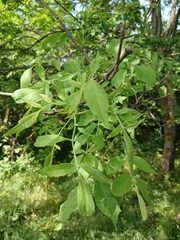 Fraxinus pallisiae Pallis’ Ash Photo: CC BY, olha_chusova
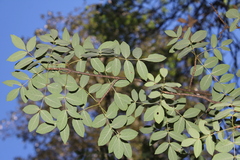 Fraxinus papillosa Chihuahua ash Photo: CC BY, Rodolfo Maximiliano Gutiérrez-Sánchez
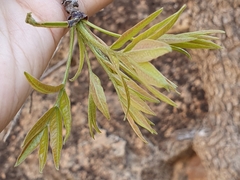 Fraxinus dimorpha Wild Ash Photo: CC BY, Mehdi Chetibi
 Fraxinus paxiana Photo: CC BY-SA, Plant Image Library from Boston, USA
- no open photograph on file Fraxinus apertisquamifera
- no open photograph on file Fraxinus longicuspis Japanese ash
- no open photograph on file Fraxinus raibocarpa
- no open photograph on file Fraxinus stylosa
- no open photograph on file Fraxinus suaveolens
Grown: iNaturalist's observations of the species marked captive or cultivated; "not counted" where the species list does not count it. Native ranges: Kew's World Checklist of Vascular Plants (Govaerts et al., CC BY 4.0), file of 4 June 2026. Grown: iNaturalist's observations marked captive or cultivated, counted 17 October 2026 (the species list's count). Habitat climate known: the species page has a habitat climate, read from CHELSA's monthly climate and NASA POWER's daily extremes at its well-placed wild records inside Kew's native range; each page says its own sources and days. Record low: the lowest night in NASA POWER's daily series at the habitat's typical spot, as the species page gives it, held in °C to a tenth and shown in your units; each page says its own years and day read. Counts as the reference built on 19 November 2026 holds them. The CSV holds every result, not only this page's.