Handroanthus
17 species in the reference · family Bignoniaceae · 16 with a habitat climate · 16 grown, per iNaturalist, 1 not counted
About the genus
Handroanthus is a genus of flowering plants in the family Bignoniaceae. It consists of 30 species of trees, known in Latin America by the common names poui, pau d'arco, or ipê. The latter sometimes appears as epay or simply ipe (unaccented) in English. The large timber species are sometimes called lapacho or guayacan, but these names are more properly applied to the species Handroanthus lapacho and Handroanthus guayacan, respectively.
Quoted from Wikipedia, "Handroanthus", its opening paragraph, revision 1358112584, read 2026-11-08, CC BY-SA 4.0.
Where Handroanthus is native
| Brazil Southeast | 11 |
|---|---|
| Brazil South | 9 |
| Colombia | 8 |
| Peru | 8 |
| Bolivia | 7 |
| Brazil Northeast | 7 |
| Venezuela | 7 |
| Brazil North | 5 |
| Ecuador | 5 |
| Paraguay | 5 |
| Argentina Northeast | 4 |
| Brazil West-Central | 4 |
Species native to each region. A species counts in every region it is native to. Native ranges: Kew's World Checklist of Vascular Plants (Govaerts et al., CC BY 4.0), file of 4 June 2026.
17 species
Handroanthus
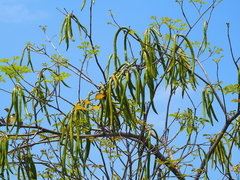 Handroanthus chrysanthus Roble amarillo Photo: CC0, 葉子
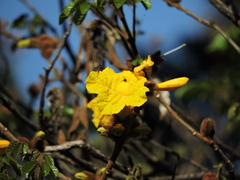 Handroanthus chrysotrichus Golden trumpet tree Photo: CC BY, Fabrício Mil Homens Riella
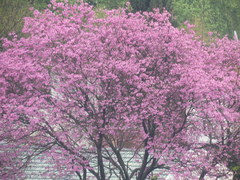 Handroanthus heptaphyllus Photo: CC0, Diego Carús
 Handroanthus serratifolius Yellow poui Photo: CC0, David Bird
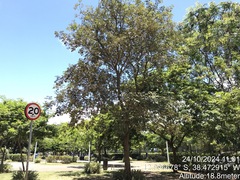 Handroanthus ochraceus Golden trumpet tree Photo: CC BY-SA, vitordematos12
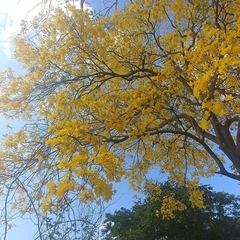 Handroanthus guayacan Guayacan Photo: CC BY-SA, Olvin Wilfredo Oyuela
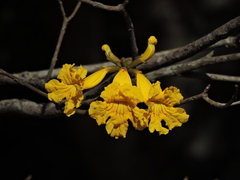 Handroanthus umbellatus Photo: CC BY, Fabrício Mil Homens Riella
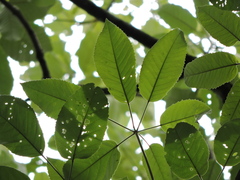 Handroanthus albus Photo: CC BY, Fabrício Mil Homens Riella
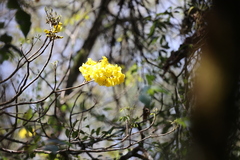 Handroanthus lapacho Photo: CC BY, Andrea Gantzer
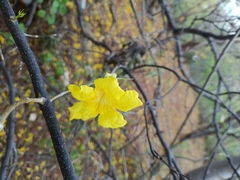 Handroanthus billbergii Photo: CC BY, Lucero Luna Montilla
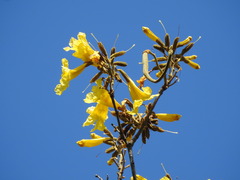 Handroanthus pulcherrimus Photo: CC BY, Fabrício Mil Homens Riella
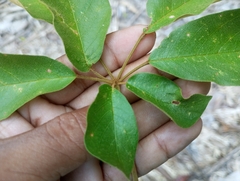 Handroanthus incanus Photo: CC BY, Robin Cañari Marzano
 Handroanthus capitatus Arawnig Photo: CC BY, Guillaume Delaitre
 Handroanthus riodocensis Photo: CC0, Daderot
- no open photograph on file Handroanthus speciosus
- no open photograph on file Handroanthus catarinensis
 Handroanthus impetiginosus Pink trumpet tree Photo: CC BY, Wallace Carneiro Almeida
Grown: iNaturalist's observations of the species marked captive or cultivated; "not counted" where the species list does not count it. Native ranges: Kew's World Checklist of Vascular Plants (Govaerts et al., CC BY 4.0), file of 4 June 2026. Grown: iNaturalist's observations marked captive or cultivated, counted 17 October 2026 (the species list's count). Habitat climate known: the species page has a habitat climate, read from CHELSA's monthly climate and NASA POWER's daily extremes at its well-placed wild records inside Kew's native range; each page says its own sources and days. Record low: the lowest night in NASA POWER's daily series at the habitat's typical spot, as the species page gives it, held in °C to a tenth and shown in your units; each page says its own years and day read. Counts as the reference built on 19 November 2026 holds them. The CSV holds every result, not only this page's.