Leptospermum
21 species in the reference · family Myrtaceae · 21 with a habitat climate · 21 grown, per iNaturalist
About the genus
Leptospermum is a genus of shrubs and small trees in the myrtle family Myrtaceae commonly known as tea trees, although this name is sometimes also used for some species of Melaleuca. Most species are endemic to Australia, with the greatest diversity in the south of the continent, but some are native to other parts of the world, including New Zealand and Southeast Asia. Leptospermums all have five conspicuous petals and five groups of stamens which alternate with the petals. There is a single style in the centre of the flower and the fruit is a woody capsule.
Quoted from Wikipedia, "Leptospermum", its opening paragraph, revision 1354638594, read 2026-11-08, CC BY-SA 4.0.
Where Leptospermum is native
| New South Wales | 16 |
|---|---|
| Victoria | 7 |
| Tasmania | 6 |
| Queensland | 5 |
| South Australia | 2 |
| Chatham Is. | 1 |
| New Zealand North | 1 |
| New Zealand South | 1 |
| Norfolk Is. | 1 |
Species native to each region. A species counts in every region it is native to. Native ranges: Kew's World Checklist of Vascular Plants (Govaerts et al., CC BY 4.0), file of 4 June 2026.
21 species
Leptospermum
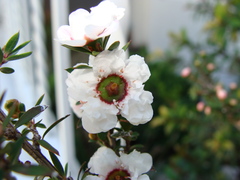 Leptospermum scoparium Broom Tea-tree Photo: CC BY, Alexis López Hernández
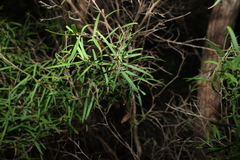 Leptospermum petersonii Common teatree Photo: CC BY-SA, Greg Tasney
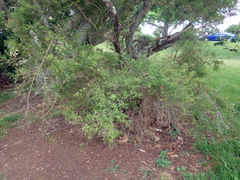 Leptospermum polygalifolium Tantoon Photo: CC0, Peter de Lange
 Leptospermum morrisonii Large-leaf yellow teatree Photo: CC BY, Murray NZ
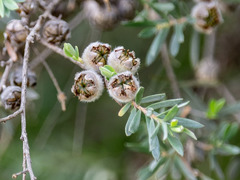 Leptospermum lanigerum Woolly Tea-tree Photo: CC BY, Terra Occ
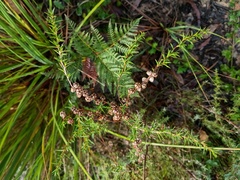 Leptospermum continentale Prickly tea-tree Photo: CC BY, grampianshiker
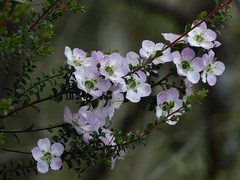 Leptospermum rotundifolium Round-leaved tea tree Photo: CC BY, Max Campbell
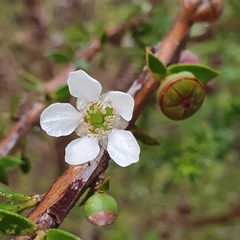 Leptospermum squarrosum Peach blossom Tea Tree Photo: CC BY, ronavery
 Leptospermum liversidgei Lemon-scented Tea-tree Photo: CC BY-SA, Greg Tasney
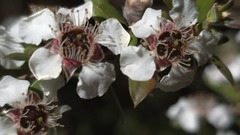 Leptospermum grandifolium Tea Tree Bairne Photo: CC BY, Petra Holland
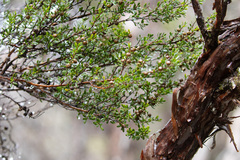 Leptospermum rupestre Alpine tea-tree Photo: CC BY, avocat
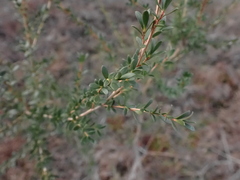 Leptospermum obovatum River teatree Photo: CC BY, ttsquid
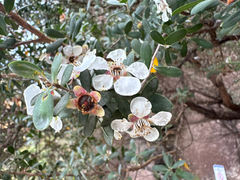 Leptospermum grandiflorum Photo: CC BY, Caleb Catto
 Leptospermum nitidum Shining Tea-tree Photo: CC BY-SA, Miguel de Salas
 Leptospermum spectabile Photo: CC BY-SA, Melburnian
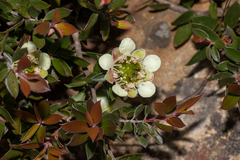 Leptospermum macrocarpum Large-fruited tea tree Photo: CC BY, T. Hammer
 Leptospermum turbinatum Shiny tea-tree Photo: CC BY, Murray NZ
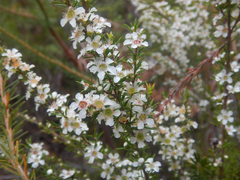 Leptospermum juniperinum Prickly teatree Photo: CC BY, Bryce Watts-Parker
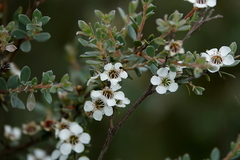 Leptospermum myrtifolium Myrtle Teatree Photo: CC BY, Max Campbell
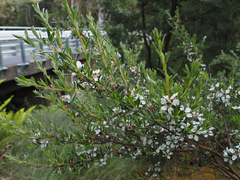 Leptospermum riparium Photo: CC0, Cowirrie
 Leptospermum sphaerocarpum Photo: CC BY, Ian McMaster
Grown: iNaturalist's observations of the species marked captive or cultivated; "not counted" where the species list does not count it. Native ranges: Kew's World Checklist of Vascular Plants (Govaerts et al., CC BY 4.0), file of 4 June 2026. Grown: iNaturalist's observations marked captive or cultivated, counted 17 October 2026 (the species list's count). Habitat climate known: the species page has a habitat climate, read from CHELSA's monthly climate and NASA POWER's daily extremes at its well-placed wild records inside Kew's native range; each page says its own sources and days. Record low: the lowest night in NASA POWER's daily series at the habitat's typical spot, as the species page gives it, held in °C to a tenth and shown in your units; each page says its own years and day read. Counts as the reference built on 19 November 2026 holds them. The CSV holds every result, not only this page's.