Macaranga
7 species in the reference · family Euphorbiaceae · 5 with a habitat climate · 7 grown, per iNaturalist
About the genus
Macaranga is a large genus of Old World tropical trees of the family Euphorbiaceae and the only genus in the subtribe Macaranginae (tribe Acalypheae). Native to Africa, Australasia, Asia and various islands of the Indian and Pacific Oceans, the genus comprises over 300 different species. It was first described as a genus in 1806, based on specimens collected on the Island of Mauritius. Many species, such as Macaranga gigantea have uncommonly large leaves, and many are peltate.
Quoted from Wikipedia, "Macaranga", its opening paragraph, revision 1354824118, read 2026-11-08, CC BY-SA 4.0.
Where Macaranga is native
| Sulawesi | 5 |
|---|---|
| Myanmar | 4 |
| Thailand | 4 |
| Borneo | 3 |
| Nicobar Is. | 3 |
| Philippines | 3 |
| Sumatera | 3 |
| Andaman Is. | 2 |
| Jawa | 2 |
| Malaya | 2 |
| Maluku | 2 |
| Bangladesh | 1 |
Species native to each region. A species counts in every region it is native to. Native ranges: Kew's World Checklist of Vascular Plants (Govaerts et al., CC BY 4.0), file of 4 June 2026.
7 species
Macaranga
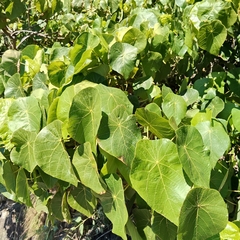 Macaranga tanarius Parasol leaf tree Photo: CC BY, John Barkla
 Macaranga gigantea Giant Mahang Photo: CC BY-SA, Cheongweei Gan
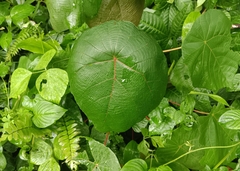 Macaranga peltata Photo: CC BY, renjus box
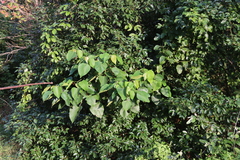 Macaranga capensis Photo: CC BY-SA, Tony Rebelo
 Macaranga grandifolia Photo: CC BY-SA, David J. Stang
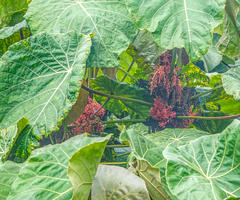 Macaranga mappa Pengua Photo: CC BY, Slunky
 Macaranga triloba Common mahang Photo: CC BY-SA, Abu Hamas
Grown: iNaturalist's observations of the species marked captive or cultivated; "not counted" where the species list does not count it. Native ranges: Kew's World Checklist of Vascular Plants (Govaerts et al., CC BY 4.0), file of 4 June 2026. Grown: iNaturalist's observations marked captive or cultivated, counted 17 October 2026 (the species list's count). Habitat climate known: the species page has a habitat climate, read from CHELSA's monthly climate and NASA POWER's daily extremes at its well-placed wild records inside Kew's native range; each page says its own sources and days. Record low: the lowest night in NASA POWER's daily series at the habitat's typical spot, as the species page gives it, held in °C to a tenth and shown in your units; each page says its own years and day read. Counts as the reference built on 19 November 2026 holds them. The CSV holds every result, not only this page's.